
Olive skipper
Pyrgus serratulae
Description
How to identify
The Olive skipper (Pyrgus serratulae) is a species of butterfly belonging to the Hesperiidae family. This small butterfly has a wingspan ranging from 25 to 30 millimeters.
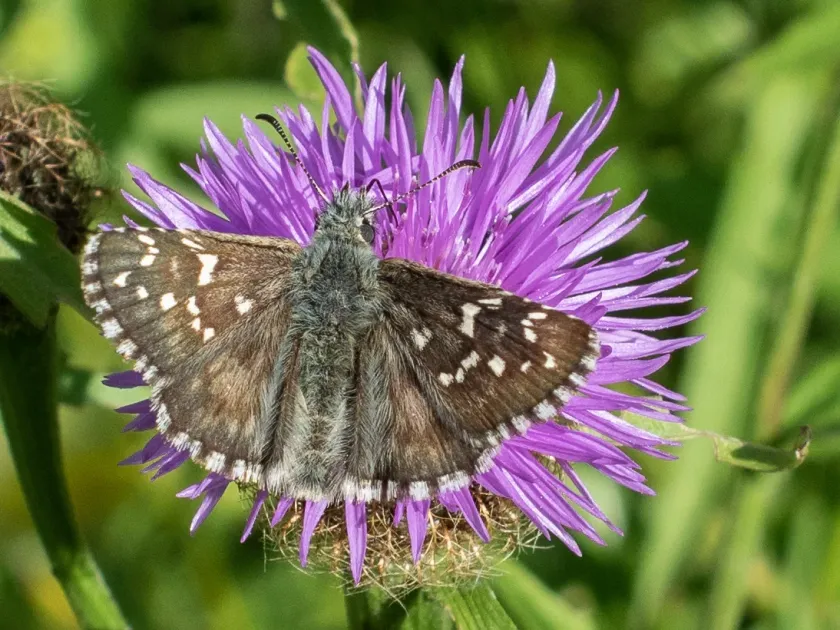
The upper side of the wings is dark brown with a distinct pattern of white spots and a pale fringe along the outer edge. The underside of the wings is paler, typically featuring yellowish-gray tones.
The body is covered with dense hair, a characteristic feature of the skipper family. When resting, these butterflies hold their wings in a half-open position.
Larvae are greenish with dark spots and a light head, covered with short hairs. They lead a secretive lifestyle, often hiding to avoid detection by natural predators.
Pupae develop inside folded leaves of host plants, providing protection during the transformation process until the adult butterfly emerges.
What it damages
The caterpillars primarily feed on various plants of the Rosaceae family. They are frequently associated with both wild and cultivated Potentilla species.
In agricultural settings, they can infest berry crops if wild host plants are scarce. While usually not a primary pest, their feeding can weaken plants.
The larvae consume leaf tissue, creating irregular holes and edges. This damage reduces the photosynthetic surface of the leaves, potentially slowing plant growth.
Economic impact is generally low but can increase if the population density reaches significant levels during favorable weather conditions.
Monitoring is recommended for gardeners cultivating sensitive Rosaceae species to prevent leaf loss and maintain overall plant vigor throughout the season.
When it appears
Adults are typically seen flying from May to July. This is the main period for mating and egg-laying on suitable host plants.
The species usually produces one generation per year, although warmer regions may occasionally support a partial second generation.
The larvae overwinter in the middle stages, typically hidden within leaf litter or at the base of plants near the soil surface.
Activity resumes in the spring as temperatures rise, with larvae feeding on fresh leaves and preparing for pupation later in the season.
The entire developmental cycle depends on climatic factors, which regulate the emergence of the next generation of butterflies.
Signs of infestation
The most common sign of infestation is the presence of rolled or folded leaves secured with silk, which serve as a shelter for the larvae.
Visible damage to the leaves, including holes and scalloped margins, confirms the presence of active feeding by the caterpillars.
The presence of frass (larval waste) inside the rolled leaf shelters is a reliable indicator that a caterpillar is currently occupying the site.
Yellowing or premature drying of leaves, especially those that appear distorted or webbed, suggests a need for a closer inspection of the plant.
Spotting adults near host plants during late spring serves as an early warning for potential larval outbreaks on the property.
Control measures
Sanitation is the first line of defense; removing weeds, especially Potentilla species, helps eliminate breeding grounds for the pest.
Autumn cleanup of garden debris is essential to remove overwintering sites, significantly reducing the population for the following year.
For smaller infestations, manual removal and destruction of the rolled leaves containing caterpillars is a highly effective and eco-friendly method.
Biological insecticides, particularly those containing specific bacterial strains, can be applied to manage larger populations without harming beneficial insects.
- Regular monitoring of host plants during the spring season.
- Maintaining healthy soil to promote plant resilience against pests.
- Encouraging natural predators like birds and parasitic wasps in the garden.
Taxonomy
- Latin name
- Pyrgus serratulae
- Order
- Lepidoptera (butterflies)
- Family
- Hesperiidae
- EPPO code
- PYRGSE
Discussion
No discussions yet — be the first.