
Mallow skipper
Pyrgus malvae
Description
How to identify
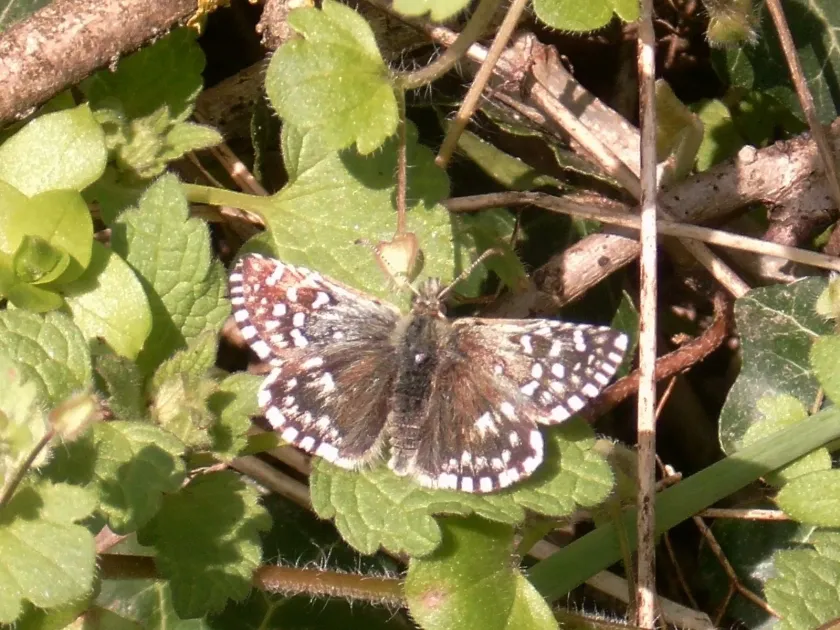
The Mallow skipper (Pyrgus malvae) is a small butterfly belonging to the Hesperiidae family, commonly found in meadows, gardens, and forest edges.
Adults are easily recognized by their dark brownish wings, which feature a distinct pattern of white spots arranged in a chessboard-like fashion.
The body of the butterfly is robust and densely covered with hairs, characteristic of the skipper family, allowing for powerful and rapid flight patterns.
The larvae, or caterpillars, are typically greenish or greyish with dark, well-defined heads and numerous tiny bristles covering their bodies.
While often seen as a beneficial pollinator in some contexts, its larval stage can become a nuisance if it targets cultivated Mallow species.
What it damages
The primary hosts for the Mallow skipper larvae are plants from the Malvaceae family, including wild mallow, marsh mallow, and various garden cultivars.
Caterpillars cause damage by feeding on the leaves, starting with the tender foliage and often skeletonizing the leaf blade between the veins.
This feeding behavior compromises the plant's ability to photosynthesize, which can stunt overall growth and reduce the number of blossoms.
In decorative gardens, the damage can significantly detract from the aesthetic value of the plants as foliage becomes ragged and discolored.
Heavy infestations, although relatively rare, can lead to the defoliation of younger plants if left unmanaged during the peak larval growth stages.
When it appears
The life cycle of Pyrgus malvae typically involves one or two generations per year, largely dependent on local temperature and climate conditions.
The flight period for the first generation begins in the spring, usually from April through June, during which mating and egg-laying occur.
Larvae hatch after about two weeks and begin their development, creating characteristic shelters by folding leaves and securing them with silk threads.
Pupation usually takes place in late summer, and the species frequently overwinters in the pupal stage, hidden within plant debris or leaf litter.
A partial second generation may emerge in late summer if the season has been particularly warm and the host plant supply remains abundant.
Signs of infestation
The most reliable sign of a Mallow skipper infestation is the presence of folded or rolled leaves that are held shut by fine strands of white silk.
Upon opening these leaf shelters, you will typically find the caterpillar or evidence of its feeding, such as ragged holes or missing tissue.
Small deposits of black frass (excrement) visible near the leaf folds are clear indicators that the larva is currently feeding in the area.
Plants affected by the caterpillars often exhibit a lack of vigor, with yellowing edges and visible bite marks along the margins of the foliage.
In cases of severe infestation, the cumulative damage leads to a sparse, unhealthy appearance of the foliage, especially on lower stems.
Control measures
Effective management begins with sanitation; keeping the area free of wild Malvaceae weeds reduces the breeding grounds for the butterflies.
Physical removal of the rolled leaves containing larvae is highly effective for home gardens and helps prevent the spread to larger crops.
For larger infestations, biological controls such as sprays containing Bacillus thuringiensis are recommended as they are selective and environmentally safe.
Avoid excessive use of broad-spectrum chemical insecticides to preserve local populations of predatory insects that naturally control skipper numbers.
- Regular weeding to remove alternative host plants.
- Manual inspection and removal of leaf shelters.
- Use of eco-friendly microbial insecticides.
Taxonomy
- Latin name
- Pyrgus malvae
- Order
- Lepidoptera (butterflies)
- Family
- Hesperiidae
- EPPO code
- PYRGMA
Discussion
No discussions yet — be the first.