
Safflower Skipper
Pyrgus carthami
Description
How to identify
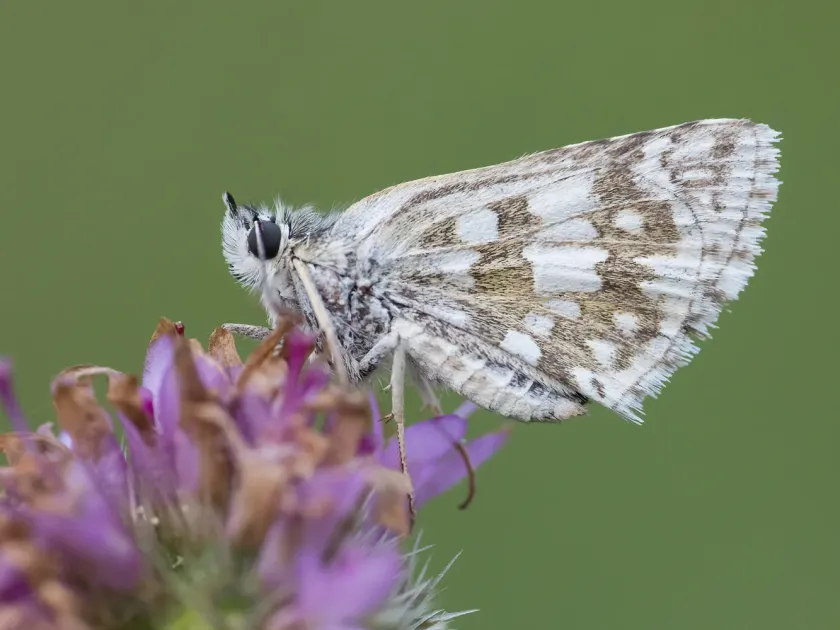
The Safflower Skipper (Pyrgus carthami) is a butterfly belonging to the Hesperiidae family, commonly known as skippers due to their rapid, darting flight pattern.
The adult butterfly features a dark brown wing coloration with distinctive white spots and fringes, spanning approximately 25 to 32 millimeters in width.
Larvae (caterpillars) are dark-colored with short hairs and are known for their habit of creating protective shelters by folding or stitching leaves together.
The pupal stage occurs within these silk-lined leaf shelters, providing a physical barrier against external threats and environmental fluctuations.
These insects are typically found in dry, sunny, and open habitats where their primary host plants, specifically Malvaceae species, are abundant.
What it damages
Caterpillars of the Safflower Skipper primarily feed on the foliage of various Malvaceae plants, causing irregular holes and skeletonization of the leaf tissue.
Heavy infestations can lead to significant defoliation, which hampers the plant's ability to photosynthesize and results in reduced overall vigor.
While often confined to weeds, larvae may migrate to related agricultural crops, potentially impacting the health and yield of younger plants.
Feeding activity often weakens the plant's immunity, making it more susceptible to opportunistic secondary infections by bacteria or fungi.
Damage is most pronounced in localized clusters where eggs have been laid, leading to distinct patches of ruined foliage within a field.
When it appears
Adults are generally observed from late spring through mid-summer, depending on the latitude and local climatic conditions of the area.
The larval phase is most active during the peak growth season, coinciding with the lush development of host plant leaves in mid-summer.
The species typically overwinters in the larval stage, tucked away in silk-enclosed leaf shelters on or near the ground surface.
The timing of emergence in the spring is strictly regulated by temperature accumulation, marking the beginning of the new life cycle for the population.
In some regions, environmental conditions may support a second generation, extending the period of potential pest activity until early autumn.
Signs of infestation
The presence of tightly folded or stitched leaves is the primary indicator that Safflower Skipper larvae are actively feeding on the plant.
Small holes or jagged edges along the leaf margins are tell-tale signs of the larvae's feeding activity within the protective shelters.
Observing the rapid, jerky flight of adult butterflies during sunny midday hours provides a warning of potential future larval populations.
The accumulation of frass (larval excrement) within or below the leaf shelters is a definitive sign of active infestation on the vegetation.
Growth stunting in specific areas of the field serves as a late-stage indicator that the photosynthetic capacity of the plants has been compromised.
Control measures
Effective management begins with strict weed control, targeting Malvaceae species that serve as primary reservoirs for the insect population.
Mechanical tillage practices after the harvest can effectively disrupt the overwintering sites of the larvae and pupae within the soil.
Biological control agents, specifically those targeting Lepidoptera larvae, offer a sustainable way to manage outbreaks without harming beneficial insects.
Chemical intervention should be reserved as a last resort, applied only when population levels threaten the economic viability of the crop.
- Removal of host weeds.
- Proper crop rotation cycles.
- Use of biological insecticides.
- Field monitoring during peak flight periods.
Taxonomy
- Latin name
- Pyrgus carthami
- Order
- Lepidoptera (butterflies)
- Family
- Hesperiidae
- EPPO code
- PYRGCA
Discussion
No discussions yet — be the first.