
Armorican grizzled skipper
Pyrgus armoricanus
Description
How to identify
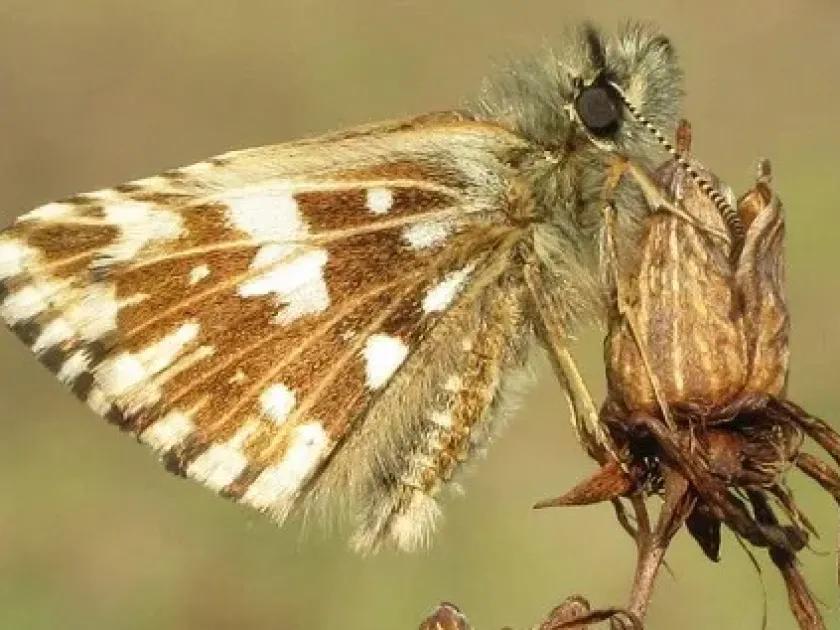
The Armorican grizzled skipper (Pyrgus armoricanus) is a butterfly belonging to the Hesperiidae family. It has a wingspan of approximately 25–30 mm, making it a relatively small species within its group.
The upper side of the wings is characterized by a dark brownish color adorned with white spots and bands. The underside of the hindwings is lighter in color, often featuring a subtle grey or greenish tint for camouflage.
The body of the butterfly is robust and densely covered with fine hairs, which is typical for skippers. They possess a broad head with large eyes and club-shaped antennae used for environmental sensing.
Larvae are typically greenish to brownish in color with a darker head capsule. They are known for their secretive nature, often hiding within foliage to minimize exposure to predators.
The pupal stage occurs within a flimsy silk cocoon woven between folded leaves of the host plant, providing a level of physical defense against external environmental threats.
What it damages
The primary host plants for Pyrgus armoricanus include various members of the Rosaceae family, most notably wild and cultivated strawberries (Fragaria) and cinquefoils (Potentilla).
The damage is caused by larvae feeding on the leaf tissues. This grazing activity reduces the plant's photosynthetic surface area, which can negatively impact the overall vigor and yield of the plant.
In cases of high infestation density, the larvae can consume significant portions of the foliage, leading to visible stunted growth and reduced fruit quality in berry production.
Young plants are particularly sensitive to this damage, as their limited leaf mass means that even moderate larval activity can severely disrupt their metabolic processes.
While often considered a minor pest, in specialized nursery environments or berry plantations, their presence can necessitate management efforts to prevent cumulative economic losses.
When it appears
Adult butterflies are typically on the wing throughout the warmer months, usually appearing from late May through August, depending on local temperature and climate zones.
Depending on the latitude and climate, this species may complete one or two generations per year. Multiple generations can lead to prolonged periods of potential damage during the growing season.
Larval activity is most intense during the mid-summer period, when environmental temperatures are optimal for their development and the host plants are in full growth.
The species typically overwinters as a late-instar larva or pupa, seeking refuge in the leaf litter, plant debris, or soil surface to survive cold winter temperatures.
The emergence of adults and the start of larval feeding in the spring are closely aligned with the initiation of host plant vegetation, ensuring immediate access to nutrients.
Signs of infestation
The most distinct signs of infestation are irregular, notched leaf margins where larvae have consumed the tissue. These notches often give the leaves a ragged appearance.
Larvae often fold or tie leaves together using silk threads, creating small protective shelters. Identifying these folded leaves is a reliable method for locating the pest.
The presence of fine, dark granular frass (excrement) deposited on the leaves below the larval shelters is a clear indication of recent feeding activity.
Leaf yellowing or premature wilting of specific leaflets, despite sufficient soil moisture, can suggest that the plant's vascular or photosynthetic systems have been damaged by larval feeding.
Careful scouting of the lower canopy and base of the plants is essential, as larvae tend to remain hidden within the dense vegetation during the daylight hours.
Control measures
Effective management begins with good horticultural practices, such as removing weeds and crop debris, which may serve as overwintering sites for the larvae or pupae.
Maintaining proper plant spacing and crop rotation helps improve airflow within the plantation, creating a less favorable microclimate for the larvae to develop.
Biological controls, such as the application of Bacillus thuringiensis or the introduction of native parasitic wasps, can be highly effective in reducing pest pressure.
If economic thresholds are exceeded, targeted application of soft, selective insecticides may be employed to manage the population while protecting beneficial insects.
- Sanitation of garden areas by clearing away dead leaves in autumn.
- Encouraging natural predators such as birds and beneficial insects in the field.
- Regular field monitoring every 10-14 days during the active growth period.
Taxonomy
- Latin name
- Pyrgus armoricanus
- Order
- Lepidoptera (butterflies)
- Family
- Hesperiidae
- EPPO code
- PYRGAR
Discussion
No discussions yet — be the first.