
Birch prominent
Pygaera strigosa
Description
How to identify
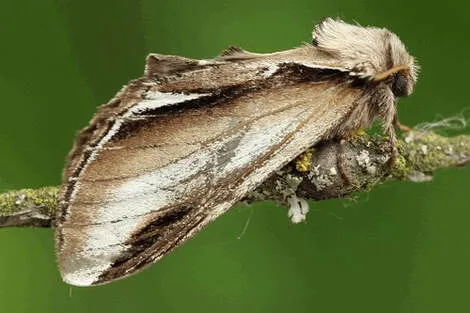
The birch prominent (Pygaera strigosa) is a moth species belonging to the Notodontidae family. These insects are known for their distinct camouflage, which allows them to blend perfectly with birch bark during the day.
The adult moth typically has a wingspan of 30 to 40 mm, with grayish or brownish forewings featuring characteristic cross-lines. The body shape is robust and aerodynamic, typical of the prominent moth group.
Like all Lepidoptera, they undergo complete metamorphosis: egg, larva (caterpillar), pupa, and adult. Each stage has specific ecological requirements, influencing the seasonal life cycle of the species.
The larvae are notable for their unique appearance, often possessing humps or tubercles on their abdominal segments. These structures, along with their color patterns, serve as protection against avian predators.
They overwinter as pupae, usually found in leaf litter or shallow soil. This pupal diapause is a critical adaptation for surviving cold climates until the host plants bud out in the spring.
What it damages
The primary host plant for this species is the birch (Betula). Larval feeding is exclusively focused on the foliage of these trees, which can be devastating if populations reach outbreak levels.
Caterpillars feed on the leaf tissues, initially creating small notches (skeletonizing) and eventually consuming the entire leaf blade, leaving only the primary veins intact.
Severe defoliation significantly reduces the tree's photosynthetic capacity, leading to weakened tree vigor and reduced annual increment growth, which is critical in forestry management.
In ornamental and urban landscapes, the aesthetic impact of skeletonized or stripped birch branches can be significant, leading to premature leaf drop and tree stress.
Cumulative damage over several growing seasons can render birch trees highly susceptible to secondary infestation by bark beetles and other wood-boring insects, potentially leading to tree mortality.
When it appears
The adult flight period typically occurs in late spring and early summer, triggered by rising temperatures and the phenological stage of birch bud burst, which serves as the optimal time for egg-laying.
Eggs are deposited on the undersides of the leaves. Once hatched, the larvae begin a period of intensive feeding that spans the mid-summer months, primarily through July and August.
As the season progresses, the caterpillars reach their final instar, drop to the forest floor, and pupate. This stage marks the end of their activity for the current growing season.
Depending on geographical latitude, the species may complete one or two generations per year. Warmer southern regions are more prone to multiple generations, which complicates management efforts.
Monitoring for adults should begin early in the season using pheromone traps or light traps to determine the exact timing for implementing necessary control measures.
Signs of infestation
One of the earliest signs is the appearance of irregularly shaped holes and chewed leaf margins. These feeding traces are highly indicative of early larval stage presence.
The larvae themselves are often found on the undersides of leaves or along the petioles, where they utilize their color patterns to camouflage against the tree's natural backdrop.
Fecal pellets (frass) accumulating on lower leaves or on the ground surface underneath the canopy serve as a strong indicator of an active and feeding caterpillar population above.
General thinning of the canopy and yellowing of the leaves by mid-summer are clear signs of widespread damage, suggesting that the population density has reached an economic threshold.
Presence of fine silken webbing between leaves, sometimes used by larvae to create shelters or consolidate food resources, is a diagnostic feature to look for during routine tree health inspections.
Control measures
Integrated Pest Management (IPM) is the most effective approach. This includes regular scouting, threshold monitoring, and the use of targeted biological controls where possible.
Biological insecticides based on Bacillus thuringiensis are highly effective against young larvae while posing minimal risk to non-target beneficial insects in the ecosystem.
Chemical applications using systemic or contact insecticides should be reserved for high-value areas or when monitoring confirms that population levels are likely to cause irreparable tree harm.
Autumn maintenance, such as the removal of leaf litter or light soil cultivation around the base of the trees, helps to disturb or destroy overwintering pupae, reducing the next year's population.
- Targeted insecticide spraying during the peak hatching period.
- Encouraging natural predators such as birds and parasitoid wasps.
- Monitoring pheromone traps to time treatments correctly.
Taxonomy
- Latin name
- Pygaera strigosa
- Order
- Lepidoptera (butterflies)
- Family
- Notodontidae
- EPPO code
- PYGAST
Discussion
No discussions yet — be the first.