
Poplar kitten moth
Pygaera apicalis
Description
How to identify
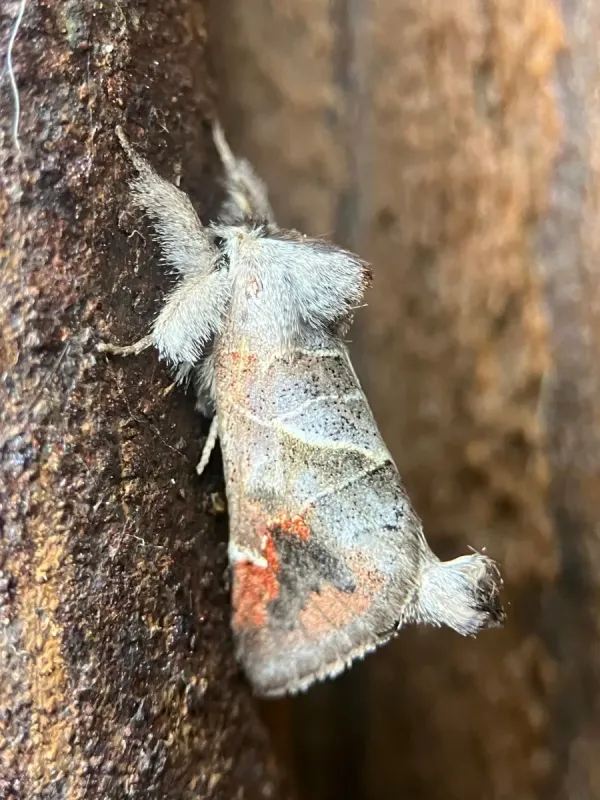
The Poplar kitten moth (Pygaera apicalis) is a species of moth belonging to the Notodontidae family. As a lepidopteran, it undergoes a complete metamorphosis, transitioning through egg, larva, pupa, and adult stages.
Adult moths are characterized by a specific wing pattern featuring a prominent pale spot at the apex, which is the primary feature for field identification. They are nocturnal and are attracted to light sources at night.
The larvae, often referred to as caterpillars, are notable for their distinct coloration and colonial behavior during the early larval instars. They possess specialized defense mechanisms to ward off predators in their natural habitat.
Pupation typically occurs in cocoons hidden within bark crevices, leaf litter, or shallow soil. This stage is crucial for overwintering, allowing the species to survive colder months before the spring emergence.
The biological cycle is heavily influenced by regional climate. In favorable conditions, the species can produce multiple generations annually, leading to rapid population growth and potential outbreaks in tree nurseries.
What it damages
The primary hosts for this species include members of the Salicaceae family, specifically various species of poplar and willow. These trees serve as both food sources and breeding sites for the moth.
The damage is caused by the larvae feeding on the foliage. While young larvae may only graze on leaf surfaces, older caterpillars can cause total skeletonization, leaving only the main veins intact.
High infestation levels lead to significant defoliation of the crown. This reduces the photosynthetic capacity of the tree, causing stress, stunted growth, and a decrease in wood production quality.
Young trees in nurseries are particularly vulnerable. Heavy feeding can lead to dieback of branches, weakened overall immunity, and, in severe cases, the mortality of young saplings due to repeated defoliation.
In addition to direct damage, the weakened trees become more susceptible to secondary pathogens and environmental stressors such as drought, which can ultimately lead to the decline of local tree stands.
Signs of infestation
Early signs of infestation include the presence of chewed leaf edges or small, irregular holes in the middle of the leaf blades. Careful inspection of the canopy can reveal the early stages of larval feeding.
Egg clusters are typically found on the underside of leaves and are a key indicator of potential pest pressure. Finding these clusters early is vital for preventing widespread damage to the tree canopy.
Frass (larval excrement) accumulation on the ground or on lower leaves is a clear visual sign of high larval activity. This is often the first thing noticed during a walk-through of an affected nursery or park.
The visibility of the larvae themselves, especially when grouped together, is a definitive diagnostic feature. Their movement or feeding activity can often be heard in quiet environments during peak feeding hours.
Overwintering signs include remnants of cocoons in bark cracks or in the duff layer beneath the host tree. Monitoring for these during the dormant season helps predict potential activity for the following spring.
Control measures
Manual removal of egg clusters and larval colonies is an effective strategy for small-scale applications, such as in private gardens or small nursery sections, ensuring no chemicals are released.
Biological control agents, specifically products derived from Bacillus thuringiensis, are highly effective against these caterpillars. They offer a selective approach that protects beneficial insects while managing the pest.
Chemical control involving systemic insecticides is recommended during severe outbreaks where biological methods are insufficient. Treatments must be timed to coincide with early larval development for maximum efficacy.
Improving general tree health through proper fertilization and adequate watering significantly enhances the plant's ability to recover from herbivore damage. Maintaining proper planting density improves airflow and tree resilience.
Integrated Pest Management (IPM) strategies emphasize the preservation of natural predators like predatory beetles, wasps, and birds. These natural controls play a significant role in stabilizing the population long-term.
Taxonomy
- Latin name
- Pygaera apicalis
- Order
- Lepidoptera (butterflies)
- Family
- Notodontidae
- EPPO code
- PYGAAP
Discussion
No discussions yet — be the first.