
Ptyelus goudoti
Ptyelus goudoti
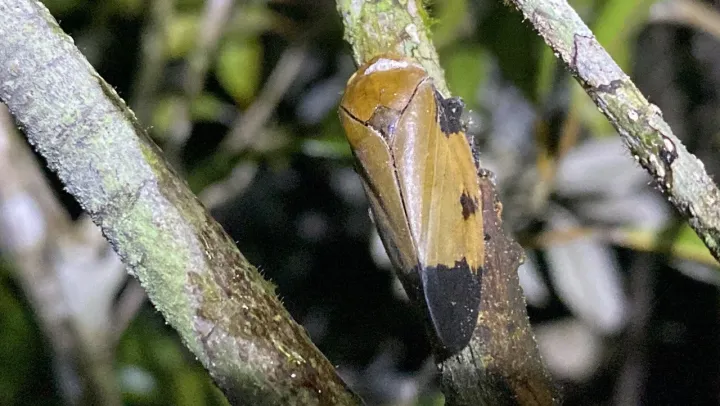
Description
How to identify
Ptyelus goudoti belongs to the family Aphrophoridae, commonly known as spittlebugs or froghoppers, within the order Hemiptera.
The insect is characterized by its jumping ability, which is facilitated by strong hind legs, making it difficult to capture or observe closely in the field.
The larvae are particularly well-known for creating protective frothy masses that resemble saliva, which shield them from predators and environmental stress.
These nymphs are usually found on the stems or leaf axils of host plants, where they feed continuously to sustain their rapid development.
The adult stage has a camouflaged coloration, often blending seamlessly with the plant stems, which serves as a primary survival strategy.
What it damages
This pest causes direct damage by inserting its stylet into the vascular system of the host plant to feed on nutrient-rich sap.
Severe infestations lead to the wilting of terminal shoots, as the plant loses vital fluids and nutrients required for healthy growth.
Growth retardation is a common symptom, as the plant redirects energy to compensate for the continuous loss of sap from the infected tissues.
Deformation of young leaves is frequently observed, which impairs the plant's ability to perform photosynthesis effectively.
In addition to direct feeding damage, the sugary excretions of the insect promote the growth of sooty mold, further reducing plant vigor.
When it appears
The activity cycle of Ptyelus goudoti is closely correlated with the availability of succulent plant tissue during the spring and summer months.
Larvae appear in early spring when host plants initiate active growth, providing the necessary sap flow for the nymphs to start their cycle.
Adults typically emerge during the mid-summer period, when environmental temperatures are optimal for flight and mating activities.
The population density peaks during warm, moist conditions which are favorable for both the development of nymphs and the proliferation of the host plants.
As the season progresses toward autumn, the activity declines as the insects move into their overwintering stage or complete their life cycle.
Signs of infestation
The presence of white, bubbly foam on the stems of plants is the most diagnostic indicator of a Ptyelus goudoti infestation.
Leaf yellowing and stunted shoot development often accompany the presence of foam, signaling significant stress on the host plant.
Sticky residue on the leaves is another common sign, resulting from the accumulation of honeydew produced during the feeding process.
Close inspection of the leaf axils or stem junctions will often reveal the nymphs hiding within the spittle mass during the daytime.
Premature leaf drop or the failure of flower buds to open are late-stage symptoms indicative of a heavy, unchecked infestation.
Control measures
Cultural control measures, such as removing weeds and thinning out dense vegetation, help reduce the suitable habitats for the pest.
On a small scale, washing the plant with a strong stream of water can physically remove the spittle masses and the larvae hiding within them.
Systemic insecticides are the most effective chemical intervention, as they are absorbed by the plant and target the feeding larvae directly.
Integrated Pest Management (IPM) practices should emphasize the preservation of natural predators, such as ladybugs and certain wasp species.
Regular monitoring of plants during the early vegetative stage is crucial for early detection and preventing the population from reaching economic injury levels.
Taxonomy
- Latin name
- Ptyelus goudoti
- Order
- Hemiptera (bugs, aphids, leafhoppers)
- Family
- Cercopidae
- EPPO code
- PTYEGO
Discussion
No discussions yet — be the first.