
Meadow spittlebug
Ptyelus
Description
How to identify
The meadow spittlebug (Philaenus spumarius) belongs to the order Hemiptera and the family Aphrophoridae. These small insects are known for their remarkable jumping ability and their unique larval stage.
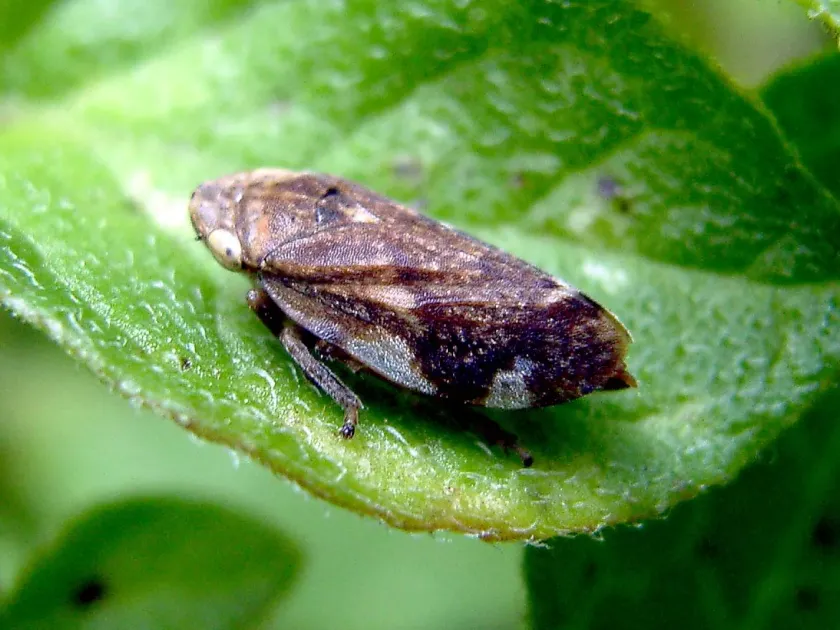
Adults typically measure about 6-7 mm in length. Their coloration is highly polymorphic, ranging from pale yellow to dark brown, often featuring stripes or spots that provide excellent camouflage against foliage.
The larvae are easily distinguished by the frothy, spit-like mass they produce. This "spittle" acts as a protective shield against predators, parasites, and desiccation from the sun and wind.
Inside the protective foam, the soft-bodied nymph feeds on plant sap. The foam is created by the nymph forcing air into its liquid excrement, creating stable bubbles that persist throughout the day.
Eggs are typically laid in the stems or near the roots of host plants in autumn. These eggs remain dormant during the winter months, with nymphs emerging in early spring as temperatures rise.
What it damages
This pest is a generalist feeder, known to attack hundreds of different plant species. Common hosts include strawberries, roses, chrysanthemums, legumes, and various ornamental nursery stock.
In strawberry cultivation, nymphs feed on the flower stalks and young fruit buds. This causes stunted fruit development, deformity, and a significant reduction in total yield and commercial value.
Ornamental plants often suffer from distorted leaf growth and curled stems. Because the insects tap into the xylem, the host plant loses vital water and nutrients, leading to a decline in overall health.
Heavy infestations leave the plant vulnerable to secondary infections. As the nymph probes the tissues, it creates an entry point for various plant pathogens, including fungi and bacteria.
Beyond physical damage, the meadow spittlebug is a known vector for several plant diseases, including the bacteria that cause leaf scorch and various phytoplasma-related disorders.
When it appears
The life cycle begins in spring when the eggs hatch. The peak period for observing spittle masses is typically late spring, specifically during the months of May and June in temperate climates.
The larval stage lasts for approximately one month. During this period, the insects remain relatively stationary, focusing exclusively on feeding and maintaining their protective foam bubbles.
Adult spittlebugs usually emerge in early summer. Unlike the larvae, adults are highly mobile, frequently flying and jumping between host plants, which makes manual control much more difficult.
The species generally completes one generation per year. Adults remain active throughout the summer and autumn months, continuing to feed on sap until the first hard frosts signal the end of the season.
Before winter, the adult females lay their eggs in protected crevices near the plant base. These eggs are hardy and adapted to withstand freezing temperatures, ensuring the population survives until the next year.
Signs of infestation
The most iconic sign of infestation is the appearance of white, frothy clumps on the stems or leaf axils. These look like saliva and are very easy to spot upon casual inspection.
- Leaf curling and stunted shoot development.
- Yellowing or chlorotic patches on the foliage.
- Deformed or undersized flower buds.
- Premature flower drop or wilting.
- Visible sticky residue on leaves from insect secretions.
By removing the spittle mass, you can usually find the small, pale green or yellow nymph hidden inside. This is the stage where the insect does the most damage to the plant tissue.
A plant suffering from a severe infestation often looks messy and unhealthy. The accumulation of froth and plant sap can also encourage the growth of black sooty mold on the leaves.
Regular scouting of gardens and nurseries during late spring is critical. Spotting the first foam nests allows for intervention before the larvae mature into mobile adults.
Control measures
For small-scale infestations in home gardens, the simplest and most effective method is to wash the spittle masses away with a sharp stream of water from a garden hose.
When infestation levels are high, systemic insecticides containing compounds like imidacloprid or pyrethroids can be effective. These are absorbed by the plant and kill the nymphs hidden within their foam.
Applications should be timed to reach the nymphs during the morning hours. Ensure full coverage of the plant, especially where leaves meet the stem, as this is where nymphs prefer to hide.
Organic control methods, such as applying insecticidal soaps or neem oil, can be used to manage nymph populations. These are less persistent than synthetic chemicals but effective if applied consistently.
Good garden hygiene, including the removal of weeds and debris, helps minimize habitat for overwintering eggs. Ensuring proper plant spacing also reduces the humidity levels that favor spittlebug survival.
Taxonomy
- Latin name
- Ptyelus
- Order
- Hemiptera (bugs, aphids, leafhoppers)
- Family
- Cercopidae
- EPPO code
- PTYESP
Discussion
No discussions yet — be the first.