
Chinese buprestid beetle
Ptosima chinensis
Description
How to identify
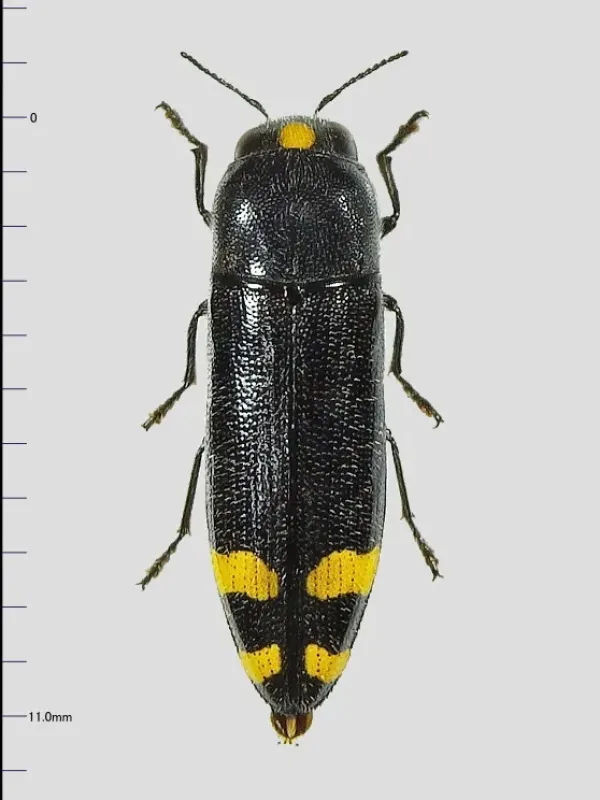
The Chinese buprestid beetle (Ptosima chinensis) belongs to the order Coleoptera and the family Buprestidae, commonly known as jewel beetles. These insects are known for their iridescent, metallic coloration and robust, elongated body structure.
The adult beetle typically displays dark metallic hues accented with yellow or orange markings. The larvae are distinctively apodous (legless) with a flattened thoracic region, specialized for navigating and feeding within the restrictive environment under tree bark.
What it damages
This pest primarily infests trees within the Rosaceae family. Its host range includes economically significant fruit trees such as apple, pear, plum, cherry, and apricot, often focusing on mature or stressed specimens.
The damage is caused by larvae tunneling through the cambium and xylem layers. These galleries disrupt the flow of water and nutrients, which can lead to branch dieback, crown thinning, and, in severe cases, the eventual death of the entire tree.
When it appears
Adult emergence typically occurs during the late spring and early summer months, aligning with the peak growth cycle of their host plants. During this time, adults are active in the canopy, feeding on foliage and twigs.
The female beetle deposits eggs in bark crevices, where they hatch into larvae that immediately bore into the tree. The life cycle can be prolonged, with larvae spending multiple seasons within the host wood before completing pupation.
Signs of infestation
Visual confirmation of an infestation often involves finding D-shaped exit holes on the bark surface. Foliar symptoms include wilting, yellowing, and premature leaf drop on affected limbs.
Internal examination reveals winding tunnels filled with frass, a mixture of excrement and wood particles. Bark splitting or localized necrosis around the entry points is also a common indicator of borer activity.
Control measures
Managing the Chinese buprestid beetle requires a focus on tree vigor and sanitation. Removing infested limbs or heavily colonized trees is essential to prevent the spread of the population to neighboring healthy plants.
Cultural practices such as adequate irrigation and fertilization help trees maintain a strong defense against boring insects. In high-pressure areas, professional arborists may recommend targeted insecticide applications during the adult emergence window.
Taxonomy
- Latin name
- Ptosima chinensis
- Order
- Coleoptera (beetles)
- Family
- Buprestidae
- EPPO code
- PTOSCH
Discussion
No discussions yet — be the first.