
Agrilus
Agrilus
Description
How to identify
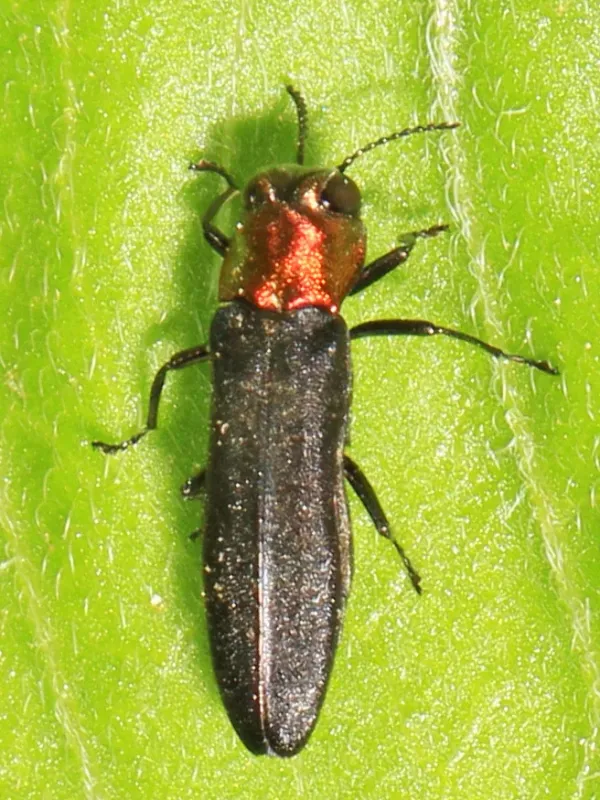
The genus Agrilus, commonly known as metallic wood-boring beetles or flatheaded borers, belongs to the family Buprestidae. These beetles are characterized by their slender, elongated bodies and distinct metallic sheen, which can range from bronze to emerald green.
Adult beetles typically measure between 5 and 15 mm in length. Their head is retracted into the pronotum, a structural feature that aids in the rapid movement of the beetle and protects it while navigating under bark crevices.
The larvae are legless, white to yellowish, and have a significantly flattened anterior segment, which gives them the appearance of a hammer or a mace. This morphology is perfectly adapted for carving flat tunnels beneath the bark.
As part of the order Coleoptera, these insects are among the most destructive pests of woody plants worldwide. They possess complex sensory systems, allowing them to locate stressed host trees via chemical signals emitted by the plants.
The life cycle usually spans one to two years, depending on the species and environmental temperature. Development from egg to adult takes place largely within the tree, making them difficult to detect until significant damage has occurred.
What it damages
Agrilus species infest a vast range of broad-leaved trees, including ash, birch, oak, willow, and various species of the Rosaceae family. They are known to be aggressive, often targeting trees that are otherwise weakened by drought or mechanical injury.
The damage is primarily caused by larvae feeding on the phloem and cambium layers. By creating galleries that disrupt the vascular system, they effectively cut off the flow of nutrients and water from the roots to the canopy.
This disruption leads to the gradual decline of the tree, starting with thin foliage and eventually leading to crown dieback. In severe infestations, the entire tree can perish within a few growing seasons due to complete girdling.
Beyond direct mortality, the galleries created by these beetles serve as entry points for various wood-decaying fungi and secondary pathogens, further compromising the structural integrity and long-term health of the wood.
- Stunted growth and premature yellowing of leaves.
- Decreased wood quality, rendering it unsuitable for timber or commercial use.
- Increased susceptibility to wind-throw and branch failure.
Signs of infestation
The most diagnostic sign of an Agrilus infestation is the presence of D-shaped exit holes on the bark. These holes are perfectly shaped to match the beetle's flattened body, appearing when the adult exits the tree.
Bark cracks and localized necrosis often appear over the infested areas. As the larvae tunnel beneath, the pressure and destruction of cambial tissue cause the bark to become brittle, sometimes resulting in vertical splitting or peeling.
Canopy thinning is a tell-tale sign of advanced colonization. Leaves will become smaller than normal, wilt, and drop early in the season. Over time, the crown shows significant dieback, starting from the outermost branches and moving toward the center.
Removing a section of the bark reveals galleries packed with fine, frass-filled sawdust. These tunnels often zigzag in complex patterns, physically obstructing the sapwood and killing the tree's vital transport pathways.
On certain tree species, especially fruit trees, external symptoms may include "weeping" or gumming at the entry sites, as the tree attempts to defend itself by pushing out defensive resins to encapsulate the larvae.
Control measures
Maintaining tree vigor is the first line of defense. Proper irrigation during dry spells and adequate fertilization reduce the stress signals that attract adult beetles to the host trees, making them less likely to be targeted.
Sanitation is critical; all infested branches or entire trees must be removed and destroyed immediately. Burning or chipping the material during the non-flight season prevents the emergence of the next generation of adults.
Systemic insecticides, particularly those applied as trunk injections, have shown high efficacy. These treatments deliver the poison directly into the plant's vascular system, killing larvae as they feed on the sap and tissues.
Monitoring populations using pheromone or sticky traps helps in timing insecticide applications to the peak flight period of the adults. This targeted approach is essential for reducing the use of unnecessary chemicals in urban landscapes.
Biological control, including the release of specific parasitoid wasps that prey on Agrilus eggs or larvae, remains a key research area. Protecting and encouraging these natural enemies is a sustainable way to manage beetle populations in forests.
Taxonomy
- Latin name
- Agrilus
- Order
- Coleoptera (beetles)
- Family
- Buprestidae
- EPPO code
- AGRLSP
Discussion
No discussions yet — be the first.