
Oak splendour beetle
Agrilus arcuatus
Description
How to identify
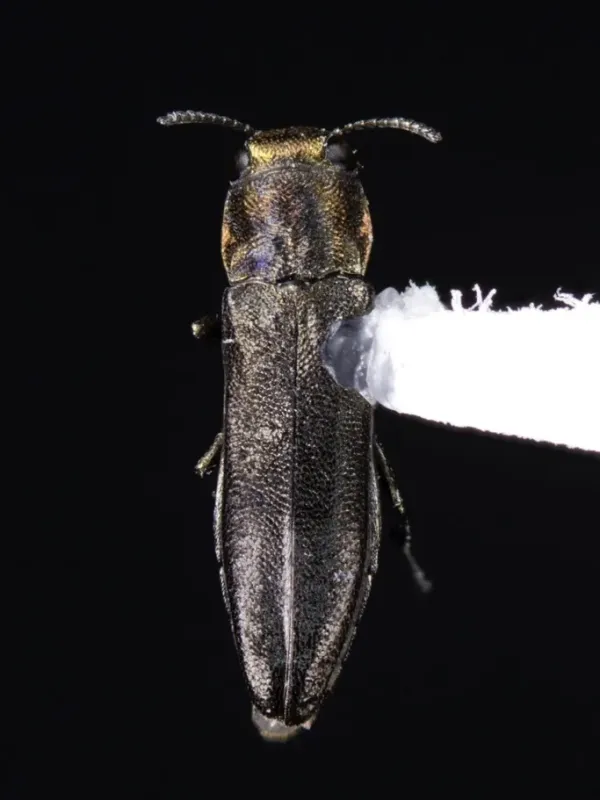
The Oak splendour beetle (Agrilus arcuatus) belongs to the Buprestidae family, order Coleoptera. Adult beetles are characterized by a slender, metallic body, typically measuring 6 to 9 mm in length, with a bronze-green or copper-brown coloration.
The larvae are legless and white, featuring a flattened thorax, which is a structural adaptation for navigating the narrow spaces between the bark and the wood of host trees.
Pupation occurs within a specially constructed chamber in the wood or inner bark. The adult stage, following metamorphosis, emerges through distinct exit holes.
The biological cycle is typically univoltine, meaning one generation per year, though development may be delayed in colder climates or less favorable conditions.
As a xylophagous insect, this species plays a specific ecological role but is considered a significant pest when populations reach outbreak levels in commercial oak stands.
What it damages
The primary hosts of this beetle are species of the genus Quercus, particularly the pedunculate oak. It prefers weakened or drought-stressed trees but can infest seemingly healthy trees during high population densities.
Larval feeding activity occurs in the cambium layer. By mining horizontal or zigzag galleries, larvae effectively disrupt the phloem and xylem, which interferes with the nutrient and water transport of the tree.
Heavy infestations result in branch dieback, thinning of the canopy, and ultimately, the death of the entire tree as the transport system is progressively girdled.
Secondary colonization by other wood-boring insects and pathogenic fungi often occurs on trees already stressed by Agrilus feeding, leading to rapid deterioration of forest stands.
Economic damage is profound, resulting in timber loss and the degradation of natural ecosystems, especially in regions prone to changing precipitation patterns.
When it appears
Adult beetles typically emerge in late spring or early summer, synchronized with the warmer temperatures that facilitate mating and oviposition on host tree trunks.
The larvae spend the majority of the year feeding and developing beneath the bark, transitioning through several instars before preparing for overwintering.
Overwintering takes place in the larval stage within the wood. The transition to the pupal stage occurs in the early spring, marking the preparation for the next cycle of adult emergence.
The activity of adults is strictly temperature-dependent; prolonged warm periods during the flight season significantly increase the success rate of reproduction.
Environmental stressors such as drought serve as catalysts for population growth, as stressed trees provide less chemical resistance to larval development.
Signs of infestation
The most diagnostic sign of infestation is the appearance of D-shaped exit holes on the bark, left behind when the adult beetles emerge from the wood.
Crown dieback, where the top branches of the oak begin to wither prematurely, is a clear visual indicator that the tree's vascular system has been compromised by larval mining.
Bark cracking or localized depressions on the trunk often correspond to the internal galleries created by larvae feeding on the cambium layer.
Increased woodpecker activity on specific trunks is often a secondary sign, as these birds seek out the larvae beneath the bark.
Shedding of bark and the presence of fine sawdust (frass) at the base of the tree are indicators of advanced infestation within the wood structure.
Control measures
Sanitary forest management is the primary control method, involving the identification and prompt removal of infested trees before the adult beetles emerge.
Maintaining forest hygiene is crucial; this includes the proper disposal or processing of wood residues to prevent them from acting as breeding grounds.
Encouraging tree health through silvicultural practices, such as proper spacing and water management, helps increase the natural resilience of oaks against beetle attacks.
While chemical applications on trunks can target adults during the flight period, this approach is often limited to high-value trees or urban forestry settings.
- Use of pheromone traps for monitoring population levels.
- Promotion of natural predators and parasitoids within the ecosystem.
- Reforestation with diverse tree species to reduce the susceptibility of stands to host-specific pests.
Taxonomy
- Latin name
- Agrilus arcuatus
- Order
- Coleoptera (beetles)
- Family
- Buprestidae
- EPPO code
- AGRLAF
Discussion
No discussions yet — be the first.