
Ptilophora plumigera
Ptilophora plumigera
Description
How to identify
Ptilophora plumigera, commonly known as the plumed prominent, is a moth belonging to the family Notodontidae. The adult moth has a wingspan of 35 to 45 mm, with forewings varying in color from yellowish-tan to reddish-brown, marked with light veins and crosslines.
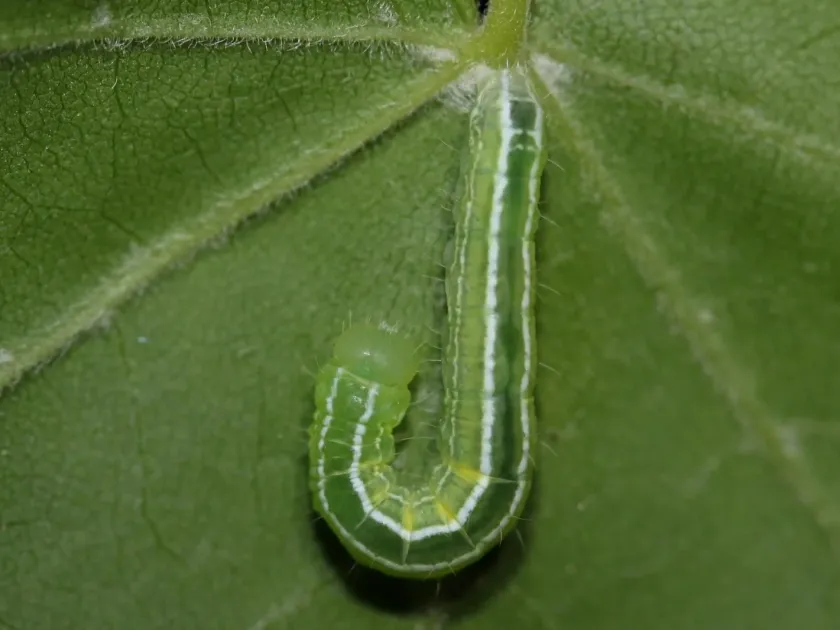
The larva of this pest reaches a length of 40-50 mm. Its body is bright green with three light longitudinal dorsal stripes, providing excellent camouflage among the foliage of its host plants.
A distinctive feature of this species is the plumose antennae found in males, which is reflected in its scientific name. Females have filiform antennae and are generally larger in body size compared to males.
The species has a univoltine life cycle. The overwintering stage is the egg, which is laid by the female either singly or in small clusters on the twigs of host trees.
Pupation occurs in the soil within a silken cocoon, where the pest spends the summer months, waiting for autumn to emerge as an adult moth.
What it damages
The primary food source for the larvae of Ptilophora plumigera consists of various maple species, particularly field maple and Norway maple. In some cases, the pest may attack other deciduous tree species.
Young caterpillars start feeding immediately after bud burst, consuming the tender leaf tissue. As they grow, their appetite increases, leading to skeletonization or complete destruction of the foliage.
Mass infestations lead to severe weakening of the trees. Affected individuals lose a significant portion of their photosynthetic surface, which stunts their growth and reduces their resistance to diseases.
In parklands and nurseries, the activity of this moth can cause premature leaf drop. This negatively impacts the aesthetic value of the plantings and the overall physiological health of the trees.
While the plumed prominent rarely causes total mortality of mature trees, repeated outbreaks over several years significantly deplete the tree's energy reserves.
When it appears
The flight period of the moths occurs in autumn, from late October through the heavy frosts of November. This makes the species unique among many other Lepidoptera.
The eggs remain on the tree branches throughout the winter, enduring freezing temperatures. Embryonic development concludes in the spring at the time of bud burst.
Caterpillars are active during May and June. This period marks the peak of their feeding, when larvae rapidly gain mass by consuming fresh young leaves.
Pupation takes place in June. The larvae descend from the tree canopies into the leaf litter or topsoil, where they form cocoons and remain in diapause until autumn.
Thus, the insect's life cycle is strictly synchronized with the phenology of its host trees, ensuring maximum survival success for the next generation.
Signs of infestation
The first sign of infestation is the appearance of small holes in maple leaves in late spring. As the larvae grow, the damage becomes more noticeable, with leaf margins appearing heavily chewed.
During canopy inspections in June, one can spot the caterpillars themselves, which often blend in with leaf petioles and veins due to their protective coloration.
The presence of frass (droppings) in the form of small dark granules beneath the tree is also an indicator of active feeding by the larvae in the canopy.
A reduction in canopy density and "transparency" of the foliage in early summer are clear indicators for conducting insect population monitoring.
During years of outbreaks, trees can appear severely defoliated by mid-June, necessitating immediate intervention.
Control measures
For controlling Ptilophora plumigera in forests and parks, biological control methods are used, including the application of entomopathogenic bacterial agents.
If population density is high, the application of systemic or contact insecticides approved for use in urban forestry and tree care is justified.
- Spraying trees during the period when larvae hatch from eggs.
- Encouraging insectivorous birds that actively prey on the caterpillars.
- Preserving natural enemies such as parasitic wasps.
Good silvicultural practices include removing leaf litter and tilling the soil around the base of trees, which can destroy a portion of the pupae located in the ground.
Regular monitoring of adult moth populations using light traps in the autumn allows for forecasting the level of risk for the following growing season.
Taxonomy
- Latin name
- Ptilophora plumigera
- Order
- Lepidoptera (butterflies)
- Family
- Notodontidae
- EPPO code
- PTILPL
Discussion
No discussions yet — be the first.