
Prominent moth
Ptilodon
Description
How to identify
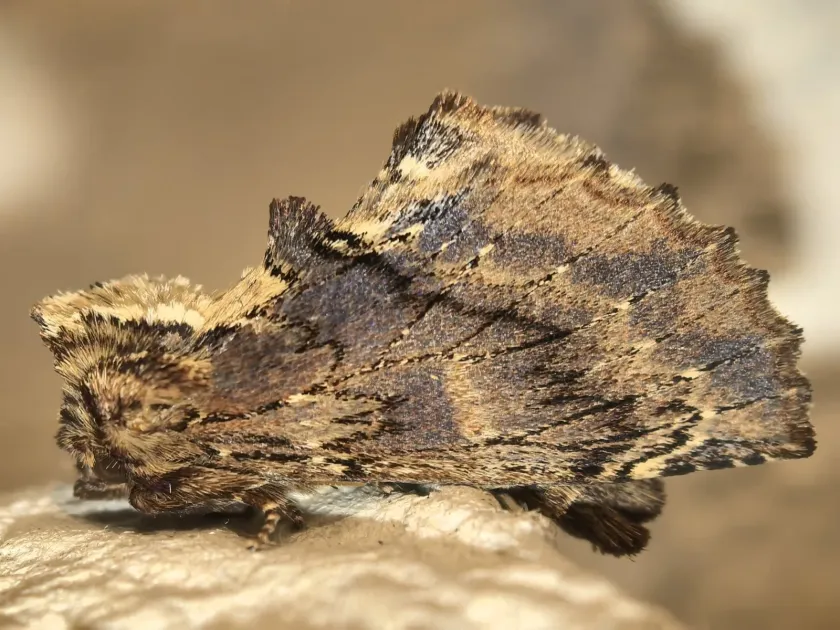
Prominent moths (genus Ptilodon) are nocturnal moths belonging to the family Notodontidae. They are named for the distinctive tufts of scales on their wings that resemble a crest when the insect is at rest.
Adult moths typically have a mottled greyish-brown appearance, which provides excellent camouflage against the bark of host trees. The wingspan generally ranges between 40 and 50 millimeters.
The larvae, or caterpillars, often possess peculiar body shapes, including humps or irregular protrusions, which serve as a primary defense mechanism against avian predators.
Their life cycle consists of complete metamorphosis: egg, larva, pupa, and adult. They typically overwinter as pupae within cocoons buried in the soil or leaf litter.
While they are naturally adapted to woodland habitats, populations can increase significantly, causing them to spread to orchards and ornamental garden trees.
What it damages
Prominent moths primarily attack deciduous tree species, including major fruit crops such as apples, pears, plums, and cherries.
The caterpillars are foliage feeders that consume leaf tissue, often starting from the margins and progressing until only the major veins remain skeletonized.
High population densities can cause severe defoliation, stripping branches bare and significantly reducing the tree's ability to photosynthesize effectively.
This stress impairs the tree's general health, leading to diminished fruit quality, poor sugar accumulation, and reduced overall vigor during the growing season.
In cases of heavy infestation on young or newly planted trees, the loss of foliage can hinder growth and compromise the plant's survival throughout the following winter.
When it appears
Adult moths typically emerge in late spring or early summer, depending on local temperatures and the onset of the growing season for host plants.
Following mating, females lay eggs on the undersides of leaves, ensuring that hatching larvae have immediate access to a food source.
Larval activity reaches its peak during mid-summer, specifically throughout July and August, as the caterpillars feed voraciously before pupation.
Depending on the climatic conditions of the region, the species may complete one or two generations within a single calendar year.
As autumn approaches, the larvae descend from the branches to the soil, where they construct their pupal chambers and enter dormancy for the winter months.
Signs of infestation
The earliest signs of infestation are ragged leaf margins and partially missing foliage, often found in the upper sections of the tree canopy.
Frass, or caterpillar excrement, manifests as small dark pellets on the leaves below the feeding sites, serving as a clear indicator of active larvae above.
Careful observation during the summer may reveal the caterpillars themselves, which are often found resting along the midrib of a leaf to blend into their surroundings.
Some prominent moth species utilize silk threads to pull leaves together, creating shelters or nests, which are highly visible signs of ongoing activity.
A sudden decrease in leaf density, resulting in a thin or "lacy" crown appearance, is a primary red flag that requires immediate horticultural attention.
Control measures
Manual control involves the physical removal and destruction of egg clusters or individual larvae, which is most effective on small trees and early infestations.
Biological control using microbial insecticides, such as Bacillus thuringiensis, is highly recommended for targeting larvae without disrupting beneficial insect populations.
Chemical intervention should be reserved for severe outbreaks and must be applied according to local agricultural regulations to ensure safety and environmental compliance.
Cultivating the soil beneath the canopy in late autumn can disrupt the pupation sites and expose overwintering pupae to predators and cold temperatures.
Encouraging biodiversity by installing birdhouses or maintaining habitats for predatory insects can help manage population levels naturally throughout the year.
Taxonomy
- Latin name
- Ptilodon
- Order
- Lepidoptera (butterflies)
- Family
- Notodontidae
- EPPO code
- PTLOSP
Discussion
No discussions yet — be the first.