
Coxcomb prominent
Pterostoma
Description
How to identify
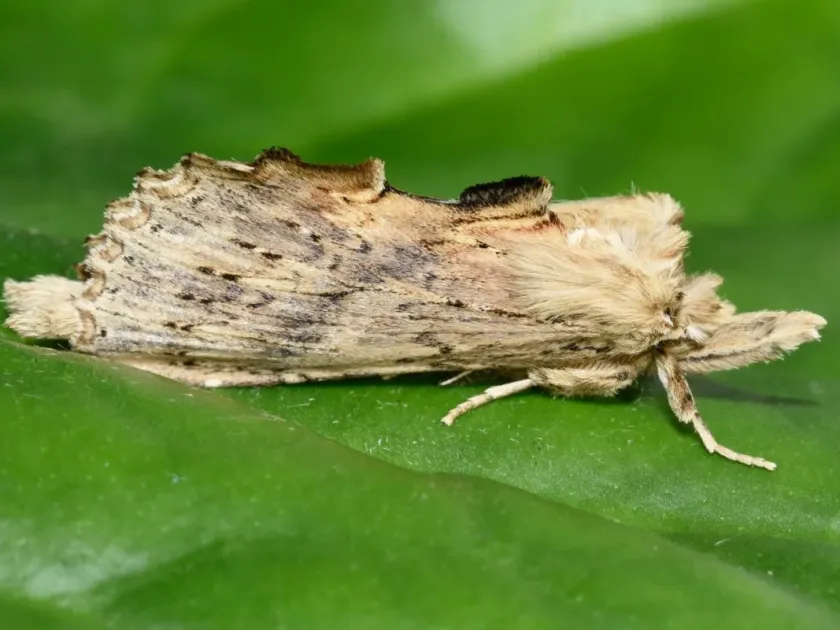
The Coxcomb prominent (Pterostoma palpina) is a moth species belonging to the Notodontidae family. The adult moth has a wingspan of approximately 40 to 50 mm, with a distinctive tuft of scales on the inner edge of its forewings.
When resting, the moth mimics a withered leaf or a piece of dry wood with extraordinary accuracy, serving as a highly effective camouflage against potential predators in its natural habitat.
The larvae are elongated, typically green in color with white or yellowish longitudinal stripes along the sides of the body. They possess a characteristic posture when threatened, lifting both their head and rear ends.
Pupation occurs within a loose cocoon situated in the soil or amidst leaf litter. The pupa itself is dark brown and serves as the overwintering stage for the species.
The species usually completes two generations per year in temperate climates. This cycle allows for a prolonged presence of the insect, extending from late spring well into the early autumn months.
##damage##The primary hosts for the Coxcomb prominent are deciduous trees, specifically those belonging to the Salicaceae family. Poplars, willows, and aspens are the most frequently affected species.
Larval feeding is the primary cause of damage, as these caterpillars consume significant amounts of foliage. In nurseries, heavy infestations can lead to severe stress for young trees.
Young caterpillars begin by skeletonizing the leaf blades, while later instars consume the entire leaf, often leaving only the main veins. This reduces the tree's overall photosynthetic efficiency.
Severe infestations can result in premature defoliation of trees, which inhibits growth and weakens the plant before the onset of winter dormancy.
In forestry and arboriculture, this pest is noted for its ability to damage saplings, leading to significant stunted growth and reduced timber quality in affected populations.
##season##The first generation of adults emerges in late spring, usually May. Mating and egg-laying on the undersides of host plant leaves begin shortly after the initial emergence.
Caterpillars of the first generation feed actively through June and July. The warm summer temperatures facilitate rapid larval development, leading to a quick turnover of the generation.
A second generation of adults emerges in mid-to-late summer, around July or August. The resulting larvae continue feeding through the end of the season before seeking winter shelter.
Pupation occurs in autumn as the larvae descend to the ground or seek cover in leaf litter to transform into pupae, entering a state of diapause for the winter.
The seasonal population density is highly dependent on local weather conditions; hot, dry summers often lead to increased larval survival rates and larger population spikes.
##signs##Small holes or skeletonized patches on leaves of poplars or willows are the first signs that the Coxcomb prominent is present in your garden or nursery.
The presence of larval excrement on the foliage or on the ground beneath the tree canopy is a clear indicator of active feeding by a larger colony of caterpillars.
Identifying the caterpillars is relatively simple due to their unique, defensive posture. When disturbed, they arch their bodies in a way that distinguishes them from other common defoliators.
Leaf yellowing or premature leaf drop, especially in areas where larvae have been seen, is a strong indicator of the damage caused by the feeding activity of this moth.
Inspecting the soil and leaf litter around the base of host trees in late autumn can reveal the cocoons, confirming the presence of the pest and the need for control measures.
##control##Manual removal of egg clusters and young larvae is a viable and highly recommended control strategy for small-scale gardens or individual ornamental trees.
Biological insecticides containing Bacillus thuringiensis are highly effective against larval stages of Lepidoptera and are considered a safer, more eco-friendly alternative to chemical sprays.
For large-scale infestations, registered contact or systemic insecticides should be applied during the early larval stages when they are most susceptible to chemical control.
Cultivation of the soil around the base of host trees in autumn is an effective cultural practice that disrupts the pupation sites and increases larval mortality during the winter.
Encouraging natural predators, such as insectivorous birds and parasitic wasps, provides long-term biological control and helps maintain the population at a manageable level.
Taxonomy
- Latin name
- Pterostoma
- Order
- Lepidoptera (butterflies)
- Family
- Notodontidae
- EPPO code
- PTRSSP
Discussion
No discussions yet — be the first.