
Plume moth
Pterophorus
Description
How to identify
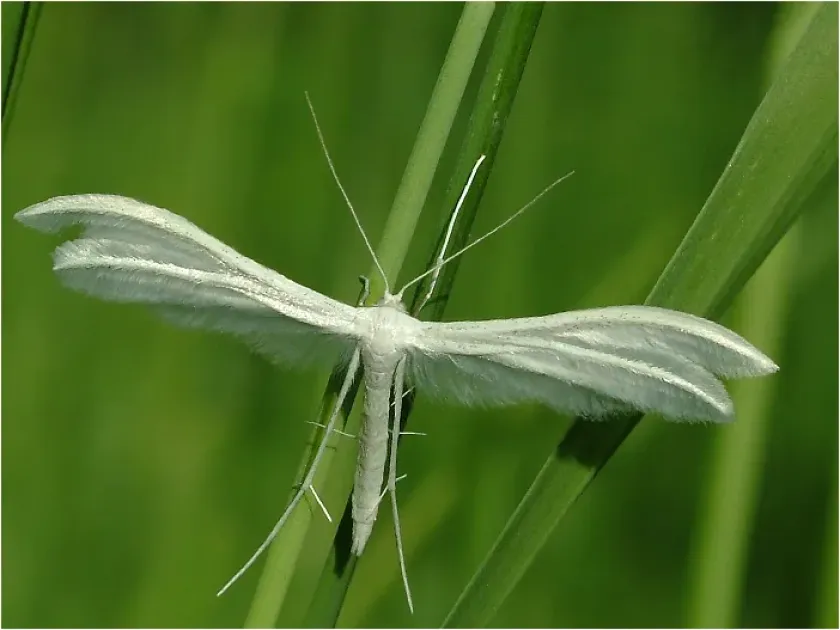
The Plume moth (family Pterophoridae) is a group of Lepidoptera distinguished by their unique wing morphology. Their wings are deeply cleft into narrow, feather-like lobes, which gives them the name "plume" moth.
When at rest, these moths fold their wings tightly against their bodies, making them appear like thin dry grass or twigs. Their wingspan typically ranges between 15 and 30 mm, with colors usually ranging from dull gray to light brown for camouflage.
The larvae, or caterpillars, are often densely covered in short hairs and may have vibrant patterns to warn off potential predators. Their life cycle undergoes complete metamorphosis, including egg, larval, pupal, and adult stages.
Taxonomically, they belong to the order Lepidoptera, family Pterophoridae. In agriculture, certain species are notorious for damaging grapes, mint, and various medicinal or essential oil-bearing plants.
Accurate species identification often requires microscopic examination of the male or female genitalia, as the external appearance of the adult moths can be very similar across different species within the family.
What it damages
The primary damage to plants is caused by the larvae, which possess chewing mouthparts. They are known for feeding on both vegetative tissue and reproductive organs such as flower buds and fruit clusters.
In vineyards, Plume moth caterpillars are considered significant pests. They feed on young inflorescences and developing fruit, leading to crop loss and structural deformation of the grape bunches.
Beyond viticulture, these pests target mint and other herbs. Larvae may skeletonize leaves by eating the mesophyll or create "mines" within the leaf tissue, which reduces the plant's photosynthetic capacity.
The feeding sites created by the larvae often serve as entry points for secondary pathogens, including fungi and bacteria, which can lead to further decay and necrosis of the plant tissues.
Under conditions of high population density, these pests can cause severe economic losses by significantly reducing both the quantity and quality of the final agricultural yield.
When it appears
The life cycle of the Plume moth is closely linked to the phenology of its host plants. The emergence of adult moths typically begins in late spring or early summer, coinciding with warmer temperatures.
Females lay their eggs singly or in small groups on the underside of leaves, stems, or near the flower buds. The incubation period usually lasts between one to two weeks depending on the environmental conditions.
Caterpillar activity is most intense during June and July. During this time, they feed aggressively on plant parts, which is the most critical period for implementing protective measures.
Overwintering typically occurs at the pupal stage within the soil or in leaf litter at the base of the host plants. Some species are also capable of overwintering as early-instar larvae in sheltered environments.
The number of generations per year is heavily dependent on the climate. In warmer southern regions, two generations may occur per season, while in cooler northern areas, only one generation is common.
Signs of infestation
An early sign of infestation is the appearance of small holes or "windows" on the leaves where the larva has consumed the inner tissues while leaving the epidermis intact.
On grapevines, the presence of fine silk webbing used by larvae to pull inflorescences together is a diagnostic feature. This webbing protects the larvae while they feed on the buds.
Accumulation of frass (larval excrement) within the webbed areas or on leaf surfaces below the feeding sites is a clear indicator of active infestation.
Wilting of individual flowers, deformed inflorescences, and dry patches on young shoots serve as critical warnings for growers to initiate scouting or treatment.
During the night, adult moths are attracted to artificial light sources. Using light traps can help monitor population levels and predict potential damage to the crops.
Control measures
Managing the Plume moth requires an integrated approach that combines cultural, biological, and chemical control methods to ensure sustainable crop protection.
Effective cultural practices include proper weed management to remove alternative hosts and deep autumn tillage in rows to disrupt pupation sites in the soil.
Chemical control should be implemented during the peak hatching period of the larvae using systemic or contact insecticides. Applications must be timed to hit the larvae before they hide within the plant structures.
Biological control, particularly the use of Bacillus thuringiensis (Bt) based products, is highly effective against young larvae and is significantly safer for beneficial insects and the environment.
Using pheromone traps is recommended to monitor the flight patterns of adult moths, allowing for precise timing of interventions and reducing the total number of pesticide applications required.
Taxonomy
- Latin name
- Pterophorus
- Order
- Lepidoptera (butterflies)
- Family
- Pterophoridae
- EPPO code
- PTRHSP
Discussion
No discussions yet — be the first.