
Cuckoo bumblebees
Psithyrus
Description
How to identify
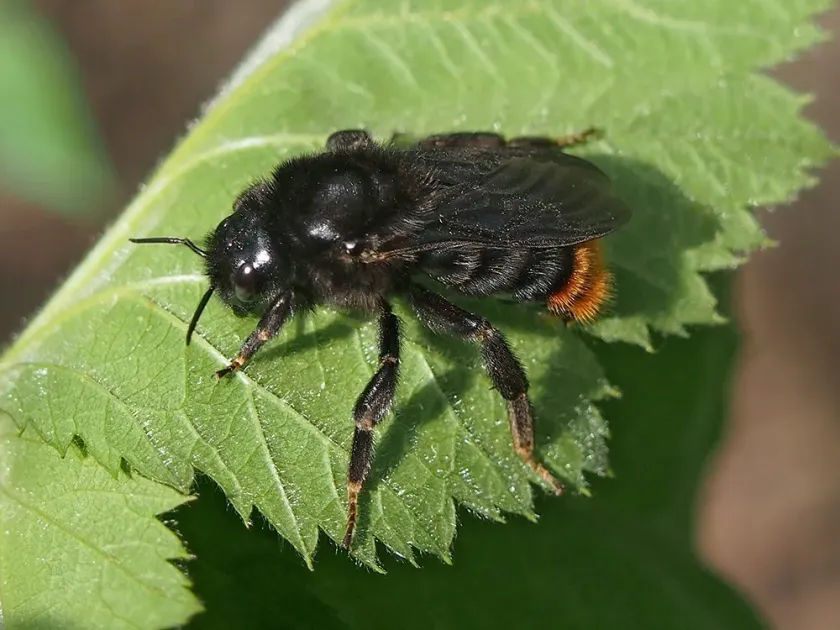
Cuckoo bumblebees (subgenus Psithyrus within the genus Bombus) belong to the family Apidae. They are obligate social parasites that have completely lost the ability to build nests or collect pollen.
They closely resemble common bumblebees but lack pollen baskets on their hind legs, which is a key physical distinction visible upon close inspection.
These bees possess a thicker, more heavily sclerotized cuticle compared to other bumblebees, providing protection during inevitable conflicts with the host queen when entering a colony.
They often exhibit mimicry, evolving to look like the specific species they parasitize, which helps them gain entry into the host's nest without immediate detection.
In agriculture, they are considered significant pests not because they damage plants, but because they act as predators of commercial bumblebee colonies used for pollination.
What it damages
The economic damage is caused by the disruption and eventual destruction of commercial bumblebee colonies used in greenhouses for pollinating crops such as tomatoes and peppers.
Once a cuckoo bumblebee successfully enters a hive, it kills or suppresses the host queen, forcing the host workers to prioritize the development of the parasite's brood over foraging.
This leads to the collapse of the colony, which is a major setback for greenhouse operations as it leaves crops under-pollinated, resulting in lower yields and poor fruit quality.
Since the parasites are not pollinators, their presence in the greenhouse leads to a decrease in the overall efficiency of the biological pollination program.
The cost of replacing destroyed hives and the potential loss of production make cuckoo bumblebees a serious management concern for professional agronomists.
When it appears
Cuckoo bumblebees are active during the warm months, with their emergence usually synchronized to the peak development of their host's colonies.
In most regions, they become active in late spring and early summer, targeting colonies that have already established a workforce but are still vulnerable to invasion.
The males appear in late summer and autumn, focusing on mating and finding suitable overwintering sites for the next year.
Only the fertilized females overwinter, typically burrowing into soil or leaf litter, emerging in the spring to initiate the search for a new host nest.
This single-generation lifecycle means that prevention efforts are most critical during the initial setup of pollination hives in the greenhouse at the start of the season.
Signs of infestation
One of the first signs of an infestation is a noticeable decline in the foraging activity of bumblebees on the crop within the greenhouse environment.
Upon inspecting the hives, technicians may observe the presence of non-working individuals that show little interest in flower visitation or nest maintenance.
Internal symptoms include the death of the host queen, a halt in the production of worker brood, and the accumulation of parasite larvae instead of host brood.
The colony often shows signs of stress, including aggressive behavior among workers or, conversely, a lack of defensive behavior when the hive is approached.
Detection is often confirmed by opening a suspected hive and finding the presence of the cuckoo bumblebee itself, which is often found resting or feeding on the honey stores of the host.
Control measures
The most effective control strategy is the installation of fine-mesh screening on all greenhouse vents and doors to physically exclude cuckoo bumblebees from entering.
Agronomists should perform routine monitoring of bumblebee hives to assess colony strength and detect the presence of any unusual or lazy individuals.
If an infestation is confirmed, the affected hive must be immediately removed and safely disposed of to prevent the parasite from spreading to other nearby colonies.
Sourcing bumblebee colonies from certified, high-biosecurity breeders is essential to ensure that hives are free from pests and parasites upon arrival at the facility.
No chemical pesticides are recommended for direct control, as these would harm the beneficial pollinators; therefore, cultural and physical exclusion methods are the foundation of management.
Taxonomy
- Latin name
- Psithyrus
- Order
- Hymenoptera
- Family
- Apidae
- EPPO code
- PSITSP
Discussion
No discussions yet — be the first.