
Spined assassin bug
Pselliopus cinctus
Description
How to identify
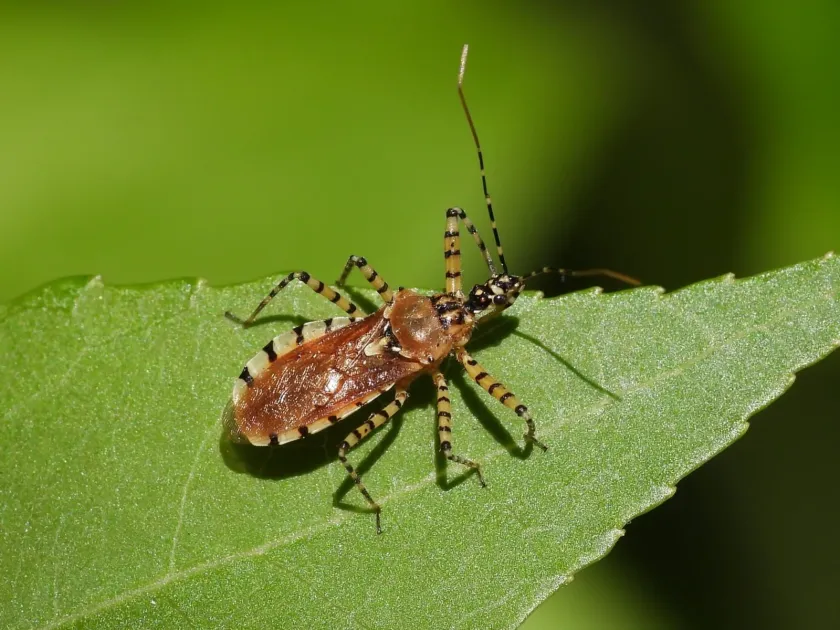
The Spined assassin bug (Pselliopus cinctus) belongs to the Reduviidae family, within the order Hemiptera. Adults typically measure about 12–15 mm and are easily recognized by their distinctively banded legs and antennae.
Their body coloration ranges from yellowish-brown to orange, often featuring darker patches on the elytra and pronotum. They possess a long, sharp rostrum used for feeding, which is held under the head when not in use.
These insects undergo hemimetabolous development. Nymphs resemble miniature versions of adults but are wingless and have a lighter, more uniform color, passing through several instars during their maturation.
They overwinter as adults, finding shelter in leaf litter, under loose tree bark, or in dry vegetation, allowing them to remain protected against harsh winter conditions.
Generally, these bugs are active hunters. However, their morphological features allow them to adapt to various garden environments, where they are often found lurking on foliage during the warm season.
What it damages
While primarily predatory, the Spined assassin bug can cause incidental damage to plant tissues. This occurs when they pierce plant parts while searching for moisture or in response to a shortage of prey.
The injection of digestive enzymes during probing causes local necrosis, leading to yellowing, spotting, and tissue death on leaves. This weakens the plant's structural integrity and overall vigor.
In ornamental gardens and orchards, the damage can lead to deformed shoots and buds. This aesthetic damage is particularly problematic for commercial nurseries where plant quality is paramount.
Excessive piercing can create entry points for secondary pathogens, such as fungi and bacteria, which can accelerate the decline of weakened specimens following a bug attack.
During periods of drought, the bugs may congregate more frequently on succulent plant parts, leading to more significant visible damage to flower buds and younger, more tender stems.
When it appears
Activity begins in early spring, typically between April and May, as temperatures rise and the overwintered adults emerge from their dormant state to seek food.
The peak population growth and nymph emergence occur during mid-summer. This is the period when the most significant damage to vegetation is observed in gardens and agricultural settings.
As autumn approaches, adult bugs prepare for diapause. They become less active on plants and begin migrating towards sheltered hibernation sites like leaf piles and building crevices.
Temperature fluctuations in late summer can influence their breeding cycle, potentially leading to varied population densities depending on the specific microclimate of the area.
During late fall, bugs are less likely to be found on the foliage itself, focusing instead on finding suitable protection from the incoming cold weather.
Signs of infestation
One of the earliest signs is the appearance of tiny, discolored spots on leaves, which often have a yellow or chlorotic halo. These points mark where the insect's rostrum has pierced the tissue.
The presence of molted nymphal skins (exuviae) left on stems or under leaves is a strong indicator of successful reproduction and localized bug activity.
Tiny dark spots resembling excrement on the leaf surface are another common diagnostic feature, providing evidence of bug residency and active feeding in the vicinity.
Physical inspection during the evening is effective, as the bugs tend to be more mobile and visible on the upper surfaces of leaves when the ambient temperature is comfortable.
Wilting of terminal shoots without clear signs of drought or root issues should prompt a closer look for the presence of these insects, especially during the peak summer months.
Control measures
Cultural control is highly effective; removing fallen leaves and garden debris in late autumn eliminates the primary overwintering sites, significantly reducing the spring population.
Maintaining plant health through adequate irrigation and proper fertilization helps plants withstand potential damage, as healthy specimens are less attractive to the bugs during prey shortages.
Biological control includes promoting the presence of birds and other beneficial predators in the garden, which naturally keep the assassin bug population under control.
If chemical control becomes necessary, targeted application of soft insecticides during the early nymphal stages is recommended to minimize impact on non-target pollinators.
- Regular monitoring of sensitive ornamental species.
- Cleaning up pruning debris immediately after cutting.
- Using row covers for young vegetable seedlings.
- Maintaining biodiversity to support natural predators.
- Applying insecticidal soaps for heavy localized infestations.
Taxonomy
- Latin name
- Pselliopus cinctus
- Order
- Hemiptera (bugs, aphids, leafhoppers)
- Family
- Reduviidae
- EPPO code
- PSLOCI
Discussion
No discussions yet — be the first.