
Psammodromus algirus
Psammodromus algirus
Description
How to identify
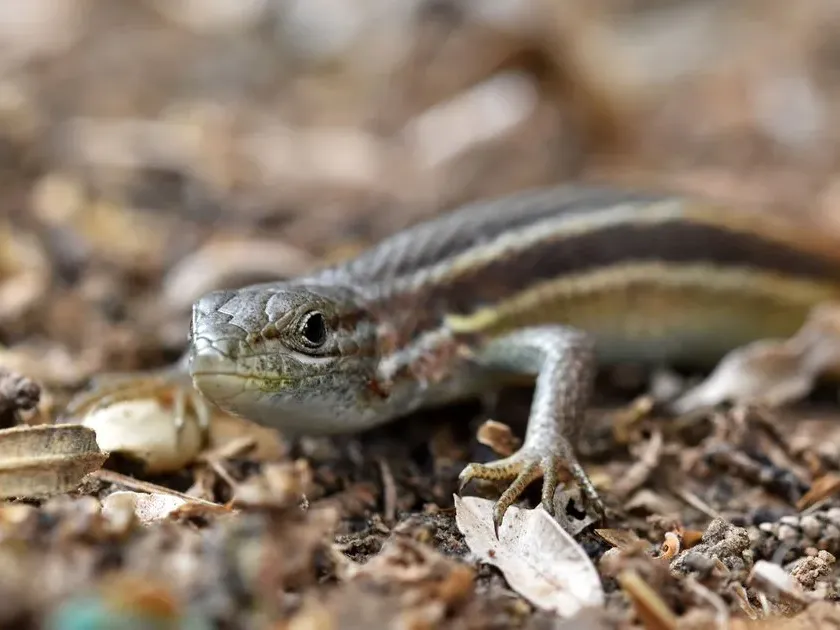
Psammodromus algirus, commonly known as the Algerian sand racer, is a lizard species belonging to the family Lacertidae, characterized by a slender body and a very long tail, often reaching two to three times the length of its head and body combined.
The coloration of adults ranges from olive to brown, featuring distinct longitudinal light or yellowish stripes running along the back and flanks, providing effective camouflage in shrubby environments.
Its scales are notably large and keeled, giving the lizard a rough appearance. This species thrives in sunny, dry habitats, including Mediterranean scrublands, field edges, and various agricultural settings where vegetation is sparse but available.
Sexual dimorphism is subtle, though males may exhibit more vibrant coloration on the throat and sides of the head during the breeding season to attract females and defend their territory.
Juvenile individuals tend to display much sharper and more contrasting stripe patterns compared to adults, which assists in their survival by blending in with the surrounding debris and grass.
What it damages
The damage caused by Psammodromus algirus is generally indirect and minor, primarily involving the creation of small burrows in the soil near the roots of young plants, which can sometimes disturb seedling development.
When searching for insects among the foliage, these lizards can occasionally cause mechanical injury to delicate plant tissues, including leaves, buds, and flowers, due to their clawed feet and rapid movements.
In greenhouse environments, they may unintentionally disrupt mulch layers or interfere with irrigation system components by scratching or moving along the tubing and emitters during their active periods.
It is important to acknowledge that they are predominantly insectivorous, preying on various beetles, crickets, and caterpillars, which can often be beneficial for controlling agricultural insect pests.
Significant damage rarely occurs under standard farming conditions, and the potential negative impacts are usually weighed against the benefits of their natural predation on harmful insects.
When it appears
The activity period for the Algerian sand racer begins in early spring, typically around March or April, as temperatures rise and the soil warms sufficiently to support their metabolic needs.
Peak activity occurs throughout the summer months (June to August), as individuals increase their foraging efforts and mating activities, making them highly visible on sunny patches and garden borders.
As autumn approaches and temperatures begin to drop, the lizards become less active, spending more time in their shelters before finally entering a state of brumation for the winter.
Winter dormancy takes place from late autumn until early spring, with lizards seeking refuge in underground burrows, rock crevices, or dense root systems to survive the cold temperatures.
Early spring agricultural activities, such as deep tilling or clearing garden borders, can accidentally disturb these wintering sites, affecting local population density for the upcoming season.
Signs of infestation
Visual signs of their presence include thin, wavy tail marks left in loose soil or sand between garden rows, particularly visible following light rain or irrigation cycles.
Small entry holes, roughly two to three centimeters in diameter, found near the base of shrubbery or garden masonry are indicative of their activity as foraging shelters or nesting areas.
Superficial abrasions or small puncture marks on young leaves and fruit surfaces can sometimes be attributed to the lizards' pursuit of insects that are hidden within or on the plant canopy.
Shed skin remnants (sloughs) found on stones or garden pathways are clear biological indicators that a population is established and active in the immediate vicinity.
Frequent sightings during daylight hours in warm weather confirm their presence, allowing growers to monitor population levels and determine if protective measures for specific crops are required.
Control measures
In most agricultural scenarios, control is not strictly necessary due to the lizard's role as a natural predator of insects; however, physical barriers such as mesh fencing can protect highly sensitive crops.
Maintaining a clean garden by removing excessive piles of debris, rocks, and unnecessary vegetation helps reduce preferred hiding spots, naturally encouraging the lizards to move to other areas.
Protecting irrigation infrastructure with covers or by partially burying components helps prevent minor mechanical damage caused by the lizards moving across the equipment.
Avoiding the use of broad-spectrum insecticides is crucial to preserving the ecological balance, as eliminating their food source might force them to forage more aggressively on crops.
If management is required for a specific nursery or delicate greenhouse crop, the focus should remain on physical exclusion rather than lethal control, ensuring the long-term health of the ecosystem.
Taxonomy
- Latin name
- Psammodromus algirus
- Family
- Lacertidae
- EPPO code
- PSMMAL
Discussion
No discussions yet — be the first.