
Ocellated lizard
Lacerta lepida
Description
How to identify
The ocellated lizard (scientifically classified under the order Squamata, family Lacertidae, and known as Timon lepidus) is one of the largest lizard species in Europe.
Adult specimens can reach lengths of 60–90 cm. They possess a robust body and a distinctive coloration: a green dorsal background featuring a black mesh pattern and vibrant blue eyespots (ocelli) on their flanks.
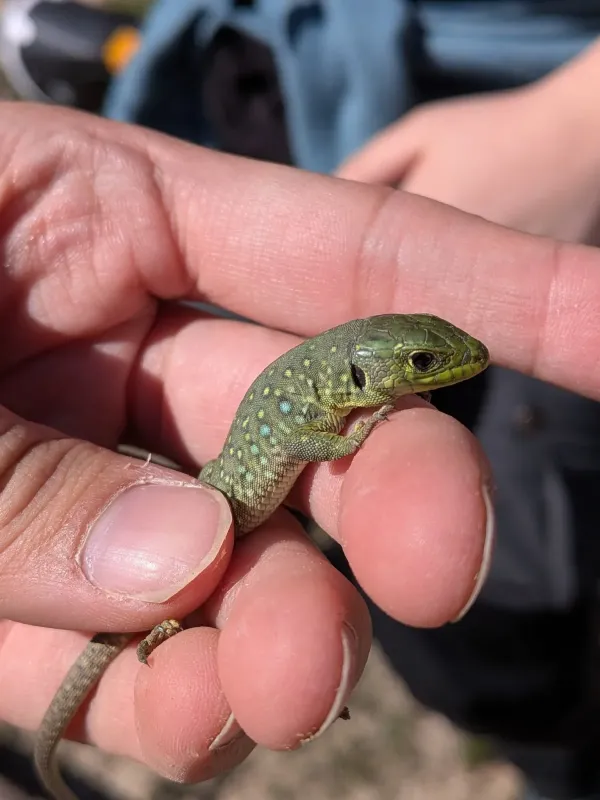
Juveniles display a more subdued, cryptic coloration with white or yellowish spots, which allows them to camouflage effectively against dry vegetation and rocky terrain.
They inhabit Mediterranean climates, favoring open, sunny spaces with plenty of crevices, rock piles, or dense bushes that serve as necessary shelters.
They are diurnal creatures, displaying peak activity levels during the morning and late afternoon when temperatures are optimal for their thermoregulation.
What it damages
While the ocellated lizard is not a major agricultural pest, its activity can occasionally cause minor losses in horticultural and fruit-bearing crops.
Primarily insectivorous, the lizard may occasionally feed on succulent fruits such as strawberries, grapes, or soft berries during periods of food scarcity.
When they access these crops, they can leave bite marks on the fruit, rendering them visually unappealing and potentially susceptible to secondary infections or rot.
Furthermore, their habit of digging burrows beneath or near the root systems of young plants can cause soil aeration or root exposure, negatively impacting plant vitality.
For most landowners, the damage is considered negligible; however, in small-scale berry gardens, their presence may require preventative management.
When it appears
The active season for the ocellated lizard typically begins in early spring, once they emerge from hibernation, and lasts until late October.
Maximum activity occurs during the breeding season in May and June, when individuals are highly mobile and frequently seen traversing their territory.
During the peak of summer, if temperatures are excessively high, they may reduce their exposure to direct sunlight by staying in deeper, cooler burrows.
As autumn progresses, their metabolic rate slows down with the drop in temperature, eventually leading them to hibernate below the frost line for the winter.
Understanding this biological cycle is essential for farmers to determine the best times for implementing crop protection measures.
Signs of infestation
The most reliable sign of their presence is direct visual observation of adult lizards basking in the sun near garden plots or stone walls.
Small burrow entrances located under stones, stumps, or along fence lines are clear indicators of established shelters in the area.
Characteristic bite marks on low-hanging fruits, distinct from those caused by birds or rodents, suggest their feeding activity on your produce.
The discovery of droppings that contain insect remains or chitinous fragments confirms the presence of a predator inhabiting your garden space.
Disturbance sounds, such as rustling in dry leaves or grass that suddenly cease upon human approach, are classic indicators of these agile reptiles.
Control measures
Since the ocellated lizard is a protected species in many regions, the use of pesticides or harmful traps is strictly prohibited and unethical.
The most effective strategy is environmental modification: removing piles of debris, stones, and overgrown weeds that provide prime nesting habitats.
Using physical protection, such as fine mesh netting over berry beds, effectively prevents lizards from reaching the fruit without harming them.
Implementing a low, buried wire fence around sensitive garden areas can act as a barrier, limiting the lizard's access to your crops.
Maintaining clean borders and regularly trimming tall grass around the garden reduces the availability of hiding spots, encouraging the population to disperse naturally.
Taxonomy
- Latin name
- Lacerta lepida
- Family
- Lacertidae
- EPPO code
- LACELE
Discussion
No discussions yet — be the first.