
Western green lizard
Lacerta bilineata
Description
How to identify
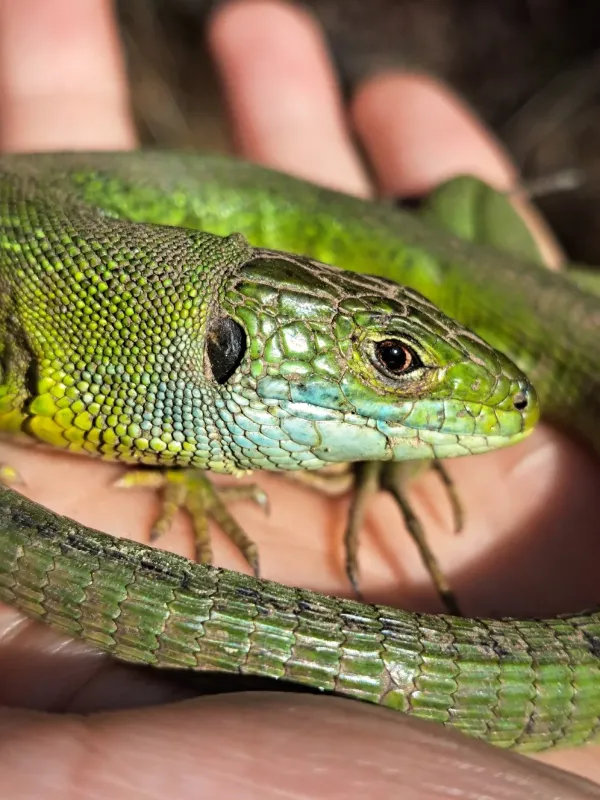
The Western green lizard (Lacerta bilineata) is a member of the Lacertidae family, known for its vibrant green coloration that provides excellent camouflage in dense vegetation. Adults can reach lengths of up to 40 cm, including their long tails.
During the breeding season, males develop a distinctive blue throat patch, which serves as a key identifying characteristic. Their bodies are covered in fine scales and are highly flexible, allowing for rapid movement across various terrains.
These lizards thrive in sunny, warm areas with plenty of cover, such as meadows, forest edges, and vineyards. They are diurnal, meaning they are most active during the day when they bask in the sun to regulate their body temperature.
The biology of this species is highly dependent on environmental temperatures. They seek out heat-retaining surfaces and sunny spots, which often places them directly into agricultural landscapes where crops are grown.
Reproduction involves laying eggs in hidden, warm environments, such as loose soil, leaf litter, or debris piles. These microhabitats provide the necessary conditions for successful egg incubation until the hatchlings emerge.
What it damages
While primarily insectivorous, the Western green lizard can cause significant mechanical damage to tender vegetable seedlings. Their active hunting behavior often results in trampled plants and broken stems, especially in young nursery crops.
By moving through beds of seedlings, they can cause physical trauma to fragile stalks. This mechanical damage often leads to stunted growth, wilting, and, in severe cases, the complete loss of individual plants.
Furthermore, these lizards can disrupt the ecosystem by preying on beneficial insects, such as ladybugs or lacewings, which act as natural pest controllers. A reduction in these predators can lead to aphid or mite outbreaks.
In orchards and vineyards, they may occasionally damage fruits, particularly when searching for water during prolonged dry spells. These damaged areas on fruit can then become sites for secondary fungal infections.
In high-density populations, the cumulative impact of their activity can result in measurable losses. Preventing these lizards from accessing vulnerable crop areas is essential for maintaining optimal yields and plant health.
When it appears
Activity begins in early spring as soon as temperatures rise above 10–12 degrees Celsius. This period is critical because it aligns with the transplanting of young seedlings, making them particularly vulnerable to disturbance.
Summer marks the peak of their activity, as lizards are busy foraging and mating. During this time, they are most likely to traverse vegetable gardens and commercial fields, increasing the frequency of interactions with crops.
As autumn approaches, activity levels gradually decline. Lizards begin to seek out suitable overwintering sites, often choosing spots beneath organic debris or near the root zones of perennial plants, which can disturb their protection.
They overwinter in deep burrows, under tree roots, or within piles of organic waste. Therefore, thorough cleanup of the field or garden plot after harvest is a vital management step to reduce wintering sites.
Even during unseasonably warm winter days, lizards may emerge briefly. This can lead to them causing unintended damage to protective covers or early-planted cold-hardy crops if they become disoriented.
Signs of infestation
Presence is often marked by tracks left in damp soil, featuring distinct footprints and a dragging tail mark. These trails are commonly found along rows of crops and near garden edges where cover is available.
Finding white, papery eggshells hidden in loose soil or under mulch indicates that the species is breeding on-site. This is a clear indicator that immediate habitat management measures should be taken.
Broken stems and damaged foliage on young plants often reveal their movement. Unlike insect damage, these signs appear as erratic, mechanical breaks caused by the animal's weight or rapid transit through the foliage.
A noticeable spike in populations of garden pests, such as aphids, can be an indirect sign that the natural predators of these insects are being outcompeted or preyed upon by lizards.
Visual identification remains the most reliable sign. Spotting adults sunning themselves on rocks, borders, or the warm side of planting beds during the peak heat of the day confirms their active presence.
Control measures
The most effective management strategy is maintaining a tidy plot. Regularly mowing grass around beds and removing debris piles denies lizards the shelter they need to establish their territory.
Installing physical barriers, such as solid edging or fine mesh fencing around vulnerable seedlings, effectively blocks access and protects fragile stems from mechanical damage throughout the growing season.
Utilizing natural, eco-friendly repellents like essential oil-based sprays can help discourage lizards from settling in specific areas without harming the crops or the environment, aligning with sustainable practices.
Protective netting is highly recommended during the initial growth phase of vegetables. This prevents physical contact between the lizards and the plants, ensuring that the seedlings can establish themselves without interference.
Fostering an environment that attracts natural lizard predators, such as hedgehogs, can provide biological control. This approach helps maintain a balanced ecosystem, naturally keeping the lizard population in check.
Taxonomy
- Latin name
- Lacerta bilineata
- Family
- Lacertidae
- EPPO code
- LACEBI
Discussion
No discussions yet — be the first.