
Sand lizard
Lacerta
Description
How to identify
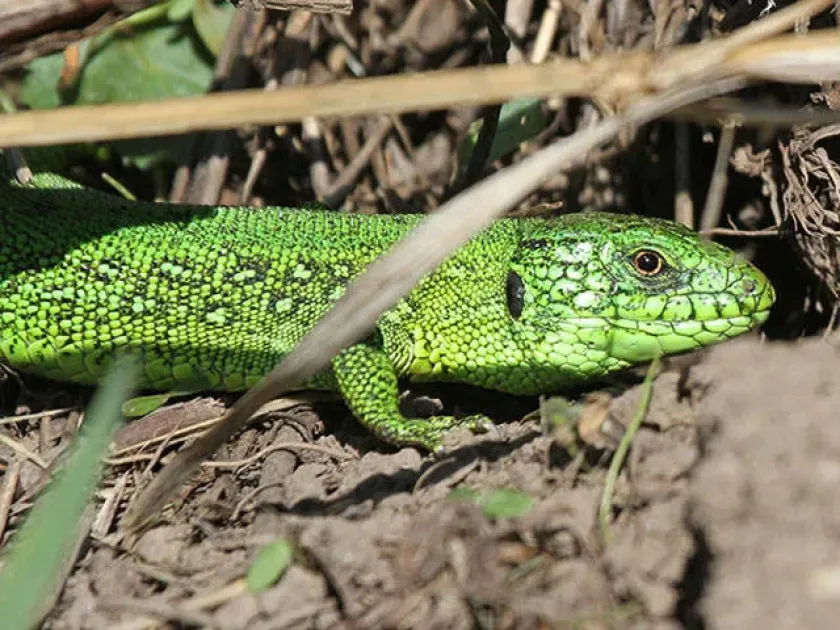
The sand lizard (Lacerta agilis) is a reptile belonging to the order Squamata and the family Lacertidae, common in temperate climate gardens.
These lizards grow up to 25 cm in length and possess a robust build with cryptic coloration, ranging from brown to bright green with dark patterns.
They are heliothermic animals, meaning they rely on sun exposure to regulate their body temperature, making sunny garden patches their preferred habitat.
Sand lizards have excellent eyesight and are highly sensitive to vibrations, which allows them to escape threats quickly and complicates human control efforts.
The species lives in complex underground burrow systems, which they modify frequently, often causing disruption to the surrounding soil structure.
What it damages
While often seen as beneficial predators of insects, sand lizards can become a nuisance in intensive gardens by trampling delicate young seedlings.
Their digging behavior in search of shelter or prey often uproots tender plants, causing significant damage to the root systems of young vegetable crops.
They are known to damage protective agricultural mulch, covers, and geotextiles, creating entry points for other pests and exposing crops to adverse conditions.
Occasional mechanical damage to low-hanging fruits, such as strawberries or leafy greens, can occur when lizards climb or move through the dense foliage.
By disrupting the soil, they can cause premature drying of the root zone, which negatively affects the development and yield of sensitive garden plants.
When it appears
The activity period for the sand lizard begins in early spring, as temperatures rise and the soil warms up after the winter dormant season.
During the planting season in late spring, they are most active in garden beds, looking for soft, disturbed soil to inhabit and warm themselves.
Peak summer months see the highest movement frequency as they forage across the entire garden, often seeking moisture under irrigation systems.
As autumn approaches, their activity slows down, and they begin the transition towards hibernation, retreating deeper into their underground burrows.
Late August and September mark the final phase of their active season before they settle into permanent overwintering sites deep below the frost line.
Signs of infestation
Small, clawed footprints visible on damp soil or garden paths after rainfall are a primary indicator of sand lizard presence in the area.
Damage to the base of plant stems, often accompanied by fresh soil mounds, is a clear sign that a burrow system has been established nearby.
The presence of shed skins, also known as sloughs, found within garden beds or near greenhouse foundations proves they are inhabiting the space.
Small, irregular bite marks on low-lying fruit or damaged sections of agricultural fleece indicate that lizards are accessing the plants directly.
Sudden rustling noises in the vegetation or quick flashes of movement when approaching garden beds are common signs of their proximity.
Control measures
A tidy garden is the best deterrent; removing piles of rocks, wood, and garden debris eliminates the essential hiding spots they need for survival.
Physical barriers like fine-mesh fencing around sensitive vegetable beds can effectively prevent lizards from accessing and trampling delicate plants.
Regular soil cultivation and frequent hoeing disrupt their underground burrow networks, making the garden environment undesirable for permanent residency.
Using natural repellents or aromatic plants with strong scents around the perimeter can discourage lizards from entering specific garden zones.
For high-value crops, installing protective covers properly and ensuring they are secured at the base will stop lizards from burrowing underneath.
Taxonomy
- Latin name
- Lacerta
- Family
- Lacertidae
- EPPO code
- LACESP
Discussion
No discussions yet — be the first.