
Wall lizard
Podarcis
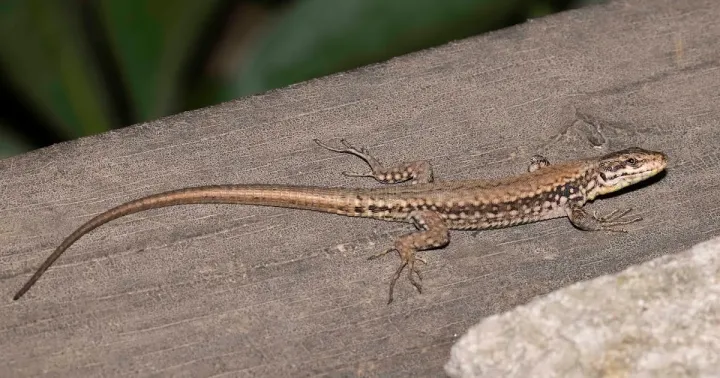
Description
How to identify
The wall lizard (Podarcis muralis) belongs to the order Squamata and the family Lacertidae. It is a slender reptile with a long, agile tail and variable color patterns.
These lizards are highly adapted to rocky environments and vertical surfaces, utilizing their sharp claws and strong limbs to traverse walls, fences, and tree trunks.
In garden settings, they occupy niches such as rock piles, wood stacks, and crevices in garden structures, where they can bask in the sun to regulate their body temperature.
The biology of the species is defined by its cold-blooded nature, meaning their metabolism and activity levels are entirely dependent on ambient warmth.
Reproduction typically takes place in early summer, with eggs laid in protected, loose soil environments that offer both shelter and stability.
What it damages
Wall lizards are primarily insectivores and are generally beneficial, as they prey on various garden pests including aphids, caterpillars, and beetles.
Damage to plants is rare and usually occurs only when the animals seek moisture or accidental food sources, such as soft berries like strawberries or raspberries.
Physical damage can occur when lizards scurry through densely planted seedling beds, potentially uprooting young, tender shoots or compacting the soil around roots.
The damage to fruit is usually superficial, consisting of small bites or indentations that can serve as entry points for mold or secondary decay organisms.
In most agricultural contexts, the wall lizard is not considered an economic pest, and their presence is often viewed as a sign of a healthy, biodiverse garden ecosystem.
When it appears
Activity begins in early spring, as soon as temperatures rise sufficiently to allow the lizards to emerge from their hibernacula to feed and mate.
Throughout the peak summer months, they are most visible during the warmest times of the day, actively hunting near vegetation and irrigation lines.
As autumn approaches and ambient temperatures drop, their metabolic rate slows down, leading to reduced movement and preparation for the winter period.
Hibernation occurs from late autumn to early spring, with lizards seeking out deep, frost-free locations such as underground burrows or cracks in foundations.
Early spring marks a critical time for them, as they require frequent sun exposure to raise their body temperature after the long winter dormancy.
Signs of infestation
Detection is often made through sightings of quick, darting movements within shrubbery or along stone walls, accompanied by the rustling of dry foliage.
Trace evidence includes subtle scratch marks on soft soil surfaces and the occasional presence of shed, papery skin fragments near their nesting or basking sites.
Evidence of fruit feeding consists of small, irregular holes or bites on the surface of ripening berries, located near the base of the plant.
A high population density may be indicated by repeated sightings of individuals in the same area throughout the day, suggesting a nearby established home range.
Lizard droppings, small and elongated with a white uric acid cap, can occasionally be found near their favorite basking spots on paths or walls.
Control measures
Since the wall lizard is a protected species in many areas, management strategies should focus on exclusion rather than eradication or lethal control.
Installing fine-mesh barriers around strawberry patches and other vulnerable ground crops is the most effective way to prevent accidental damage.
Reducing suitable habitats, such as clearing debris, wood piles, and loose stone structures near sensitive crops, encourages them to relocate to natural areas.
The use of pungent natural repellents, such as garlic or vinegar-based solutions, can discourage lizards from frequenting specific garden beds.
Maintaining a clean garden environment and providing alternative watering stations away from crops can help minimize direct interaction with the plants.
Taxonomy
- Latin name
- Podarcis
- Family
- Lacertidae
- EPPO code
- PDRCSP
Discussion
No discussions yet — be the first.