
Viviparous lizard
Lacerta vivipara
Description
How to identify
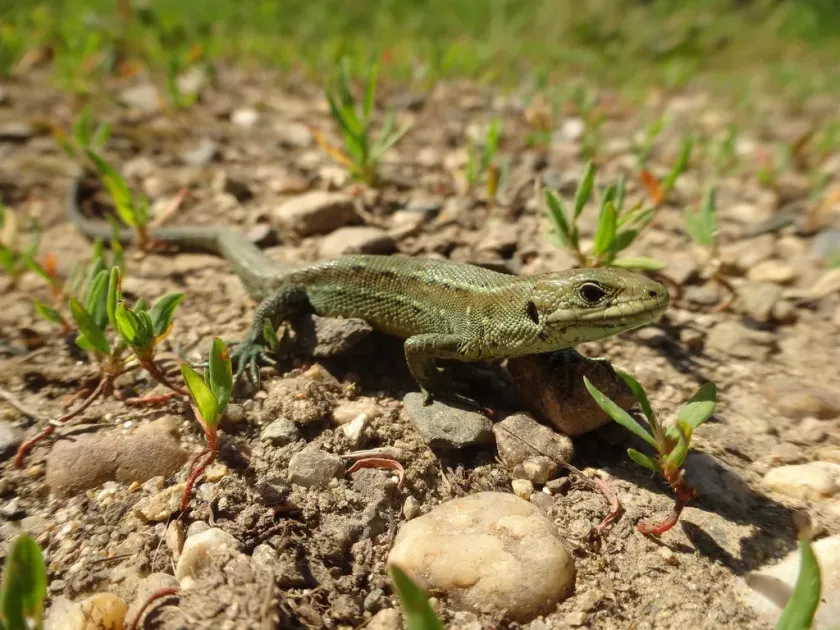
The viviparous lizard (lat. Zootoca vivipara) is a small reptile belonging to the Lacertidae family. Adults typically measure between 15 and 18 cm in length, including their long tails.
They exhibit diverse coloration, ranging from olive-green to brown, frequently decorated with dark dorsal stripes and distinct light spots along their flanks.
Known for its unique reproductive method, this species is viviparous, giving birth to live young, which allows it to thrive in colder and wetter climates compared to other lizards.
They prefer damp environments and are commonly found in meadows, marshes, and garden areas with dense vegetation and sufficient humidity.
As a highly adaptable species, they are extremely quick and agile, making them difficult to spot and capture when disturbed in the garden or greenhouse.
What it damages
Viviparous lizards are generally beneficial, feeding on insects, slugs, and snails; however, they can cause minor physical damage to delicate agricultural crops.
The primary concern is the physical trampling of young seedlings, particularly in intensive greenhouse operations where space and growth conditions are sensitive.
Their burrowing and hunting activities can disrupt mulch layers, leading to faster evaporation of soil moisture and potentially encouraging weed growth.
In containerized plant production, lizards might disturb the topsoil or root systems, occasionally displacing smaller seedlings or causing root exposure.
While they do not eat plants, their movement across seedlings can cause mechanical bruising, which sometimes creates entry points for fungal pathogens.
When it appears
Seasonal activity begins in early spring, usually as soon as the ground temperatures rise, allowing these cold-blooded animals to emerge from hibernation.
Peak activity levels are observed during late spring and early summer, coinciding with their reproductive period and the emergence of the year's offspring.
Throughout the summer, they remain active, often seeking shelter during the hottest parts of the day and becoming most visible during mornings and evenings.
As autumn approaches and temperatures drop, activity decreases as they seek suitable overwintering sites, often in garden debris or deep soil layers.
Hibernation begins in mid-to-late autumn, typically when ambient temperatures consistently remain below the threshold required for their metabolic processes.
Signs of infestation
Identifying their presence usually involves spotting characteristic wavy trails left on moist soil or loose sand within the garden beds.
Droppings are another indicator; they are generally dark, elongated, and tipped with a white, crusty substance known as uric acid precipitate.
Visual sighting of the lizards is common, as they tend to bask on warm surfaces or dart into dense foliage when human activity is detected nearby.
Disturbed mulch, flipped over small pots, or displaced seedlings serve as indirect signs of their movement through the greenhouse or seedbed.
- Discarded skin fragments (sloughs) found near their basking spots indicate regular presence.
- Observation of small, shallow burrows in loose, compost-rich soil.
Control measures
Effective control involves non-lethal deterrents, focusing on habitat modification to discourage them from occupying areas intended for crop production.
Maintaining a clean garden by removing dense piles of organic debris and tall weeds reduces the number of favorable shelters for the lizards.
Installing fine-mesh physical barriers on greenhouse vents and doors prevents the lizards from entering sensitive plant propagation areas.
Promoting a drier microclimate in areas where seedlings are at risk can reduce the lizard's interest in settling within the proximity of the beds.
Relocating lizards manually to wilder parts of the property is the most sustainable approach, preserving their beneficial role in the broader ecosystem.
Taxonomy
- Latin name
- Lacerta vivipara
- Family
- Lacertidae
- EPPO code
- LACEVP
Discussion
No discussions yet — be the first.