
Spiny-footed lizard
Acanthodactylus erythrurus
Description
How to identify
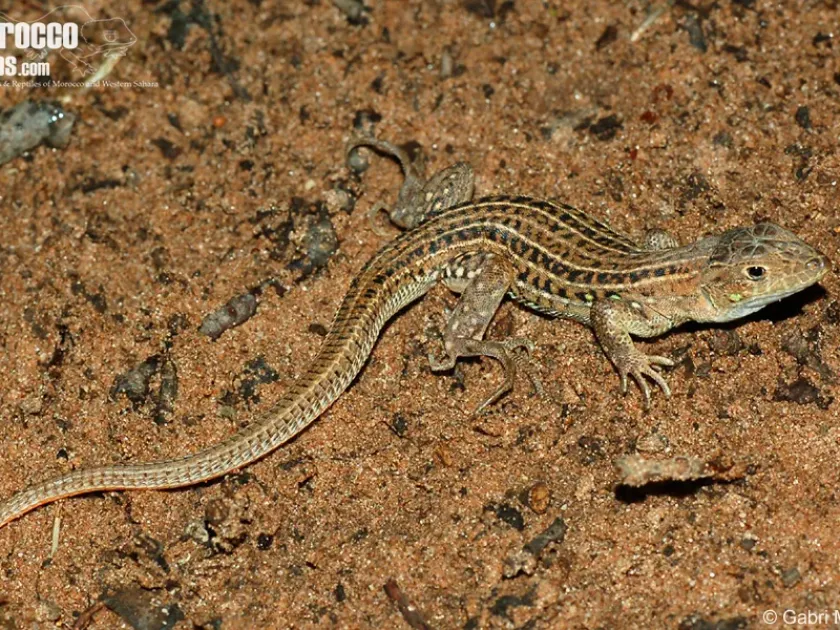
The Spiny-footed lizard (Acanthodactylus erythrurus) is a reptile belonging to the Lacertidae family, known for its distinct adaptations to sandy environments.
The name originates from the characteristic fringe of scales on its toes, which allow for rapid movement across loose or sandy substrates.
These lizards usually reach a total length of approximately 20 to 25 cm, characterized by a slender body and a long, tapering tail.
Their coloration is typically cryptic, featuring mottled patterns of brown, grey, or sand, allowing them to blend seamlessly with agricultural soil.
As a diurnal species, it is highly active during the warmest parts of the day, utilizing high temperatures to maintain a high metabolic rate.
What it damages
While primarily insectivorous, the Spiny-footed lizard can cause indirect agricultural damage when populations reach high densities near crops.
The primary concern is the physical disturbance of soil, as digging burrows can undermine the root systems of young seedlings and delicate transplants.
In nursery settings, these lizards may accidentally damage small plants or containers while navigating through dense plant clusters in search of prey.
During extreme drought, they may occasionally pierce the skin of fleshy fruits on the ground, such as strawberries or melons, seeking moisture.
Although they contribute to natural insect control, their presence might inadvertently lead to the displacement of beneficial soil microorganisms in confined areas.
When it appears
The activity of the Spiny-footed lizard begins in early spring, once soil temperatures provide sufficient thermal energy for the lizard's body.
Peak activity occurs throughout the summer months, correlating with periods of intense breeding and high levels of prey availability for the lizards.
Egg-laying typically occurs in mid-summer, with females excavating deep, secure burrows to protect the clutch from temperature fluctuations and predators.
As autumn temperatures begin to decline, the lizards gradually shift their behavior toward energy conservation to prepare for the upcoming winter.
Winter is characterized by a period of brumation, during which the lizards remain deep underground, essentially inactive until the spring warmth returns.
Signs of infestation
The presence of the lizard is often indicated by fine, intricate tracks on sandy or loose soil surfaces, left by their spiny toes during foraging.
Small, circular or oval-shaped burrow entrances are common signs, often found near field boundaries, irrigation channels, or under agricultural debris.
Evidence of soil disturbance in seedbeds, where the earth appears displaced or loose, suggests recent digging activities by the reptiles.
Direct sightings of the lizards moving quickly between rows during the sunny morning or afternoon hours are the most reliable indicators of their presence.
Shed skin or tail tips occasionally left near their favorite basking spots provide further evidence of a thriving local population.
Control measures
Management should focus on non-lethal deterrents, as these lizards are often considered part of the local biodiversity and are protected in many regions.
Mechanical cultivation of soil in inter-row spaces is the most effective method, as it disrupts burrows and creates an unfavorable habitat for the lizards.
Physical barriers, such as fine-mesh fences buried slightly into the ground, can successfully prevent the lizards from entering high-value planting zones.
Removing piles of wood, stones, or garden debris eliminates basking and hiding spots, encouraging the population to relocate to more suitable habitats.
- Regular tillage to destroy subterranean nest sites.
- Maintaining soil moisture that prevents dry, loose sandy patches.
- Using scent-based repellents if lizards concentrate near crops.
- Promoting natural predation by encouraging local predatory bird species.
Taxonomy
- Latin name
- Acanthodactylus erythrurus
- Family
- Lacertidae
- EPPO code
- AKNDER
Discussion
No discussions yet — be the first.