
Protambulyx strigilis
Protambulyx strigilis
Description
How to identify
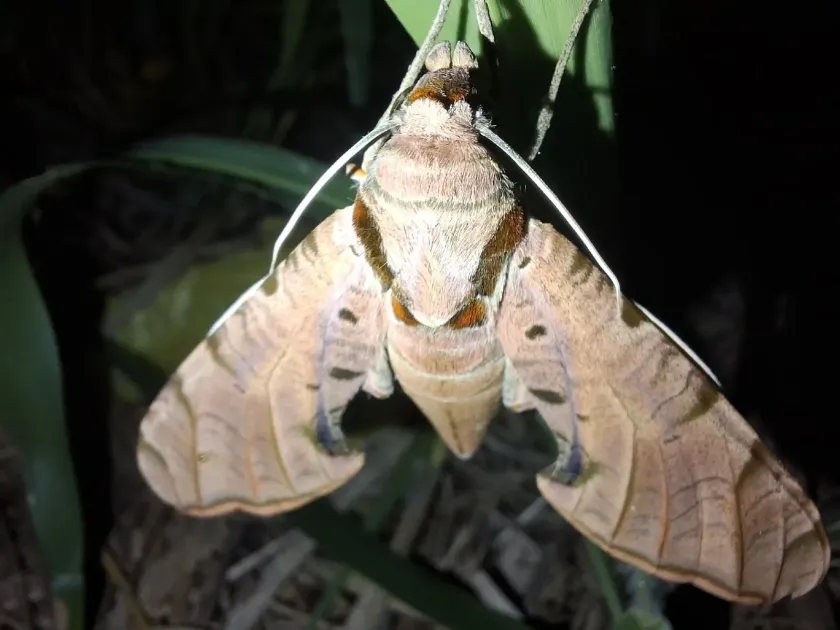
Protambulyx strigilis is a species of moth in the family Sphingidae, commonly known as a hawkmoth. Adults are recognized by their large size and patterned wings, which provide excellent camouflage against tree bark.
The larvae, or caterpillars, are notable for their robust size and varied coloration, typically ranging from light green to brown, featuring a distinct horn at the posterior end of the body.
This species is distributed primarily throughout the Neotropical regions, where the warm climate supports year-round development and multiple generations of the moth.
The life cycle involves a complete metamorphosis: egg, larva, pupa, and adult. Adults are nocturnal, showing high activity around light sources during the night.
Pupation typically occurs in the soil, where the insects remain sheltered until they emerge as adult moths, completing their life cycle and preparing for the next mating cycle.
What it damages
Caterpillars of Protambulyx strigilis feed primarily on plants within the Anacardiaceae family, including various Spondias species that are commonly grown for fruit.
The damage caused is primarily defoliation, where the larvae consume significant amounts of leaf tissue, depriving the plant of its photosynthetic capabilities.
Heavy infestations can lead to severe stress on the host plants, resulting in stunted growth, reduced fruit production, and a general decline in plant health.
Older caterpillars are voracious eaters, capable of stripping entire branches of leaves in a relatively short period, which poses a significant threat to young trees.
Repeated defoliation by this pest may also weaken the trees, making them more susceptible to secondary infections, such as wood-boring pests or fungal pathogens.
Signs of infestation
The most evident sign of a Protambulyx strigilis infestation is the presence of irregular holes or completely consumed leaf edges on the host plants.
Frass (caterpillar droppings) found on the foliage or at the base of the tree is a strong indicator of an active caterpillar presence in the upper canopy.
Observing the undersides of leaves can reveal the presence of eggs, which are small, round, and usually pale-colored, often laid in clusters or singly.
Visible caterpillars, often resting on stems or twigs during the day, are a direct sign that active control measures need to be implemented immediately.
A noticeable reduction in foliage density, especially in the middle and upper parts of the tree, is a characteristic sign of advanced larval feeding.
Control measures
Manual removal of caterpillars is highly effective for small-scale gardening and helps to control population levels without the need for toxic chemicals.
Biological control agents, such as Bacillus thuringiensis, are effective for targeting larvae while remaining safe for the surrounding environment and beneficial insects.
Installing light traps at night can significantly reduce the number of breeding adults, which decreases the frequency of future egg-laying events on the property.
Maintaining clear ground cover under host trees can disrupt the pupation process, making it more difficult for the pest to complete its life cycle successfully.
For large-scale agricultural infestations, strategic insecticide application might be necessary, but this should be done with caution to protect local biodiversity.
Taxonomy
- Latin name
- Protambulyx strigilis
- Order
- Lepidoptera (butterflies)
- Family
- Sphingidae
- EPPO code
- PRTXST
Discussion
No discussions yet — be the first.