
Prosopis
Prosopis
Description
How to identify
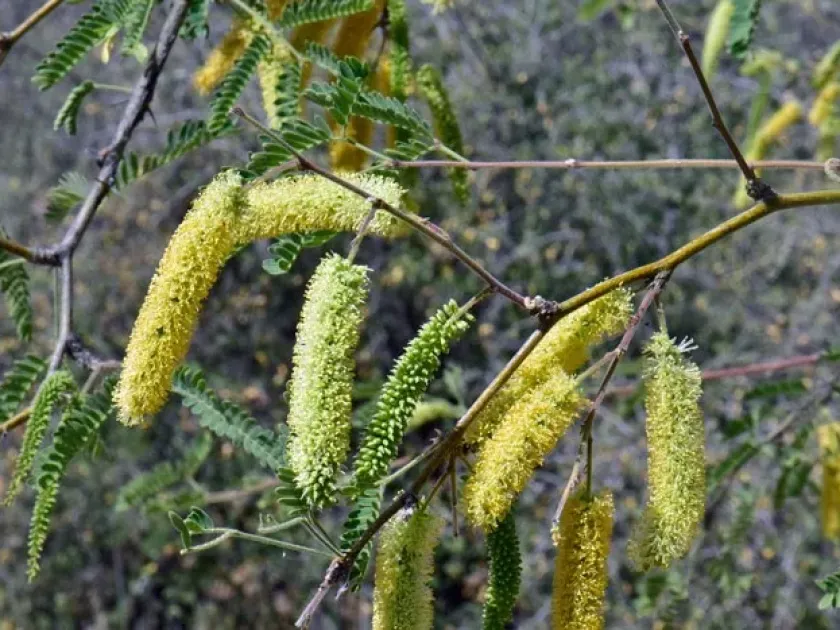
Prosopis is a genus of shrubs and trees in the family Fabaceae, notorious for being one of the most aggressive invasive species worldwide. These plants are characterized by their feathery compound leaves and, in many species, long, sharp thorns that protect them from herbivores.
The root system of Prosopis is exceptionally deep, reaching depths of over 20-30 meters in arid environments. This adaptation allows the plant to tap into deep groundwater, making it nearly invincible in drought conditions.
The flowers are typically small, yellow, and arranged in cylindrical spikes. After pollination, the plant produces large seed pods that contain many seeds, which can remain viable in the soil for several years.
Prosopis exhibits extreme environmental plasticity, allowing it to colonize diverse landscapes, from overgrazed pastures to cultivated fields, quickly forming dense, impenetrable thickets.
It is widely recognized by ecologists as a major threat to biodiversity and agriculture because it fundamentally alters the hydrology and nutrient dynamics of the habitats it invades.
What it damages
Prosopis causes significant economic losses in agriculture by competing intensely with crops for limited water and soil nutrients. In arid regions, it can completely ruin harvests by outcompeting native and cultivated plants.
In pastures, Prosopis creates dense, thorny thickets that block livestock movement and restrict access to forage. This forced exclusion of livestock significantly reduces the carrying capacity of grazing lands.
The plant causes infrastructure damage, as its thorns can puncture vehicle tires and create hazards for farmers. Furthermore, it complicates the use of mechanical equipment during soil preparation and harvest.
Prosopis seeds are often spread by livestock that consume the pods, leading to the rapid infestation of previously clean grazing areas and surrounding agricultural fields.
By altering the local environment, Prosopis reduces soil fertility and causes widespread erosion, as its dense shade and heavy water consumption prevent the growth of protective grass cover.
When it appears
Prosopis activity is strongly linked to temperature and moisture. The germination of seeds generally occurs at the beginning of the warm season or following substantial rainfall events.
Flowering usually takes place during the late spring and summer months, when temperatures are high and the plant is physiologically active, maximizing the probability of seed production.
Seed pods reach maturity by late summer or autumn. During this stage, the pods dry out, facilitating the dispersal of seeds by wind, water, or animal vectors across large areas.
Growth may slow down during the coldest months of the year, but the tree remains hardy and well-adapted to survive dormant periods, ready to resume rapid growth as soon as conditions improve.
Continuous monitoring is essential throughout the growing season to identify and eliminate new infestations before they have the chance to establish a permanent seed bank in the soil.
Signs of infestation
The primary sign of a Prosopis infestation is the appearance of thorny, feathery-leaved bushes in areas where they were not previously present. These plants often grow in clusters.
A noticeable decline in surrounding vegetation, including native grasses or small crops, indicates the competitive pressure exerted by the Prosopis roots for scarce soil moisture.
The presence of distinct, long, tan or straw-colored seed pods on the ground beneath the plants is a clear indicator that the species is reproducing and spreading effectively.
Soil compaction or a shift in the local plant community composition around the tree base often signals that the Prosopis specimen has established a strong and invasive presence.
The survival of the plant after standard mechanical weed control attempts is another sign, as Prosopis is notorious for its ability to resprout vigorously from its deep root system if not completely removed.
Control measures
Mechanical control, such as uprooting, is only effective if the entire root system is removed. If the root crown remains, the plant will sprout again, often with even greater vigor than before.
Chemical control involving systemic herbicides is widely recommended. Applying herbicides directly to the stumps immediately after cutting or as a foliar spray during active growth periods is highly effective.
Integrated land management, including proper crop rotation and the maintenance of dense ground cover, can help prevent the successful establishment of new Prosopis seedlings.
Biological control, utilizing specific insect agents that attack the pods or foliage of the plant, has shown potential in large-scale programs designed to limit the spread of this invasive species.
- Regular field surveillance.
- Immediate removal of individual plants.
- Cleaning of farm machinery to prevent seed dispersal.
- Strategic use of systemic herbicides.
Taxonomy
- Latin name
- Prosopis
- Order
- Hymenoptera
- Family
- Apidae
- EPPO code
- PRSSSP
Discussion
No discussions yet — be the first.