
Bedstraw hawkmoth
Proserpinus proserpina
Description
How to identify
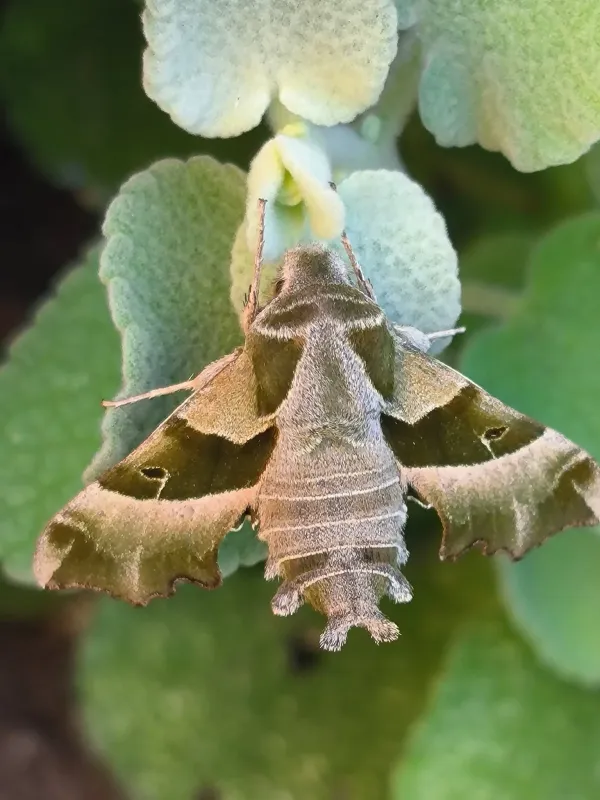
The bedstraw hawkmoth (Proserpinus proserpina) is a moth of the Sphingidae family, order Lepidoptera, known for its distinct appearance.
Adult moths have a wingspan of 40 to 50 mm, featuring jagged wing edges and camouflage colors that blend well with tree bark or dead foliage.
The larvae, or caterpillars, grow up to 60 mm long. They lack the classic horn found on other hawkmoth larvae, possessing a distinct eyespot on the rear instead.
The coloration of the caterpillar varies from green to brown, allowing it to hide effectively among the leaves of its host plants during the day.
The imagos are primarily active at dusk, and they are famous for their ability to hover over flowers while feeding on nectar, similar to hummingbirds.
What it damages
The primary damage is caused by the caterpillars, which feed aggressively on the foliage of host plants, leading to significant defoliation.
Their preferred diet consists of plants from the Onagraceae family, most notably willowherbs (Epilobium) and bedstraw (Galium) species.
In gardening environments, they can cause aesthetic damage to ornamental plants like fuchsia and evening primrose (Oenothera).
Severe infestations can lead to a drastic reduction in plant vigor, weakening the specimen and making it more susceptible to environmental stress.
Continuous feeding causes a decrease in photosynthetic area, which is particularly harmful to young or freshly transplanted ornamental plants.
When it appears
The lifecycle typically consists of a single generation per year, though warmer climates may allow for a partial second generation in some seasons.
Adults emerge in late spring or early summer, usually between May and June, depending on local weather conditions and temperatures.
Eggs are deposited individually on the undersides of leaves, ensuring the larvae have immediate access to food upon hatching.
Caterpillars are active feeders during the summer months, with their peak activity occurring throughout June and July when they reach full size.
Pupation takes place in the summer, and the insects remain in the pupal stage within the soil or ground debris throughout the winter period.
Signs of infestation
Initial signs of infestation include irregular, jagged feeding patterns along the margins of leaves, often leaving only the midribs behind.
The presence of frass (caterpillar droppings) under the canopy is a clear indicator of larval activity occurring in the upper foliage.
Evening inspections using a flashlight can reveal the caterpillars, as they are most active during the night and hide during the day.
Searching the undersides of leaves can uncover the small, pale eggs, allowing for early intervention before the larvae start causing damage.
Because the larvae are well-camouflaged, look for the unique rear eyespot on the caterpillars when examining suspected host plants.
Control measures
Manual removal of caterpillars is a highly effective method for small-scale gardens; it is best performed at dusk or early morning.
Keeping the garden free of weeds like willowherb and bedstraw helps remove the primary breeding ground for this specific hawkmoth species.
Biological control using Bacillus thuringiensis sprays is recommended for larger infestations, as it targets larvae without harming beneficial insects.
Tilling the soil in late autumn can help expose the pupae to predators and frost, significantly reducing the population for the next growing season.
Avoid excessive use of broad-spectrum insecticides, as these can harm pollinators and beneficial predatory insects that inhabit the garden ecosystem.
Taxonomy
- Latin name
- Proserpinus proserpina
- Order
- Lepidoptera (butterflies)
- Family
- Sphingidae
- EPPO code
- PSRPSE
Discussion
No discussions yet — be the first.