
Proserpinus proserpina
Proserpinus
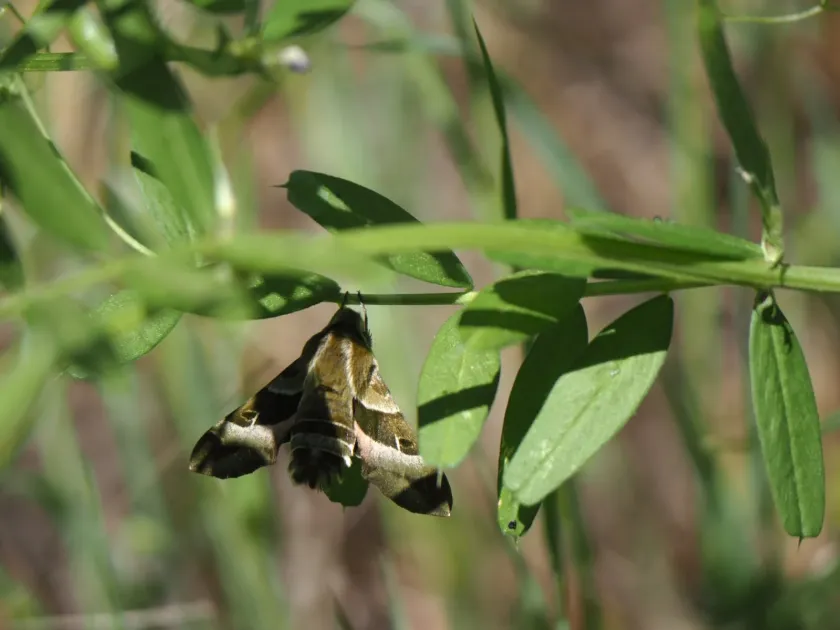
Description
How to identify
Proserpinus proserpina, commonly known as the willowherb hawkmoth, belongs to the Sphingidae family within the order Lepidoptera.
The adult moth features a wingspan of up to 50 mm, with wings colored in olive-green to brownish shades, designed to resemble a dry leaf.
A distinctive feature of the larvae is a small horn-like protrusion on the posterior end of the body, typical for most hawk moth caterpillars.
Caterpillars display a wide range of colors from bright green to brown, providing excellent camouflage against the stems of host plants.
The pupae are cylindrical, dark brown in color, and typically spend the winter buried in the soil or under leaf litter at shallow depths.
What it damages
The primary hosts for Proserpinus proserpina are plants within the Onagraceae family, particularly species like willowherb (Epilobium) and bedstraw.
While the moth is more common on wild plants, larvae may occasionally infest ornamental garden plants that share botanical characteristics with their hosts.
Ornamental flowers such as Fuchsia and Oenothera are particularly vulnerable when grown in proximity to wild habitats of the willowherb hawkmoth.
Larvae feed voraciously on leaf blades, often consuming the edges or performing complete skeletonization of leaves, leaving only the primary veins.
Severe defoliation significantly weakens the host plant, resulting in stunted growth and a noticeable decline in the aesthetic value of ornamental plantings.
When it appears
The flight period for adult moths typically occurs between May and July, depending heavily on the regional climate and temperature conditions.
These moths are primarily nocturnal or crepuscular, spending daylight hours in a state of rest where they are perfectly camouflaged against their surroundings.
Caterpillar development happens throughout the summer months, with peak feeding activity usually observed during June and July.
Pupation takes place towards the end of summer, after which the pupae enter a dormant state to survive the winter months underground.
The number of generations per year varies by latitude, with warmer southern climates potentially supporting two generations in a single season.
Signs of infestation
The first indicator of an infestation is the appearance of large, irregular holes or missing margins on the leaves of host plants during field inspections.
The presence of frass (caterpillar droppings) on the soil surface or lower leaves provides clear evidence of ongoing larval feeding activity.
Advanced infestations often reveal skeletonized leaves, where only the vascular structure remains, signaling a heavy population of feeding larvae.
Nighttime monitoring with a light source allows for the direct observation of larvae, which are much more active and easier to spot in the dark.
General signs of plant stress, such as yellowing leaves, slowed development, or premature leaf drop, often correlate with high larval density.
Control measures
Manual removal of caterpillars is a highly effective method for small gardens, especially if performed during their peak activity hours in the evening.
Maintaining a weed-free area and removing wild host plants like willowherb from the vicinity can significantly reduce the risk of infestation.
Biological control agents, such as formulations containing bacteria or fungi, provide an environmentally friendly solution for managing younger larvae.
Chemical insecticides should be reserved for severe outbreaks and applied in accordance with regional agricultural regulations and safety guidelines.
- Autumn soil cultivation or light digging around plant bases helps destroy overwintering pupae, effectively lowering the pest population for the next year.
Taxonomy
- Latin name
- Proserpinus
- Order
- Lepidoptera (butterflies)
- Family
- Sphingidae
- EPPO code
- PSRPSP
Discussion
No discussions yet — be the first.