
Spittlebug Prosapia simulans
Prosapia simulans
Description
How to identify
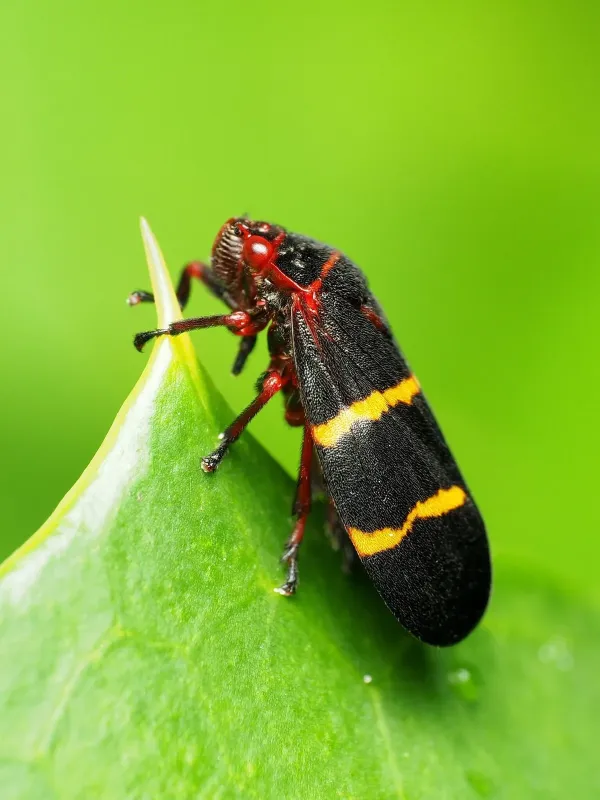
Prosapia simulans belongs to the Cercopidae family, commonly known as spittlebugs. Adult insects are typically dark with distinctive orange or red stripes on their wings, making them easy to recognize.
The larvae are famous for creating protective foam masses, which they secrete from their waste and glandular fluids. This foam protects them from dehydration and natural predators.
Adults range from 8 to 12 mm in length. This specific species is well-adapted to the climatic conditions of Central America and thrives in grassy environments with consistent moisture.
The life cycle encompasses the egg stage, five larval instars, and the adult stage. Eggs are usually laid at the base of plants or in the soil, ensuring survival during dry periods.
Agronomists identify the pest by searching for the characteristic foam or by using sweep nets to capture adults during peak activity periods in the pasture.
What it damages
The pest primarily targets pasture grasses and forage crops. Heavy infestations can lead to a drastic reduction in biomass, impacting hay production and overall field quality.
The spittlebug feeds on xylem sap, using its piercing-sucking mouthparts. This feeding process drains the plant of essential nutrients and inhibits its metabolic functions.
Saliva injected by the insect contains toxins that cause chlorosis and localized necrosis. As a result, the leaves turn yellow or brown and the plant growth becomes stunted.
Severe infestations can cause entire sections of a pasture to wither and dry out, significantly reducing the grazing capacity of the land for livestock.
Weed populations surrounding the fields serve as reservoirs for the pest, allowing it to migrate onto crops and maintain a constant cycle of re-infestation.
When it appears
The population density of Prosapia simulans is highly correlated with rainfall and humidity levels. Activity peaks during the rainy season when moisture is abundant.
The life cycle is synchronized with seasonal changes. Eggs can enter diapause during the dry season, waiting for the return of favorable moisture to hatch successfully.
Adults are most active during warm, sunny days when they move between plants to feed and mate. This is when the insect is most vulnerable to monitoring efforts.
In regions with multiple rainy seasons, the pest can complete several generations annually, requiring sustained pest management throughout the growing season.
Winter survival in temperate regions depends on the egg stage, which is resistant to harsh weather conditions, ensuring the population returns the following spring.
Signs of infestation
The most prominent sign of infestation is the appearance of white, bubbly foam masses on the stems and leaf axils of grasses, often referred to as "cuckoo spit."
Infested plants show clear signs of distress, including leaf curling, yellowing, and necrotic spots. These symptoms are often confused with nutrient deficiencies.
A noticeable decrease in the overall volume of the grass cover is a strong indicator of high larval populations feeding at the base of the plant.
Mass flights of adult insects when walking through the field indicate a significant infestation level that requires immediate corrective action.
Droppings left by the larvae around the base of the plant, which appear as damp, muddy-like spots, are a specific diagnostic marker for this species.
Control measures
Cultural control, such as timely mowing, is highly effective as it exposes larvae to direct sunlight and predators by destroying their foam-based microhabitat.
Biological control options involve the application of entomopathogenic fungi, which can reduce population levels significantly in humid conditions.
Chemical control should be targeted at the early larval stages before the foam masses become too thick and protective. Systemic insecticides are generally preferred.
- Regulating irrigation to avoid excessive moisture.
- Rotating crops to break the host-plant cycle.
- Encouraging natural enemies like parasitic wasps and spiders.
Monitoring with yellow sticky traps provides data on adult activity, helping agronomists time insecticide applications for maximum efficacy against the pest.
Taxonomy
- Latin name
- Prosapia simulans
- Order
- Hemiptera (bugs, aphids, leafhoppers)
- Family
- Cercopidae
- EPPO code
- PRSASI
Discussion
No discussions yet — be the first.