
Two-lined spittlebug
Prosapia bicincta
Description
How to identify
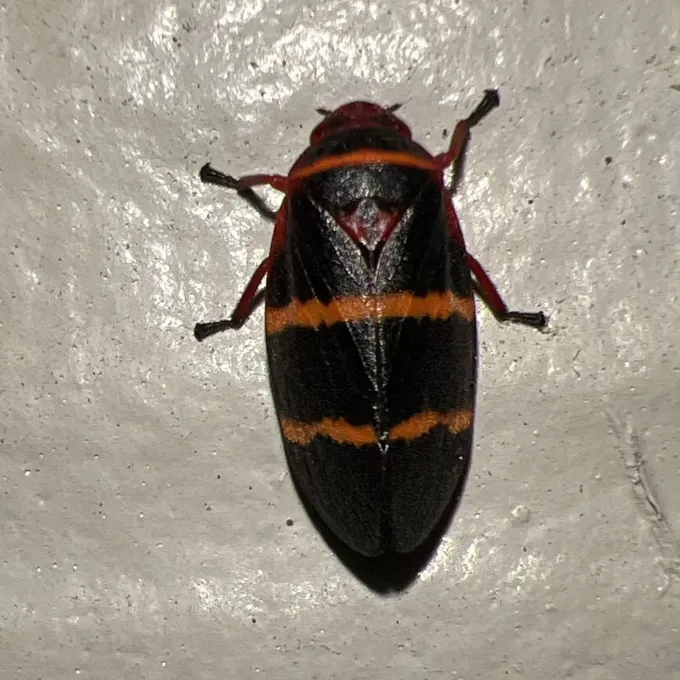
The two-lined spittlebug (Prosapia bicincta) is a member of the Hemiptera order and the Cercopidae family. Adults are easily recognized by their dark bodies featuring two distinct orange or red stripes across their wings.
The adult insect typically measures between 6 and 10 mm in length. The nymphs are soft-bodied and secrete a protective, frothy substance that resembles spit, which helps shield them from predators and dehydration.
This pest is most prevalent in warm, humid climates where lush vegetation provides the necessary cover and moisture for its survival and rapid population growth.
The eggs are oval-shaped and are primarily deposited in the base of grasses or within the soil and leaf litter, allowing them to overwinter safely in the ground.
Their life cycle consists of the egg stage, five nymphal instars, and the adult phase, with multiple generations capable of completing their development within a single growing season.
What it damages
This pest primarily targets turfgrasses, including species used in lawns, pastures, and several agricultural crops such as corn, sorghum, and various forage grasses.
Nymphs feed on the plant's xylem sap by attaching themselves to the base of the stems, which drains the plant of vital nutrients and weakens the overall root structure.
Adults feed on the leaves, causing chlorotic spots to appear. As the infestation progresses, the leaves begin to brown and wither, leading to significant tissue necrosis and plant death.
Heavy infestations can devastate large areas of lawn or pasture, leaving behind unsightly dead patches that are unable to recover without reseeding or extensive treatment.
The economic impact is significant, as it leads to reduced forage production, compromised pasture quality, and the high cost of applying insecticides to prevent total crop loss.
When it appears
The emergence of the two-lined spittlebug is heavily influenced by soil temperature; eggs typically begin to hatch in the spring once the ground reaches an optimal temperature range.
Adult populations usually peak during early to mid-summer, which often corresponds with the most vigorous growth stage of the host grasses, providing ample food supplies.
In warm regions with prolonged summer conditions, a second generation can emerge by late summer or early autumn, extending the period of potential damage until the first frosts.
While drought conditions may temporarily reduce activity, the pest remains highly resilient, and even moderate moisture levels can trigger a rapid resurgence in their population.
Proactive monitoring should begin as soon as spring temperatures rise to effectively target the vulnerable nymphal stages before they reach the more damaging adult stage.
Signs of infestation
The most reliable sign of an infestation is the presence of frothy, white spittle masses located at the base of the stems, which are created by the nymphs for protection.
Early visual cues include the browning of leaf tips and a general yellowing of the turf, which is often misidentified as drought stress due to the similar appearance of the damage.
Upon closer inspection, one may observe thinning of the grass canopy and the presence of adult insects hopping through the foliage when disturbed.
- White spittle masses found near the base of grass stems.
- Chlorotic or browning foliage, especially at the leaf tips.
- Appearance of irregular, dead patches in lawns or fields.
- Reduced grass vigor following routine mowing or grazing.
Advanced signs of damage include large, brittle, and dead patches of grass that can be easily pulled from the ground due to severe root system degradation.
Control measures
Good cultural practices are the first line of defense; regular mowing and proper aeration can reduce humidity in the thatch layer, making the habitat less suitable for nymphs.
Managing irrigation is crucial, as excessive soil moisture promotes higher survival rates for the nymphs; therefore, ensuring well-drained conditions is vital for long-term control.
Chemical control can be highly effective when insecticides are applied during the early morning hours, targeting the insects when they are most active near the surface.
Biological control agents, such as specific entomopathogenic fungi, are becoming increasingly popular as a sustainable way to suppress spittlebug populations without chemical runoff.
Monitoring using yellow sticky traps is a recommended strategy to track the emergence of adults, allowing for timely application of interventions before the next egg-laying cycle.
Taxonomy
- Latin name
- Prosapia bicincta
- Order
- Hemiptera (bugs, aphids, leafhoppers)
- Family
- Cercopidae
- EPPO code
- TOMABI
Discussion
No discussions yet — be the first.