
Prochoreutis
Prochoreutis
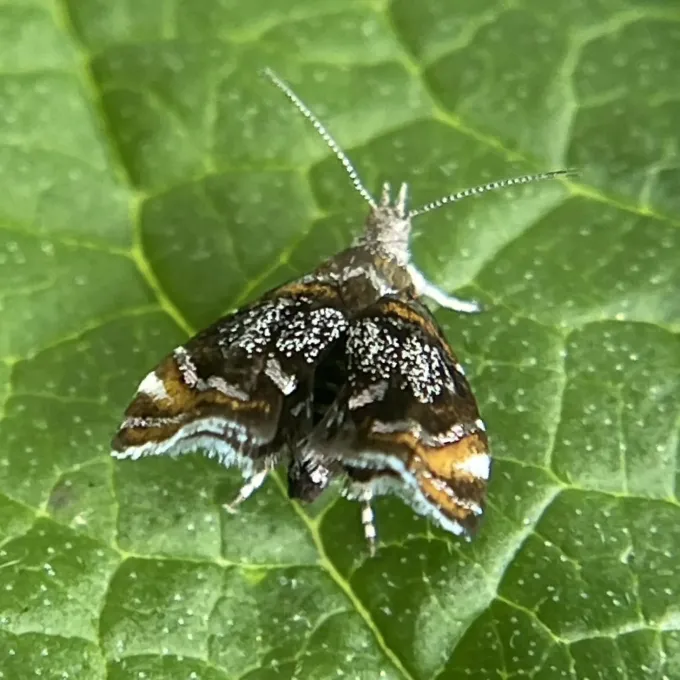
Description
How to identify
Prochoreutis is a genus of small moths belonging to the family Choreutidae. These insects are known for their compact size, typically having a wingspan between 10 and 15 mm.
Adult moths are characterized by their dark, often brownish or black wings, which may exhibit a metallic sheen and distinct white or pale patterns.
The larvae, or caterpillars, have a cylindrical body structure with well-developed thoracic legs, facilitating their movement across host plant foliage.
Taxonomically, they are classified within the order Lepidoptera, with specific biological behaviors that align with the broader traits of the Choreutidae family.
Accurate species-level identification often requires expert examination of wing venation or genitalic features due to the subtle variations between different species in the genus.
What it damages
Prochoreutis species typically target plants from families such as Lamiaceae and Asteraceae, affecting both wild flora and various cultivated species.
The larvae feed primarily on leaf tissue, often causing skeletonization or creating window-like patches by consuming the parenchyma while leaving the veins intact.
Such feeding habits lead to a reduction in the plant's photosynthetic efficiency, which can stunt growth and weaken the overall vitality of the plant.
In nursery settings, heavy infestations can result in significant aesthetic damage, reducing the commercial value of ornamental plants and herbs.
Continuous damage to young shoots can hinder the plant's structural development and, in severe cases, cause total foliage loss on specific branches.
When it appears
The lifecycle of Prochoreutis is closely synchronized with the growing season of its host plants, with adult activity typically peaking during the warmer months.
Depending on the climatic zone, the pest may complete one or multiple generations annually, with larvae being most active from late spring through summer.
Overwintering usually occurs in the pupal or adult stage, hidden within plant debris, crevices, or dry vegetation, allowing them to survive cold periods.
Peak emergence of adults is often observed during periods of stable temperature and moisture, which coincide with the rapid growth phase of their food sources.
Variations in regional weather patterns can influence the number of generations per year, potentially leading to population spikes in warmer, extended summers.
Signs of infestation
One of the most notable signs of a Prochoreutis infestation is the presence of fine silk webbing used by larvae to fold or tie leaves together for protection.
Visual inspection reveals patches where the leaf surface has been partially removed, creating a characteristic translucent look in the affected areas.
The presence of larval frass (droppings) within these webbed nests is a definitive indicator of an active and feeding population on the plant.
As damage progresses, the affected foliage may turn yellow, brown, and eventually wither, which disrupts the normal physiological functions of the plant.
Distortion of the apical growth and curling of young leaves are frequent symptoms that highlight the localized feeding activity of the larvae.
Control measures
Effective management begins with cultural practices, such as removing and destroying overwintering sites, including infested plant debris and surrounding weeds.
Manual removal of webbed leaves at the early stage of infestation is a simple yet highly effective way to prevent the population from expanding.
Biological control using formulations based on Bacillus thuringiensis is recommended for sensitive environments, providing a safe alternative to broad-spectrum insecticides.
Chemical intervention should be reserved for periods of high infestation, utilizing contact or systemic insecticides in accordance with label guidelines and local safety regulations.
- Deploying pheromone-based monitoring traps to track flight periods.
- Promoting biodiversity to encourage natural predators like parasitic wasps.
- Regular field scouting to identify and treat hotspots before the pest spreads.
Taxonomy
- Latin name
- Prochoreutis
- Order
- Lepidoptera (butterflies)
- Family
- Choreutidae
- EPPO code
- QCHOSP
Discussion
No discussions yet — be the first.