
Marbled crayfish
Procambarus virginalis
Description
How to identify
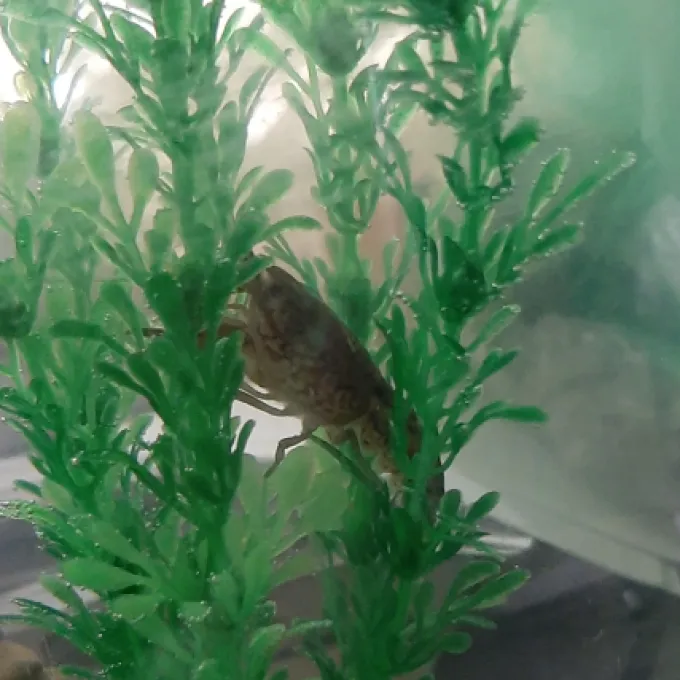
The marbled crayfish is a unique crustacean species characterized by its ability to reproduce through obligate apomictic parthenogenesis, meaning all individuals are females.
Classified under the family Cambaridae and the order Decapoda, this species is named for the distinct marbled pattern visible on its exoskeleton.
Adult individuals typically grow to approximately 10–12 centimeters in length and possess a highly adaptable biology that allows survival in various freshwater habitats.
Their rapid expansion is primarily driven by human activity, often starting from domestic aquarium releases into natural waterways, ponds, and drainage canals.
Because they do not require a mate, a single individual is sufficient to establish a new, thriving population in a previously unaffected area.
What it damages
The marbled crayfish acts as an omnivore, feeding aggressively on aquatic vegetation, which causes significant damage to rice paddies and wetland crops.
By consuming roots and tender shoots, they can destroy seedlings, leading to substantial yield losses and necessitating expensive replanting processes.
Their burrowing behavior is a major threat to agricultural infrastructure, as they dig deep tunnels into dikes, dams, and irrigation canal embankments.
The resulting structural degradation leads to water leakage, preventing effective irrigation and causing water stress for crops during the critical growth stages.
Furthermore, they alter the local aquatic ecology by competing with native species for resources and potentially acting as vectors for various diseases and parasites.
When it appears
The activity of the marbled crayfish is heavily dependent on water temperatures, with peak aggression and reproductive cycles occurring during the spring and summer.
In temperate and tropical climates, these crayfish can remain active throughout most of the year, posing a year-round threat to irrigation efficiency.
During the spring, the emergence of juveniles from burrows coincides with the early development phases of many crops, increasing the risk of early-season damage.
When water temperatures drop in the autumn, their metabolic rates decrease, leading them to seek shelter in deeper sediment or within their established burrow systems.
Monitoring should be most intensive during the warm months, when metabolic demand is highest and the crayfish are most active in searching for food sources.
Signs of infestation
Visible signs of infestation include the presence of numerous deep burrows along riverbanks, canal edges, and reservoir embankments that indicate high population density.
Floating fragments of partially consumed aquatic plants and clipped rice stems on the water surface are clear indicators of their feeding activity.
Patches of sparse or missing crops within fields often highlight areas where crayfish have caused localized destruction of root systems and stems.
Increased turbidity in irrigation water, caused by constant digging and sediment displacement, frequently alerts farmers to the presence of these burrowing pests.
Direct sightings of marbled crayfish in irrigation ditches or trapped in filters are definitive proofs of their colonization within the local agricultural system.
Control measures
Mechanical control, including intensive trapping and netting throughout the irrigation season, is currently the most practical method for population reduction.
Regular maintenance and physical reinforcement of embankments and dikes are essential to mitigate the damage caused by their persistent burrowing activities.
Biological control efforts, such as introducing or encouraging natural predators, are sometimes discussed but require careful ecological risk assessment.
Chemical control measures are generally avoided due to the significant risk of contaminating irrigation water and harming non-target beneficial aquatic organisms.
Preventative management, focusing on educational outreach and strict regulations against releasing exotic species into the environment, remains the best long-term strategy.
Taxonomy
- Latin name
- Procambarus virginalis
- Family
- Cambaridae
- EPPO code
- PROMVI
Discussion
No discussions yet — be the first.