
Rusty crayfish
Faxonius rusticus
Description
How to identify
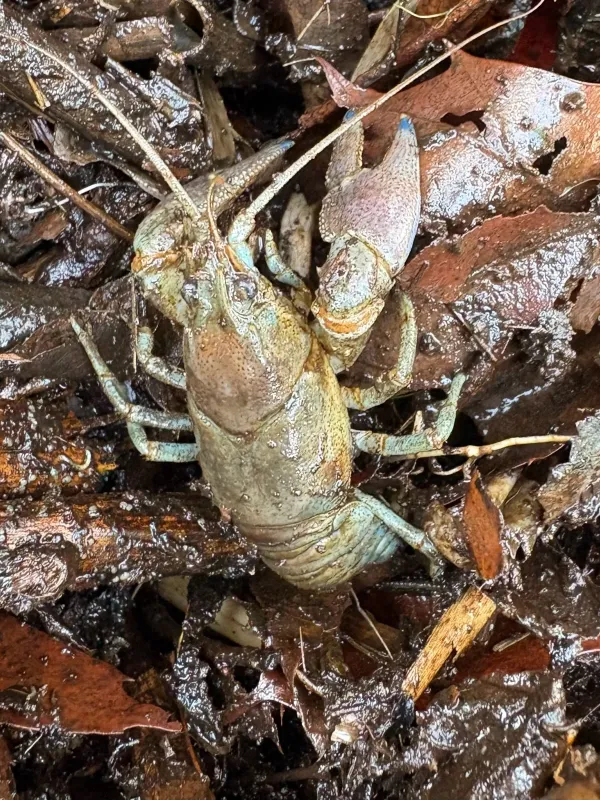
The Rusty crayfish (Faxonius rusticus) is a crustacean species belonging to the Cambaridae family. It is distinctively marked by dark, rust-colored spots on each side of its carapace, which serve as its primary identifying feature.
Adults are typically larger and more aggressive than native crayfish species. They possess robust, large claws with dark bands near the tips, allowing them to dominate other species and claim prime habitat areas.
They exhibit high physiological tolerance to varying water temperatures and oxygen levels. This resilience enables them to thrive in diverse aquatic environments, ranging from flowing streams and rivers to stagnant ponds and reservoirs.
The reproductive cycle involves mating and a prolonged incubation period. Females carry eggs on their pleopods, ensuring protection until the young hatch, which contributes to the rapid colonization capabilities of the species.
As an invasive species, they are highly prolific. Once introduced into a new habitat, they rapidly expand their range, often outcompeting native crayfish populations and depleting resources essential for local aquatic life.
What it damages
Rusty crayfish are notoriously destructive to aquatic plant communities. By consuming large quantities of submerged vegetation, they strip the lake bottom of critical habitat used by native fish for spawning and nursery grounds.
The removal of vegetation often leads to increased bank erosion and water turbidity. This habitat degradation negatively affects the entire food web, potentially leading to a decline in local fish populations and biodiversity.
In aquaculture environments, these crayfish compete with fish for food supplies. They are also known to damage fishing gear and nets, resulting in increased maintenance costs and operational losses for commercial fish farms.
They act as vectors for various diseases and parasites that can devastate native crayfish species. The spread of these pathogens poses a significant ecological threat to long-established aquatic communities in affected areas.
Furthermore, their burrowing activity can compromise the structural integrity of earth dams and riverbanks. This can cause unexpected water leakage and destabilize riparian infrastructure, posing a physical threat to pond management systems.
Control measures
Preventing the spread of the species is the most effective management strategy. This includes strict regulations on the transport of live crayfish and banning the use of Rusty crayfish as live bait by anglers.
Mechanical control through intensive trapping programs can reduce the population density in small ponds and enclosed water bodies. Regular monitoring of trapping sites is essential to assess the effectiveness of the control efforts.
Promoting a healthy population of natural predators, such as smallmouth bass or large perch, can help mitigate the impact of Rusty crayfish. Predators play a key role in keeping young crayfish populations in check.
Public education campaigns are crucial for identifying the species early. Anglers and boaters should be trained to clean their equipment thoroughly to prevent the accidental transfer of eggs or larvae to uninfested waters.
In cases of severe infestation, coordinated government-led eradication programs may be required. These programs might utilize professional trapping or targeted biological management to restore the balance of the local ecosystem.
Taxonomy
- Latin name
- Faxonius rusticus
- Family
- Cambaridae
- EPPO code
- ORCORU
Discussion
No discussions yet — be the first.