
Faxonius crayfish
Faxonius
Description
How to identify
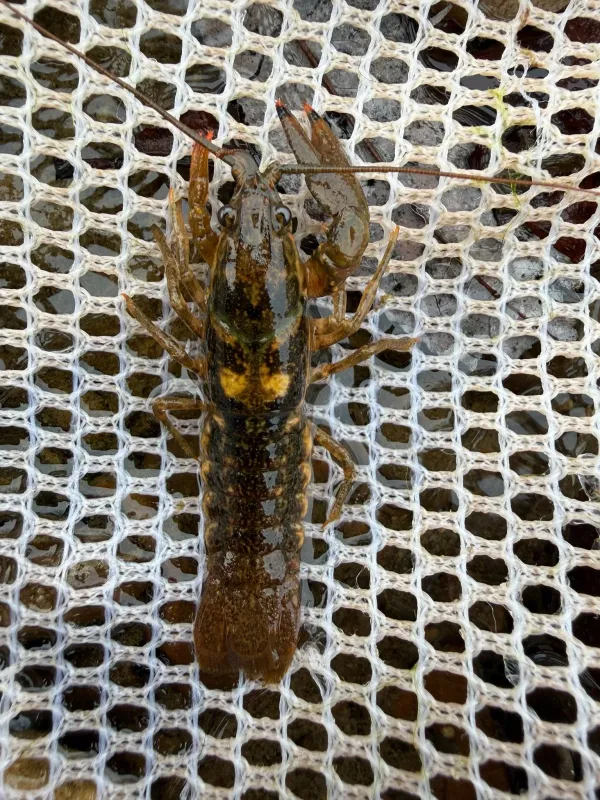
The Faxonius crayfish (genus Faxonius, such as Faxonius limosus) belongs to the order Decapoda and the family Cambaridae. These are aggressive freshwater crustaceans characterized by dark transverse stripes on the abdomen.
Adult individuals typically grow to 10–12 cm in length. Their carapace is brown or tan, and the distinct red spots on the abdominal segments serve as a primary identification feature for this group of invasive species.
They are highly tolerant to poor water quality, low dissolved oxygen, and moderate pollution. This adaptability allows them to dominate new habitats quickly, often outcompeting native crayfish species.
Reproduction occurs in the spring, with females carrying eggs attached to their pleopods. The rapid development of juveniles ensures that the population can establish itself even in suboptimal environmental conditions.
A critical biological characteristic is their role as a vector for crayfish plague (Aphanomyces astaci). They carry the pathogen without being affected by it, which makes them highly destructive to native crayfish populations.
What it damages
The agricultural damage caused by Faxonius species is significant in areas with irrigation canals and aquaculture ponds. They excavate deep burrows in banks, which leads to soil erosion and water leakage.
These crayfish consume large quantities of aquatic vegetation, including young rice sprouts in paddy fields, leading to direct crop loss and degradation of the aquatic habitat.
In aquaculture, they are considered pests due to their predation on fish eggs and young fish. Furthermore, they frequently damage fishing nets and interfere with harvesting equipment.
By altering the local food web, they consume snails and macroinvertebrates that are essential for the balance of the ecosystem, which can ultimately lead to a decline in overall biodiversity.
The structural damage to dam walls and irrigation dikes increases the cost of maintenance for farmers and water managers, making this species a primary concern for agricultural security.
When it appears
Activity begins in early spring as water temperatures rise above 8–10 degrees Celsius. This period marks the start of the mating season and active movement throughout the water bodies.
The peak of their harmful activity occurs during the summer months when metabolic rates are at their highest. During this time, foraging is intensive to support growth and molting.
Autumn activity remains significant as individuals feed aggressively to accumulate energy reserves in preparation for the winter dormancy period.
During the winter, these crayfish become largely inactive, retreating into deep burrows in the substrate or bank slopes where they remain until water temperatures rise again.
The lifecycle is continuous during the growing season, with high reproductive output, which allows the species to maintain a dense population in any suitable habitat throughout the year.
Control measures
Trapping is the primary mechanical control method. Targeted efforts using specific designs for crayfish pots can significantly reduce local population density when conducted regularly.
Biological control methods involve managing habitats to favor native predators like perch or pike, which can provide some degree of natural suppression against juvenile stages.
Engineering controls are essential, such as lining pond banks with riprap or geotextiles that prevent burrowing, thereby protecting the integrity of dams and irrigation canals.
Regulatory measures, including strict prohibitions on the release of live crayfish or their use as bait in new areas, are critical to preventing further spread across agricultural landscapes.
In extreme cases of infestation, drying out ponds and performing thorough sediment removal is necessary to eliminate the resident population before the next planting season.
Taxonomy
- Latin name
- Faxonius
- Family
- Cambaridae
- EPPO code
- FAXOSP
Discussion
No discussions yet — be the first.