
North American crayfish
Orconectes
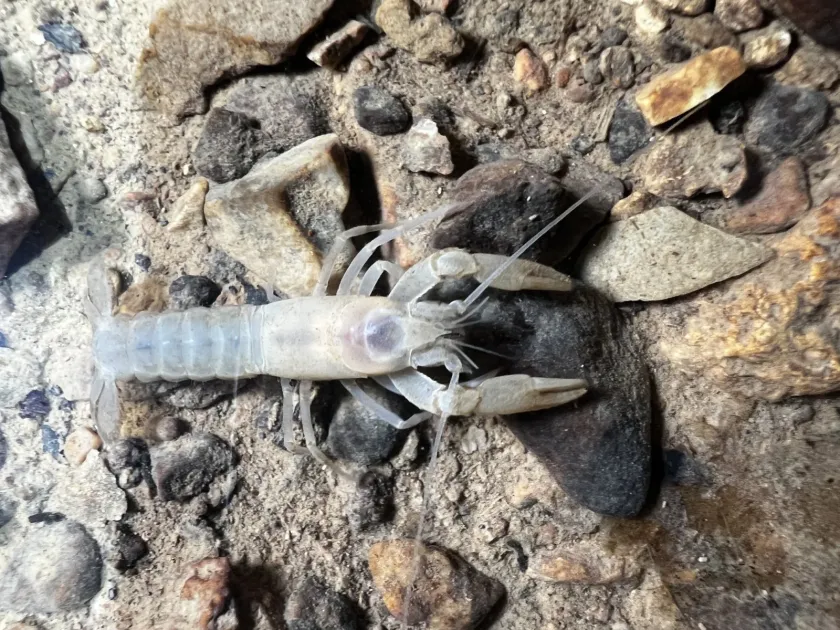
Description
How to identify
North American crayfish of the genus Orconectes (including Orconectes limosus) are invasive crustaceans of the Cambaridae family. They are highly adaptable and thrive in various aquatic environments, including irrigation ditches.
These organisms are characterized by robust chelae (claws) used for burrowing and feeding. Their shell color ranges from brown to greenish-grey, providing camouflage against the substrate of agricultural canals.
Taxonomically, they belong to the order Decapoda. Their high reproductive rate and lack of significant natural predators in many regions facilitate their rapid colonization of agricultural lands.
They possess a unique ability to withstand periods of low water levels by retreating into deep burrows. This resilience allows them to persist even in temporary water bodies.
The morphology of their abdomen and claws is specifically adapted for movement in silty or sandy substrates, enabling them to alter the structure of soil embankments significantly.
What it damages
The primary impact of Orconectes crayfish involves mechanical destruction of water infrastructure. By burrowing into canal banks and embankments, they cause leaks and loss of water supply to fields.
In rice cultivation, these pests pose a direct threat by consuming young seedlings. They frequently clip the stems, leading to severe crop stand reduction and significant economic loss.
Burrowing activities destabilize irrigation levees, leading to soil erosion and the accumulation of silt in drainage channels, which hampers overall water management efficiency.
Physical damage to the root systems of crops caused by their foraging makes the plants susceptible to fungal infections and subsequent root rot, further weakening the vegetation.
Beyond direct feeding, their presence alters the chemical and physical characteristics of the water, creating an unfavorable environment for healthy crop development.
When it appears
Crayfish activity typically begins in early spring as water temperatures rise above 8–10 degrees Celsius. They emerge from their winter burrows to begin foraging.
The peak of their destructive activity occurs during the summer months, correlating with the active growth phase of crops and the increased metabolic needs of the crayfish.
Molting periods during the summer reduce their mobility, but they remain a consistent threat as they seek nutrients to regenerate their shells and grow.
As autumn approaches and temperatures drop, these crayfish migrate toward deeper sections of canals or increase the depth of their burrows to prepare for winter dormancy.
The entire life cycle is intimately linked to the hydrologic regime of irrigation systems, making their emergence patterns predictable based on the schedule of field flooding.
Signs of infestation
The most evident sign of a crayfish infestation is the presence of burrow openings (holes) along the banks of canals, often accompanied by mounds of excavated sediment.
In rice fields, the presence of «mowed» seedlings with stems severed at the base is a strong indicator of crayfish feeding activity, often seen floating on the water surface.
An unexplained drop in water levels within irrigation sectors, despite regular intake, is frequently caused by leakage through extensive burrow networks in the levees.
The discovery of exuviae (cast-off shells) along canal edges serves as a definitive confirmation of a thriving population in the immediate vicinity.
Visual observation during twilight hours often reveals crayfish moving across the water surface or navigating along the banks in search of food sources.
Control measures
Effective management requires the physical reinforcement of canal embankments using concrete, geomembranes, or compacted clay to prevent burrowing.
Mechanical control measures, such as the use of specialized traps, can successfully reduce population density in localized irrigation networks.
Deep plowing of field edges and idle areas in the late autumn disrupts winter burrows, leading to the collapse of the habitat and mortality of the pest population.
Biological control methods include stocking adjacent water bodies with predator species like catfish or pike, which effectively feed on crayfish populations.
- Regular inspection of hydraulic structures for structural integrity.
- Installation of exclusion screens at water intake points.
- Removal of dense aquatic vegetation that provides shelter.
- Strict maintenance of water control schedules to disrupt their cycle.
Taxonomy
- Latin name
- Orconectes
- Family
- Cambaridae
- EPPO code
- ORCOSP
Discussion
No discussions yet — be the first.