
Cambarus
Cambarus
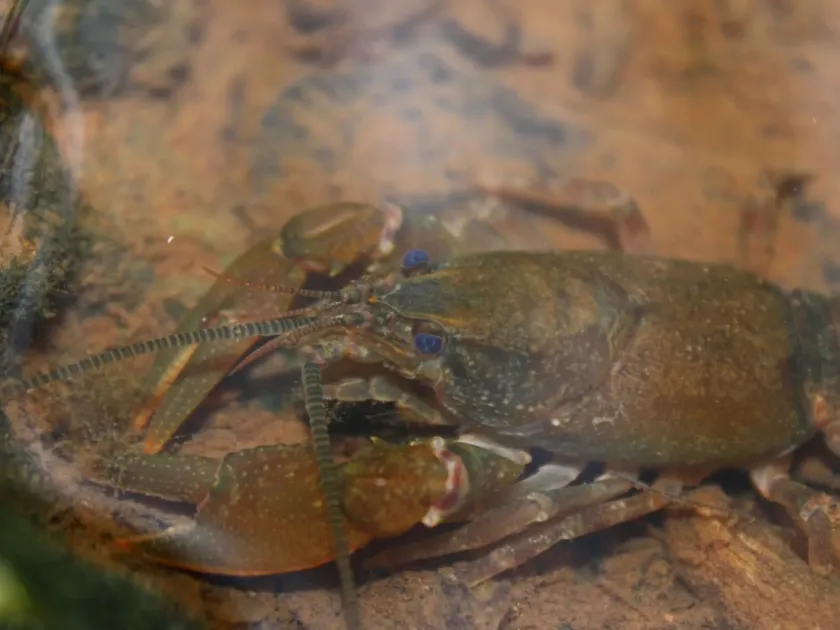
Description
How to identify
Cambarus is a genus of crustaceans belonging to the family Cambaridae. Unlike native European river crayfish, members of this genus are invasive species originally native to North America.
They resemble common crayfish but are distinguished by their high reproductive rate and aggressive behavior. Their color varies from brown to greenish-blue, and their bodies are covered with a hard chitinous exoskeleton.
A key concern is their ability to adapt rapidly to changing environmental conditions. They are extremely hardy and can survive in water bodies with low oxygen levels.
Their agricultural activity is defined by the construction of deep, complex burrow systems that can reach up to a meter in depth. These burrows allow them to survive dry periods and harsh conditions.
Identification requires careful examination of morphology, particularly the chelae (claws) and the cephalothorax, as these traits distinguish them from local species.
What it damages
The primary crops affected by Cambarus activity are flooded rice fields. The pest causes direct damage to young rice sprouts by cutting the stems and consuming the root systems.
In addition to direct crop destruction, crayfish damage irrigation infrastructure. Burrowing into levees and dams of rice paddies causes water leakage and uncontrolled draining.
The destruction of hydraulic structures leads to the drying of fields, which is critical for rice development. This causes uneven crop growth and significant economic losses for farmers.
Crayfish also actively destroy aquatic vegetation, which acts as a natural regulator of the rice field ecosystem. This disrupts the natural balance and promotes soil erosion.
In many cases, colony activity leads to the total loss of marketable yield in specific sections of the field, requiring expensive repairs to the water management systems.
When it appears
The activity of Cambarus is directly linked to water temperature and the irrigation schedule of agricultural fields. Peak damage occurs during the spring and summer, coinciding with the active vegetative stage of rice.
At the start of the season, when paddies are flooded, crayfish emerge from their deep burrows to forage. This is the period when young rice seedlings are most vulnerable to destruction.
Breeding occurs during the warmer months, which triggers population growth and expansion of the affected area. By mid-summer, population density can reach critical levels.
In autumn, as temperatures drop and fields are drained, crayfish retreat deeper into the substrate. They enter a state of forced diapause or reduce activity to prepare for winter.
Weather patterns, such as prolonged rainfall or extreme heat, can slightly shift the timing of activity. However, the overall cycle is tightly governed by the rice cultivation water regime.
Signs of infestation
The first sign of infestation is the presence of numerous holes and burrows on the surface of levees and banks. Near these entrances, one can often find soil piles or characteristic clay chimneys.
In the rice fields themselves, patches of stunted or missing seedlings become visible. Plants are often cut at the base, which cannot be attributed to natural plant death or disease.
A noticeable drop in water levels in certain sections, which cannot be explained by evaporation or normal leakage, indicates dam structural failure caused by burrowing.
Floating plant debris on the water surface is a common indicator. Crayfish often leave behind partially consumed rice stalks as they forage.
At night, surveying the field with a light often reveals large numbers of individuals in shallow areas. Digging marks in the sediment confirm the presence of an established colony.
Control measures
Managing Cambarus requires an integrated approach that combines agrotechnical and chemical methods. Maintaining the structural integrity of irrigation systems is crucial.
The use of specialized molluscicides or insecticides, approved for use in rice farming, is effective when population density is high. Applications should target peak activity periods.
Biological control methods include encouraging natural predators, such as predatory birds or fish. However, this method has limited effectiveness during massive outbreaks.
- Regular drying of paddies to destroy burrow systems.
- Mechanical reinforcement of levees using mesh or netting.
- Trapping crayfish during periods of high activity.
- Practicing crop rotation and thorough soil tillage after harvest.
Monitoring population density is an essential step in control. Upon discovering the first signs of infestation, immediate steps must be taken to localize the colony and prevent expansion.
Taxonomy
- Latin name
- Cambarus
- Family
- Cambaridae
- EPPO code
- CAMBSP
Discussion
No discussions yet — be the first.