
Nais crayfish
Orconectes nais
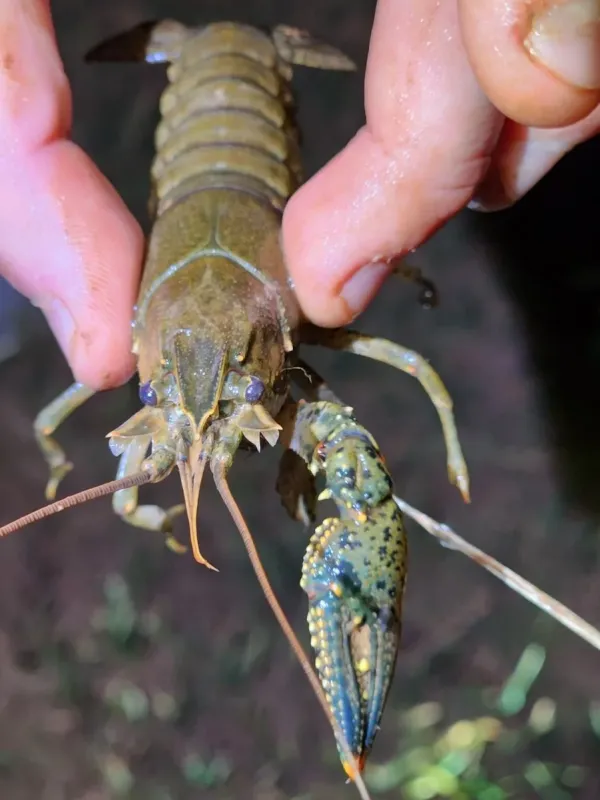
Description
How to identify
The Nais crayfish (Orconectes nais) is a freshwater crustacean species belonging to the Cambaridae family.
This species is well-adapted to lentic environments and has successfully colonized artificial aquatic systems, particularly rice paddies.
Morphologically, it possesses the standard decapod structure with robust claws used for digging and feeding.
The species belongs to the order Decapoda, which implies a complex life cycle characterized by high adaptability to fluctuating water levels.
Its ability to thrive in modified irrigation channels makes it a persistent nuisance in modern agricultural landscapes.
What it damages
The primary crop damaged by this species is rice (Oryza sativa), which provides both habitat and nutrition.
Adults and juveniles feed on young rice shoots, cutting them at the base, which significantly impacts plant stand density.
Beyond crop damage, Orconectes nais is notorious for undermining the structural integrity of irrigation systems.
By burrowing deep into levees and dams, they create channels that lead to substantial water seepage and loss of irrigation water.
This loss of water is critical for rice cultivation, as the crop requires consistent flooding to suppress weeds and ensure growth.
When it appears
The Nais crayfish remains active primarily during the irrigation and growing seasons of the rice crop.
Spring flooding of fields triggers the migration of crayfish into the growing areas to find fresh vegetation.
Summer months represent the peak of their feeding activity, which directly coincides with the most vulnerable stage of rice development.
As temperatures drop and water is drained from the fields in autumn, these crustaceans seek shelter in deeper irrigation channels or underground burrows.
Annual cycle control is dependent on understanding the timing of their breeding and seasonal movement patterns.
Signs of infestation
Visual signs of an infestation include the presence of clipped rice stalks floating in the flooded paddies.
The discovery of numerous circular burrow entrances along the slopes of levees is a primary indicator of established populations.
A steady, unexplained drop in water levels in the rice fields is a hallmark of subterranean tunnel systems created by the crayfish.
Accumulation of soil debris near burrow entrances is another diagnostic sign of active excavating behavior.
Direct sightings during evening inspections with a flashlight can confirm the presence of this specific species.
Control measures
Effective management of Orconectes nais requires an integrated pest management (IPM) approach to minimize damage.
Cultural practices, such as intensive tillage before planting, are essential to destroy burrow networks and reduce survival rates.
Chemical control can be implemented using specific molluscicides or insecticides, though strictly regulated to ensure environmental safety.
Mechanical barriers, including mesh screens on water inlets, are effective in preventing the migration of crayfish between plots.
- Reinforcement of levees with compacted clay or geomembranes.
- Draining fields during non-crop seasons to disrupt the crayfish life cycle.
- Regular monitoring and trapping programs to keep population densities low.
Taxonomy
- Latin name
- Orconectes nais
- Family
- Cambaridae
- EPPO code
- ORCONA
Discussion
No discussions yet — be the first.