
Procambarus simulans
Procambarus simulans
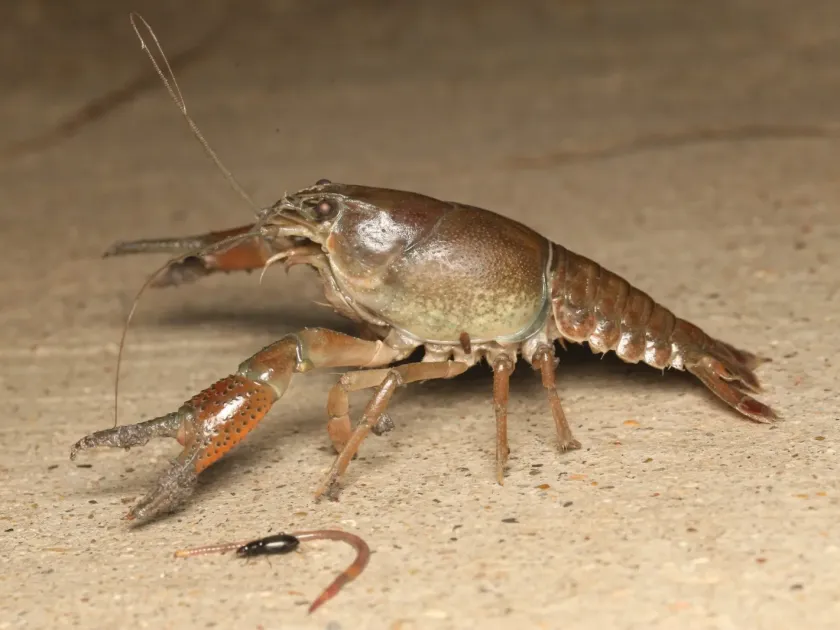
Description
How to identify
Procambarus simulans, commonly known as a type of burrowing crayfish, belongs to the Cambaridae family. These crustaceans are characterized by their ability to adapt to diverse freshwater environments, including drainage ditches and flooded fields.
They possess a robust exoskeleton and strong chelae (claws), which are used for both defense and digging. Their coloration typically ranges from light brown to olive-green, providing effective camouflage against muddy or silty bottoms.
A distinctive trait of this species is its remarkable burrowing behavior. They excavate complex tunnel systems, often reaching deep into the soil, which allows them to survive in areas that experience seasonal drying.
Adult crayfish usually reach lengths of 10 to 12 centimeters. They are highly resilient and can withstand varying levels of water quality, making them persistent inhabitants of agricultural irrigation networks.
The reproductive cycle of Procambarus simulans is highly efficient, allowing them to rapidly colonize new areas. This rapid population growth is a primary reason why they can quickly become a significant agricultural pest.
What it damages
The primary agricultural concern is the damage caused to rice seedlings. These crayfish often clip young stems at the base, leading to severe crop stand reduction and significant yield losses in early growth stages.
Beyond rice, they can impact various vegetable crops planted in or near irrigated areas. They often dig up root systems or consume succulent parts of the plants, causing the crops to wilt and die.
Burrowing activities pose a serious threat to irrigation infrastructure. By tunneling into dams, levees, and canal banks, these crayfish cause water leakage, which disrupts the precise water level management required for crop cultivation.
They contribute to water turbidity through their constant movement and feeding. This cloudiness blocks sunlight from penetrating the water column, negatively affecting aquatic plant life and the micro-ecosystem of the field.
In high densities, the economic impact is substantial. Farmers often struggle with "missing patches" in their fields, which are directly attributable to the feeding and burrowing habits of these crustaceans.
When it appears
Activity levels are highly dependent on ambient temperatures. As water temperatures rise in the spring, crayfish emerge from their overwintering burrows to seek food and mating opportunities.
The peak feeding season occurs during the summer months when metabolic rates are at their highest. During this period, the damage to young crop shoots is most severe as the population is actively growing.
As autumn approaches and water temperatures drop, the crayfish become less mobile. They spend more time within their burrows to conserve energy, signaling a decline in their immediate impact on standing crops.
Overwintering is managed by retreating deep into the soil to escape the cold. They are capable of surviving for long periods in moist soil, even if the surface water has been completely drained.
Environmental changes, such as early-season heavy rainfall or sudden draining of irrigation ditches, can trigger mass migrations, leading to rapid re-colonization of previously cleared areas.
Signs of infestation
The most reliable sign of a Procambarus simulans infestation is the presence of chimney-like burrows along canal banks and within the field. These are small mounds of excavated mud surrounding an entrance hole.
Floating clippings of young plant stems are a tell-tale indicator of their presence. Close inspection often reveals the distinctive sharp edges left by the crayfish's claws on the stems.
Unexpected drops in water levels within irrigation sectors often point to structural damage caused by crayfish tunnels. This undermines the stability of the soil and the integrity of irrigation barriers.
Persistent water turbidity that does not settle despite calm weather conditions suggests constant soil disturbance. This is a common consequence of high crayfish activity in and around the crop beds.
Nighttime visual surveys using a flashlight frequently reveal the crustaceans moving through the water. Their eyes are reflective, making them relatively easy to spot during nocturnal monitoring.
Control measures
Effective management begins with proper water management, such as timely draining of fields. Exposing the soil forces the crayfish out or makes them vulnerable, significantly reducing their ability to thrive.
Structural modifications, such as reinforcing canal banks with geotextiles or concrete, prevent burrowing. This is a long-term solution that protects irrigation infrastructure from damage.
The use of specialized traps is a practical method for population reduction in smaller areas. This non-chemical approach helps mitigate the need for pesticides, preserving the local aquatic environment.
Biological control, including the encouragement of natural predators like herons or predatory fish, can help keep population numbers in check. Creating favorable habitats for these predators enhances integrated pest management.
Chemical control should be approached with extreme caution, as many crayfish are sensitive to chemicals, but these can also harm beneficial non-target organisms. Targeted application only in high-infestation zones is recommended.
Taxonomy
- Latin name
- Procambarus simulans
- Family
- Cambaridae
- EPPO code
- PROMSI
Discussion
No discussions yet — be the first.