
Red swamp crayfish
Procambarus
Description
How to identify
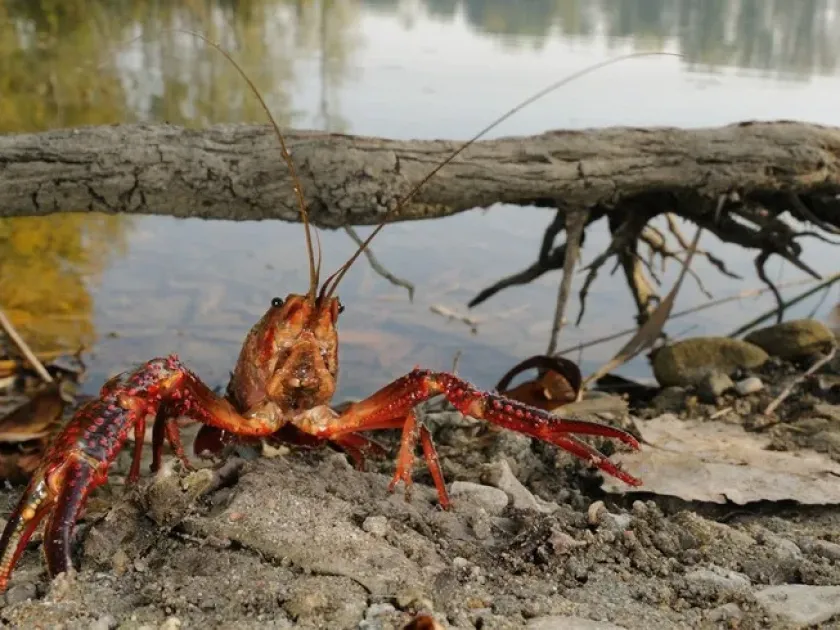
The red swamp crayfish (Procambarus clarkii) belongs to the order Decapoda and the family Cambaridae, and it is recognized worldwide as a highly invasive crustacean species.
It typically displays a dark red or brownish color, with a characteristic grainy texture on the carapace, and reaches lengths of up to 15 centimeters in mature specimens.
Adult males are distinguished by powerful chelae (claws), which they use both for defense and for excavation, creating complex burrow systems in soil and mud.
This species is extremely resilient, showing a high tolerance for varying water quality, temperature fluctuations, and periodic drying of its habitat by retreating into deep burrows.
Its ability to disperse over land at night and survive in low-oxygen environments allows it to colonize new irrigation systems and agricultural lands rapidly.
What it damages
The primary agricultural impact of Procambarus clarkii involves the consumption of young aquatic vegetation, specifically targeting rice seedlings and young plants.
By cutting through stems, these crayfish can decimate large areas of freshly seeded rice fields, often requiring farmers to replant entire sections, which increases costs.
The burrowing behavior of the species is equally destructive, as it compromises the integrity of dams, irrigation ditches, and levee banks, leading to significant water loss.
Root damage caused by the constant digging around the base of crops leads to stunted plant growth and increased susceptibility to fungal and bacterial pathogens.
The overall reduction in crop density and the degradation of the soil structure within flooded fields are key factors contributing to the economic threat posed by this organism.
When it appears
Activity levels fluctuate with the water temperature, with the most active feeding and reproductive periods occurring during the warmer spring and summer months.
As the rice season begins and fields are flooded, the crayfish population tends to emerge from overwintering sites, coinciding with the most vulnerable stage of rice growth.
Breeding can occur multiple times per year under favorable conditions, allowing the population to reach damaging levels within a single growing season.
In winter or during prolonged dry spells, the individuals enter a state of reduced activity by burrowing deep into the moist ground, where they can survive for extended periods.
Management efforts are most effective during the early growth stage of the rice, as the crayfish are highly mobile and actively seeking food sources to support their rapid development.
Control measures
Effective management includes draining fields during the off-season, which disrupts the crayfish's life cycle and destroys the essential burrowing habitats.
Physical barriers, such as fine-mesh fencing or screen traps placed at irrigation intakes, can significantly reduce the migration of individuals into protected crop areas.
Integrated pest management (IPM) may involve the introduction of natural predators, such as specific fish species or wading birds, to keep population numbers in check.
In certain instances, the application of chemical control agents might be necessary, though this must be carefully managed to avoid environmental contamination and harm to non-target species.
Regular maintenance of embankments and the prompt repair of burrow holes are crucial to preventing large-scale water leaks and limiting the physical impact of the crayfish on infrastructure.
Taxonomy
- Latin name
- Procambarus
- Family
- Cambaridae
- EPPO code
- PROMSP
Discussion
No discussions yet — be the first.