
Papuan assassin bug
Pristhesancus papuensis
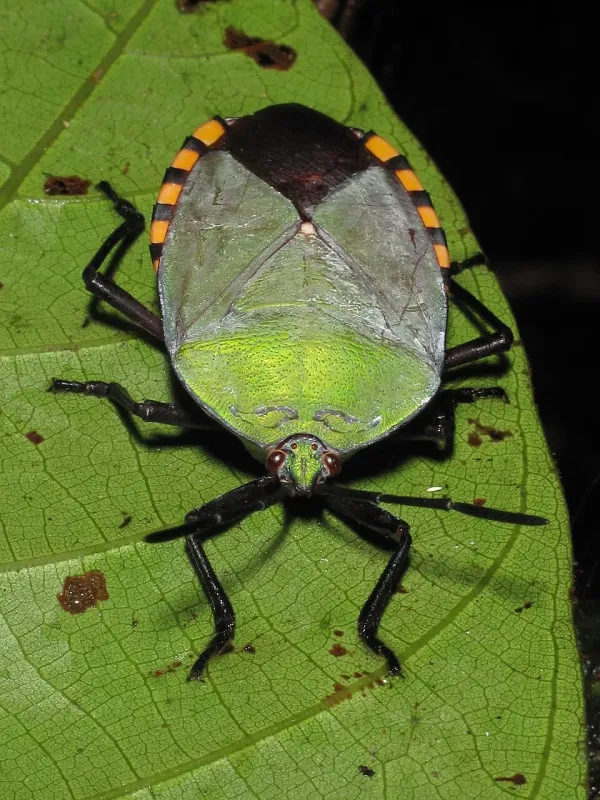
Description
How to identify
The Papuan assassin bug (Pristhesancus papuensis) belongs to the Reduviidae family, commonly known as assassin bugs. Adult individuals typically grow to 20–30 mm and possess a brown body with distinctive orange or yellow markings on the abdomen.
The most notable feature of this species is its long, sharp proboscis used for injecting a potent paralytic venom into its prey. This organ allows the bug to incapacitate insects much larger than itself very quickly.
Nymphs of this species resemble the adults but are smaller, lack fully developed wings, and have different coloration depending on their developmental stage. They start hunting almost immediately after hatching.
Unlike herbivorous insects, this species is entirely predatory. It lacks the specialized mouthparts required for extracting plant sap and cannot digest vegetable tissue, making it a harmless visitor to your crops.
Proper identification is crucial; as a predator, it should not be confused with plant-eating bugs like shield bugs or stink bugs. Assassin bugs are beneficial insects that actively contribute to ecological balance.
What it damages
The Papuan assassin bug does not cause any damage to crops. It is not a plant pest; rather, it is a highly effective natural predator that targets a wide range of agricultural pests such as caterpillars, beetles, and aphids.
These bugs patrol foliage, branches, and flower heads in search of prey. By consuming a large number of phytophagous insects, they significantly reduce the pest pressure on various fruit, vegetable, and ornamental plants.
While the bug may occasionally puncture a leaf, these instances are rare and accidental. They have no negative impact on the health, development, or overall yield of the cultivated plants.
Instead of causing damage, the presence of these bugs in an orchard or field indicates a healthy, functioning ecosystem. Their role as natural biological control agents is highly valued in sustainable and organic farming.
Using insecticides to eliminate these bugs would be counterproductive, as it would destroy a vital natural enemy and likely lead to a population explosion of the true crop pests they hunt.
When it appears
The activity of Pristhesancus papuensis is closely tied to warmer weather. Peak population density and activity levels are typically reached during the summer months when their prey is most abundant.
In regions with distinct seasons, the bugs usually overwinter as adults or eggs in sheltered habitats, including leaf litter, tree bark crevices, or protected garden structures, emerging when temperatures rise.
The length of their life cycle is temperature-dependent. Warmer conditions accelerate their development, allowing for more frequent generations throughout the growing season.
These bugs are primarily diurnal, meaning they are most active during the day while patrolling plants. At night, they seek refuge in sheltered areas within the canopy or dense vegetation.
Their movement within the field often follows the phenology of the crops. They are more frequently seen on plants that are in a stage susceptible to pest infestations, as this attracts the insects they hunt.
Signs of infestation
Seeing adult bugs sitting perfectly still on leaves or stems is the most common sign of their presence. They remain motionless to surprise prey and should not be disturbed by hand, as their bite is painful to humans.
Look for egg clusters laid on the undersides of leaves. These clusters are often brownish and securely attached to the surface, representing a new generation of beneficial predators being added to your site.
The presence of hollowed-out insect carcasses is a clear indicator of successful hunting activity. This is the result of the bug using its proboscis to drain the internal contents of the victim.
A noticeable decrease in caterpillar or beetle populations without any chemical intervention is often a direct result of these predators working within the crop canopy.
If you observe bugs that look aggressive and have a curved proboscis, you likely have assassin bugs. They are a sign of successful integrated pest management and should be left undisturbed.
Control measures
The main management strategy regarding the Papuan assassin bug is conservation. This means avoiding the use of broad-spectrum insecticides that kill both pests and their natural enemies.
To encourage their population, maintain non-crop areas or field margins with native vegetation. This provides essential habitats for overwintering and refuge during periods of low prey availability.
If pest control becomes necessary, use targeted, selective biological agents rather than systemic, toxic chemicals. This preserves the beneficial predator population while controlling the specific pest.
Integrated Pest Management (IPM) practices prioritize the protection of predators. Regularly monitor your field for both pest density and the presence of assassin bugs to make informed management decisions.
Educate agricultural workers on the visual identification of beneficial insects to ensure that these predators are not accidentally harmed or mistaken for pests during routine maintenance tasks.
Taxonomy
- Latin name
- Pristhesancus papuensis
- Order
- Hemiptera (bugs, aphids, leafhoppers)
- Family
- Reduviidae
- EPPO code
- PRIHPA
Discussion
No discussions yet — be the first.