
Assassin bug
Pristhesancus
Description
How to identify
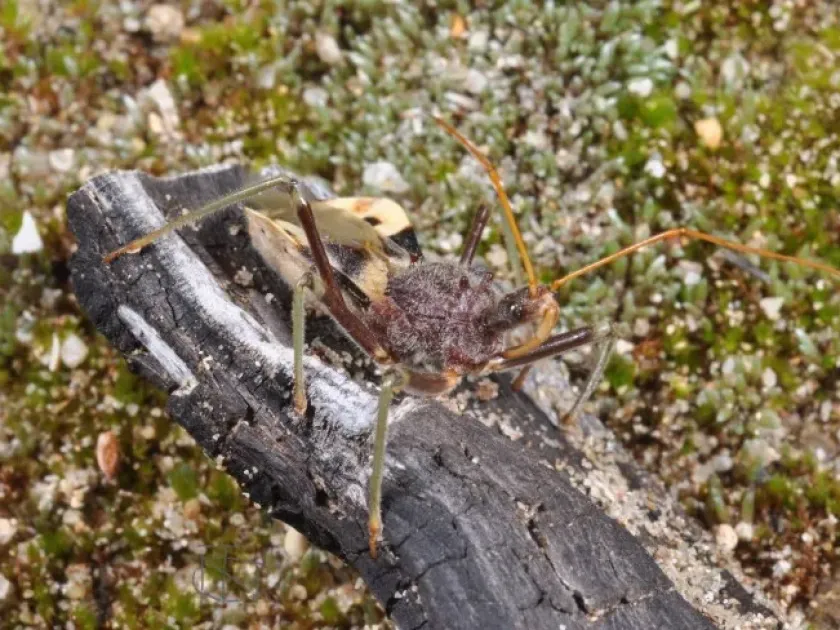
The assassin bug (genus Pristhesancus) belongs to the family Reduviidae, known for their predatory nature. These insects have a distinct elongated body, a powerful proboscis, and long legs adapted for capturing prey.
Nymphs of the assassin bug go through several instars, gradually developing their wings and adult coloration, making them highly agile and difficult to spot in dense foliage.
Adults often display warning colors or patterns, which serve to deter predators in their natural habitat, while their anatomy is perfectly optimized for a predatory lifestyle.
The most recognizable feature is the folded proboscis underneath the head, which the bug uses to deliver a paralyzing venom into its prey, immobilizing it almost instantly upon contact.
Understanding their morphology is crucial for agriculturalists, as differentiating them from other insects helps in assessing the ecological balance within a specific crop field.
What it damages
While often classified as beneficial predators, Pristhesancus species can become pests when they aggressively hunt pollinators, including bees and essential insects in greenhouse environments.
They affect a wide range of plants, including orchards and vegetable crops, not necessarily by consuming the plant tissue itself, but by disrupting the insect population that supports crop growth.
The indirect damage caused by these bugs includes a significant reduction in pollination services, leading to lower yields in fruit-bearing crops and decreased overall plant productivity.
In cases where natural prey is scarce, they may feed on other beneficial insects, essentially turning them into an unintended pest that interferes with integrated pest management (IPM) programs.
Agricultural damage is therefore categorized as ecological disruption, requiring precise population management to ensure that their beneficial role outweighs their predatory behavior toward pollinators.
When it appears
The activity cycle of the assassin bug is highly dependent on ambient temperatures, with emergence typically occurring in late spring as the ground warms up.
Peak activity for adults usually coincides with the mid-summer months, when prey density—such as aphids, caterpillars, and other small insects—is at its highest in the field.
These insects undergo a series of molts throughout the season, with reproduction cycles peaking during warm, humid conditions that favor both their development and the survival of their offspring.
As autumn approaches and temperatures drop, the bugs enter a state of dormancy or search for overwintering sites in bark, leaf litter, or debris, effectively disappearing from the canopy.
Their ability to survive cold weather depends largely on the availability of protected overwintering sites, which can lead to high survival rates in managed agricultural landscapes.
Signs of infestation
The presence of assassin bugs is often first noticed through the discovery of drained, desiccated insect carcasses left behind on leaves or branches after they have fed.
A noticeable decline in the activity of bees or other beneficial insects in an area where they were previously abundant may serve as a warning sign of high predator activity.
Visual spotting of the bugs is most successful in the early morning or evening, as they tend to hide in shaded areas or within flower clusters during the heat of the day.
Egg masses, which are sometimes deposited in clusters on foliage or stems, can be identified during regular scouting sessions if the grower knows where to look for them.
Monitoring boards or yellow sticky traps placed in the field can also capture adults, providing a reliable count to determine if their population has reached a level requiring intervention.
Control measures
Effective management requires a balanced approach, prioritizing ecological health by avoiding broad-spectrum insecticides that would indiscriminately kill beneficial insects along with the target pests.
Biological control, such as promoting the natural enemies of assassin bugs like parasitic wasps, can help keep their populations in check without the need for harsh chemical treatments.
Cultural practices, including the cleaning of field edges and removal of wintering debris, can physically limit the population density of these insects in the following growing season.
Selective use of targeted insecticides, applied only when necessary and during non-pollinating hours, is recommended to minimize impact on the wider ecosystem and bee health.
- Regular field scouting and monitoring.
- Encouraging natural predator populations.
- Clearing debris to limit overwintering.
- Manual removal of visible egg clusters.
- Selective pest management products.
Taxonomy
- Latin name
- Pristhesancus
- Order
- Hemiptera (bugs, aphids, leafhoppers)
- Family
- Reduviidae
- EPPO code
- PRIHSP
Discussion
No discussions yet — be the first.