
Hirschmanniella gracilis root nematode
Hirschmanniella gracilis
Description
How to identify
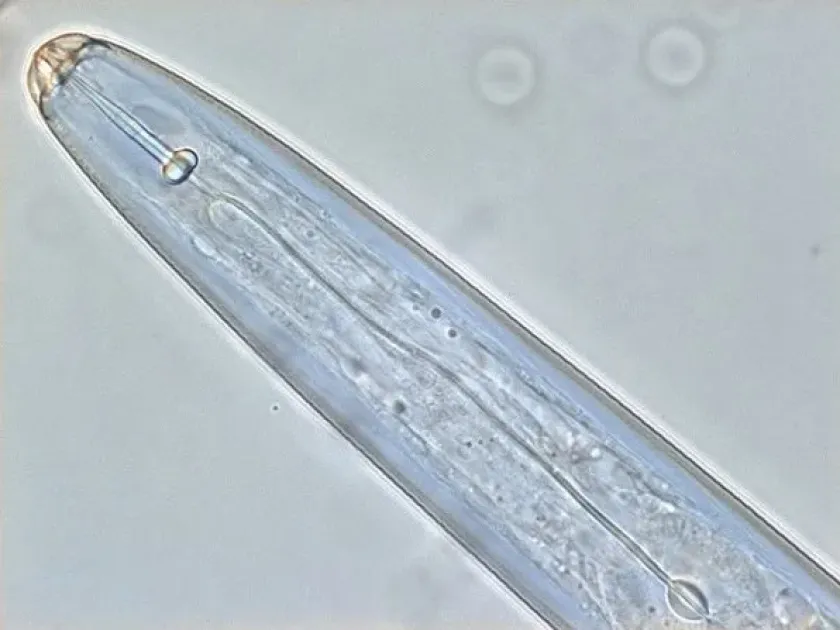
Hirschmanniella gracilis belongs to the order Tylenchida and the family Pratylenchidae. It is a migratory endoparasitic nematode known for its slender body, typically measuring 1.5–2 mm in length.
A key diagnostic feature is the presence of a well-developed stylet and a pointed tail tip, which facilitates its active movement through plant tissues and soil particles.
Females deposit eggs directly into the root tissue or the rhizosphere, ensuring a protected environment for their offspring during early development.
The life cycle encompasses an egg stage, four larval stages, and an adult stage, with all stages capable of impacting host plant health.
Accurate identification requires microscopic analysis of root and soil samples, as field symptoms can often be confused with other abiotic or biotic stress factors.
What it damages
This pest primarily affects aquatic and semi-aquatic plants, causing significant economic losses in specific agricultural sectors.
It is particularly destructive to rice crops, as well as reeds, sedges, and various ornamental aquatic plant species that thrive in flooded conditions.
The nematodes penetrate the roots and feed on parenchymal cells, physically destroying vascular bundles and disrupting nutrient and water transport.
During the feeding process, the nematode releases enzymes into the plant tissue, inducing necrosis and systemic root decay.
Severe infestations result in stunted growth, reduced plant biomass, and premature wilting, ultimately impacting total yield productivity.
When it appears
The activity of H. gracilis is tightly linked to moisture levels and temperature, making it a critical concern in flooded cultivation systems.
Activity peaks during the flooding of fields, as water provides the ideal medium for larval movement and the colonization of new root systems.
In temperate climates, the nematode can survive adverse winter conditions by entering a dormant state within soil debris or surviving root tissues.
Reproduction occurs throughout the growing season, with the number of generations per year directly correlated with the sum of active temperatures.
Nematode migration in the soil is significantly enhanced as temperatures rise between 20–25 degrees Celsius, accelerating the spread of the infestation.
Signs of infestation
Visual indicators of an infestation include generalized chlorosis, stunted growth, and uneven development compared to non-infested plants.
Upon closer inspection of the root system, one can observe brown necrotic lesions and softened tissue areas caused by active feeding sites.
The roots become fragile and lose their functional ability to absorb water and essential minerals, leading to leaf yellowing and rolling.
- Patchy areas of wilted or dying plants within the field.
- Distinct brown necrotic spots on the root surface.
- Significant loss of overall root biomass and crop yield.
Secondary infections by soil-borne fungi and bacteria frequently occur in damaged tissues, compounding the damage and accelerating plant collapse.
Control measures
Effective management relies heavily on crop rotation with non-host species and the strategic draining of fields to disrupt the nematode's habitat.
The use of certified pathogen-free planting material is the most critical preventative measure to stop the introduction of this pest to new areas.
Chemical nematicides may be utilized in controlled environments, though their application must strictly adhere to local environmental and safety regulations.
Cultural practices, such as deep plowing and the thorough removal of plant residues, are essential to reduce soil nematode population density.
Biological control agents, including fungi-based antagonists, show potential in reducing population numbers as part of an integrated pest management strategy.
Taxonomy
- Latin name
- Hirschmanniella gracilis
- Order
- Nematodes
- Family
- Pratylenchidae
- EPPO code
- HIRSGR
Discussion
No discussions yet — be the first.