
Meadow spittlebug
Poophilus
Description
How to identify
The meadow spittlebug (Philaenus spumarius) belongs to the family Aphrophoridae. Adults are small, jumpy insects, typically 5–7 mm long, with a variable coloration ranging from light yellow to brown or even black with markings.
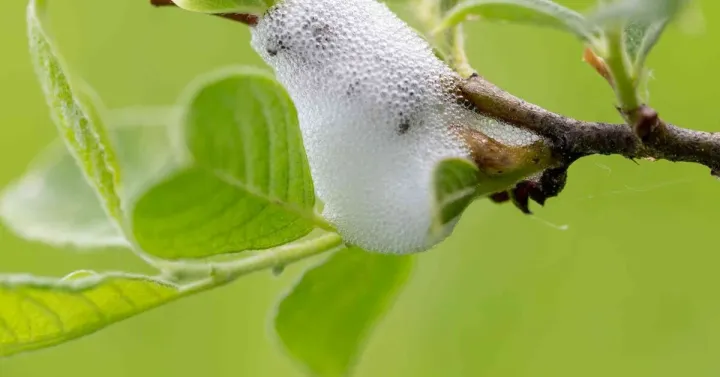
The nymphs of this pest are easily identified by the frothy, white, soap-like mass they produce on the stems and leaves of plants. This substance is commonly referred to as "cuckoo spit" or "spittle."
The foam serves as a protective layer, shielding the soft-bodied nymph from extreme heat, desiccation, and potential predators. It maintains a constant humidity level necessary for the nymph's survival.
The life cycle consists of the egg stage, five nymphal instars, and the adult stage. Eggs are typically laid in plant tissues or under organic debris, where they overwinter until the following spring.
Adults are highly mobile and capable of jumping long distances, which allows them to quickly colonize new hosts throughout the growing season.
What it damages
Meadow spittlebugs are polyphagous, meaning they feed on a vast range of plants, including strawberries, legumes, grapes, roses, and numerous herbaceous ornamentals.
Nymphs feed by using their piercing-sucking mouthparts to draw sap from the plant's vascular tissue. This process weakens the plant and disrupts its normal development and growth cycle.
Visible damage includes stunted growth, leaf curling, and distortion of young shoots. In some cases, yellowing or chlorosis occurs around the feeding sites, significantly impacting the plant's aesthetics.
Severe infestations can lead to reduced flowering and poor fruit production, especially in commercial crops like strawberries. The constant removal of sap puts significant stress on the host.
Furthermore, spittlebugs can serve as vectors for certain phytoplasma and viral diseases, potentially causing long-term damage beyond the immediate feeding impact.
When it appears
Nymphs typically emerge in mid-to-late spring, as temperatures begin to rise and plants enter active growth. This coincides with the first appearances of the characteristic foam.
The peak activity for nymphs usually lasts through late spring into early summer. During this time, the "spittle" is most visible on the upper portions of stems and in leaf axils.
Adult spittlebugs become active in early to mid-summer. They do not produce foam, making them harder to spot, but they remain active pests that feed on plant sap until the onset of autumn.
Warm and humid weather conditions are ideal for the population growth of this insect. In such environments, the cycle can proceed rapidly, leading to high population densities.
As summer draws to a close, the cycle transitions to the egg-laying phase, ensuring the survival of the next generation through the winter months.
Signs of infestation
The most tell-tale sign of a spittlebug infestation is the white, bubbly foam found on the stems, flower buds, or near the leaf axils of susceptible plants.
In addition to the foam, you may notice distorted or curled leaves. If the infestation is concentrated on a single shoot, the entire tip might appear wilted or stunted compared to the rest of the plant.
- White, frothy "spittle" masses on stems and foliage.
- Curled, crinkled, or yellowed leaves.
- Stunted growth of new shoots or flower stalks.
- Jumping insects present when disturbing the plant canopy.
- Premature yellowing or browning of affected tissue areas.
If you see signs of plant distortion but no obvious foam, look closely at the leaf undersides or the base of new leaves, as nymphs can sometimes hide in less conspicuous spots.
Control measures
Cultural control is the first line of defense: keeping the garden weed-free reduces the number of host plants available for nymphs, and removing plant debris in autumn eliminates winter egg-laying sites.
For smaller infestations, a strong stream of water from a garden hose is often sufficient to wash the nymphs and their protective foam off the plants, leaving them exposed and vulnerable.
In cases of heavy infestation, systemic insecticides containing ingredients like imidacloprid can be effective. Always apply treatments during the early growth phase and avoid use during blooming to protect pollinators.
For organic management, insecticidal soaps or neem oil can be applied directly to the nymphs once the protective foam has been washed away or compromised.
Regular monitoring of plants throughout the spring is critical. Catching the infestation during the early nymphal stages significantly reduces the need for heavy chemical intervention later in the season.
Taxonomy
- Latin name
- Poophilus
- Order
- Hemiptera (bugs, aphids, leafhoppers)
- Family
- Cercopidae
- EPPO code
- POOPSP
Discussion
No discussions yet — be the first.