
Mordellistena micans
Mordellistena micans
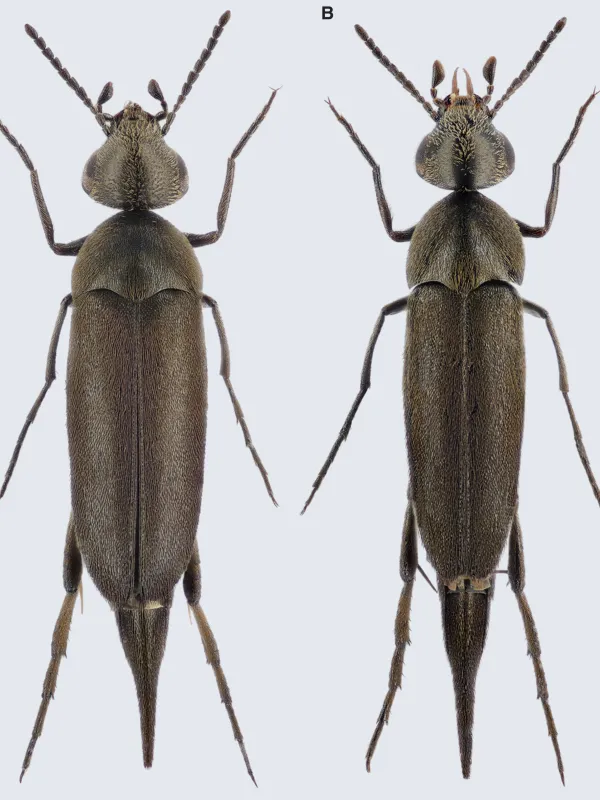
Description
How to identify
Mordellistena micans, belonging to the family Mordellidae (tumbling flower beetles) in the order Coleoptera, is a small beetle measuring approximately 3–5 mm. It is characterized by a humpbacked, wedge-shaped body that tapers toward the posterior end.
The adult beetle typically exhibits a dark, almost black coloration with a distinct metallic or shiny sheen. The head is small and closely pressed to the pronotum, which allows for agility when moving across plant surfaces during the growing season.
Larvae are whitish or yellowish with a cylindrical body and well-developed chewing mouthparts. They lead a cryptic, endophagous lifestyle, residing within plant tissues, which makes them difficult to spot during routine field inspections.
Pupation occurs within the damaged stems or leaf petioles. The pupae are of the exarate type, initially pale and darkening as the adult insect develops inside the pupal casing.
The life cycle is tightly synchronized with the phenology of host plants. There is typically one generation per year, although favorable environmental conditions may sometimes lead to partial second generations.
What it damages
The primary hosts for Mordellistena micans include sunflowers and various species of the Asteraceae family. Larvae bore into the plant stems, where they feed on the inner parenchyma and vascular tissues.
The damage caused by the larvae disrupts the normal transport of water and nutrients from the root system to the upper parts of the plant, including the flower heads or seed-forming structures.
Infested sunflowers often show signs of premature wilting, particularly during the seed-filling stage. The compromise of the stem's structural integrity increases the risk of lodging during strong winds.
In cases of heavy infestation, crop productivity can be significantly reduced. Losses manifest as lower seed oil content, reduced seed weight, and decreased overall grain yield per hectare.
While adult beetles feed on pollen and nectar and cause minimal direct harm, the larval stage is considered the most destructive, requiring active monitoring and intervention by agronomists.
When it appears
The emergence of adult beetles typically coincides with the flowering period of host plants, usually occurring in mid-summer, between June and July. During this time, adults are active fliers and move between host flowers.
Mating occurs shortly after emergence, and females lay eggs on the surface of stems or in leaf axils. The resulting larvae immediately burrow into the plant tissue to begin their development.
The highest level of larval activity is observed during the second half of the summer, as the stem grows and develops. This is the period when agronomic management should be most vigilant.
The pest overwinters as larvae or pupae within crop residues left in the field after harvest. This makes stubble management a critical factor in suppressing the following season's population.
Spring development completes as soil temperatures rise, allowing pupae to transform into adults. The emergence of these beetles often correlates with the appearance of weeds, which act as initial hosts.
Signs of infestation
Detecting Mordellistena micans requires careful observation of the crop, especially during the vegetative and flowering stages. Several visual cues indicate the presence of this pest within sunflower stems.
- Presence of small entrance holes in the lower part of the sunflower stem.
- Localized yellowing or discoloration of leaves above the site of larval infestation.
- Wilting of individual stalks or whole plants during hot, dry periods of the day.
- Brown, decaying tissue visible when splitting the stem longitudinally, often accompanied by frass.
- Reduced height or stunted growth compared to healthy plants in the same area.
If these signs are present, cutting open several stems to identify larvae is recommended to determine the infestation density and decide whether chemical intervention is necessary.
Control measures
Control strategies for Mordellistena micans rely heavily on agrotechnical practices. The most effective measure is deep autumn plowing to bury crop residues and destroy the wintering sites of the larvae.
Proper crop rotation, avoiding sunflowers or related host plants for several years, is essential for reducing population pressure. Keeping fields free of weeds, especially those in the Asteraceae family, is equally important.
Chemical control is most effective against adults during their peak emergence. Applying systemic insecticides can help prevent the infestation of young stems by killing adults before they lay eggs.
The use of yellow sticky traps is recommended for monitoring the arrival of adult beetles. This data allows for the timing of insecticide applications to be precise, ensuring maximum efficacy before larvae bore into the plants.
Ensuring balanced fertilization with potassium and phosphorus strengthens the stalks, increasing the plant's natural resistance to colonization and reducing the potential impact on final crop yields.
Taxonomy
- Latin name
- Mordellistena micans
- Order
- Coleoptera (beetles)
- Family
- Mordellidae
- EPPO code
- MOREMI
Discussion
No discussions yet — be the first.