
Common wall lizard
Podarcis muralis
Description
How to identify
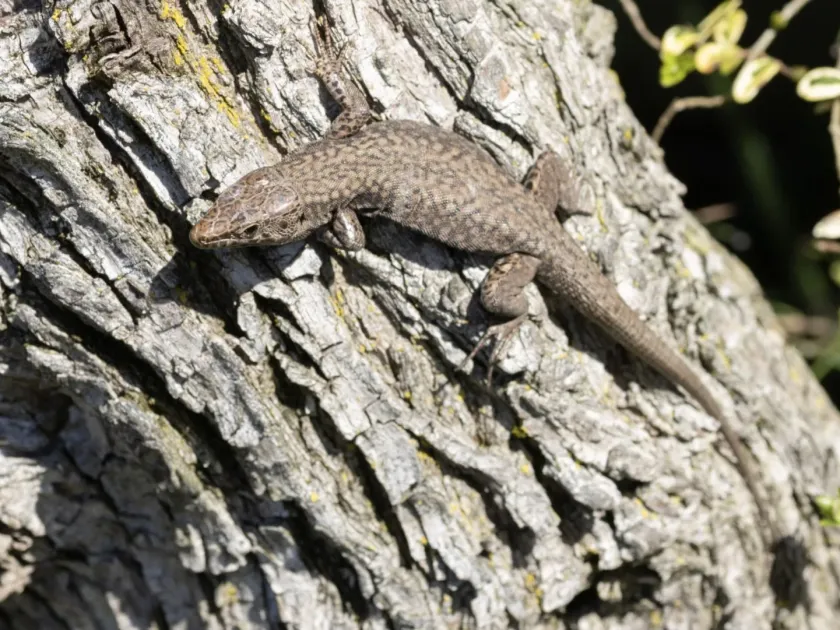
The common wall lizard (Podarcis muralis) is a member of the Lacertidae family, known for its slender body reaching up to 20 cm in length. These lizards are characterized by a highly variable dorsal pattern, ranging from gray to brown or greenish with complex spotting or striping.
They are primarily associated with rocky environments, dry stone walls, and anthropogenic structures. Their ability to climb vertical surfaces and squeeze into narrow cracks makes them highly adaptable to domestic garden environments.
As ectothermic animals, their metabolic rate and activity are strictly regulated by ambient temperature. They rely on basking in the sun to gain sufficient energy for hunting and reproductive activities.
Reproduction involves laying eggs in hidden, stable-temperature environments such as soil crevices or cavities within man-made structures, which protects them from predators and extreme heat.
While often viewed as beneficial due to their insectivorous diet, in high densities, they can become a nuisance for gardeners and agriculturalists due to their proximity to high-value produce.
What it damages
The primary agricultural concern is the physical damage caused by lizards feeding on soft-skinned fruits such as strawberries, raspberries, and blackberries. They bite into the fruit, leaving visible marks that degrade the produce quality.
In greenhouses and protective tunnels, lizards can disturb soil structure and damage delicate seedling roots through constant movement and burrowing activities around the base of the plants.
Fruit damage caused by lizards often initiates rot and mold development, making the produce unsaleable and potentially spreading infection to healthy fruits within the same cluster.
Lizard activity can also disrupt mulch layers, exposing soil to rapid evaporation or allowing weed seeds to germinate more easily near the base of the crops.
In intensive cultivation, the constant movement of these reptiles can cause mechanical stress to vulnerable plant parts, leading to reduced overall vigor of the affected berry crop.
When it appears
Activity begins in early spring as temperatures rise, typically when the air reaches 12-15 degrees Celsius. This is when individuals emerge from their hibernation sites to establish territories.
The peak activity period corresponds with the late spring and summer months (May-July), coinciding with the flowering and ripening stages of various berry crops, which are the main targets for feeding.
In mid-summer, while activity remains high, they are particularly attracted to irrigated areas where moisture is available, often leading them into vegetable patches and berry fields.
As temperatures begin to drop in early autumn, their activity levels decrease, and they start seeking secure locations to overwinter, often hiding in building foundations or woodpiles.
The life cycle is closely linked to the local climate, ensuring that populations persist year after year if the habitat remains suitable and provides enough basking spots.
Signs of infestation
The most reliable sign of wall lizard presence is the discovery of irregular, shallow bite marks on ripe berries, which differ from those of birds or rodents.
Direct sightings of lizards basking on sun-exposed walls, fences, or the foundations of greenhouses indicate a well-established colony in the immediate vicinity.
Tracks on damp soil, including the characteristic five-toed footprint pattern with a linear drag mark from the tail, are strong indicators of their daily patrol routes.
The presence of shed skins found in or near garden beds is a definitive indicator of high lizard density and frequent residency within the growing area.
Rustling sounds in the foliage or under mulch in the morning or early evening are common indicators of lizard movement as they actively forage for food.
Control measures
Management focuses on habitat modification to make the environment less attractive for residency. This includes removing garden debris, piles of stones, and sealing cracks in walls or structures.
- Installing fine-mesh exclusion netting over vulnerable berry patches.
- Using smooth vertical barriers (such as plastic or metal flashing) around garden beds.
- Maintaining clean aisles and regular weeding to eliminate hiding spots.
- Employing natural repellents like essential oils around the perimeter of the crop.
Regular monitoring of the garden, particularly during the ripening phase, is essential to detect early signs of damage and implement deterrents before the population grows.
Limiting access to standing water and reducing excessive moisture in dormant zones can also help reduce the attractiveness of the garden to these reptiles during dry summer spells.
Taxonomy
- Latin name
- Podarcis muralis
- Family
- Lacertidae
- EPPO code
- PDRCMU
Discussion
No discussions yet — be the first.