
Iberian wall lizard
Podarcis hispanica
Description
How to identify
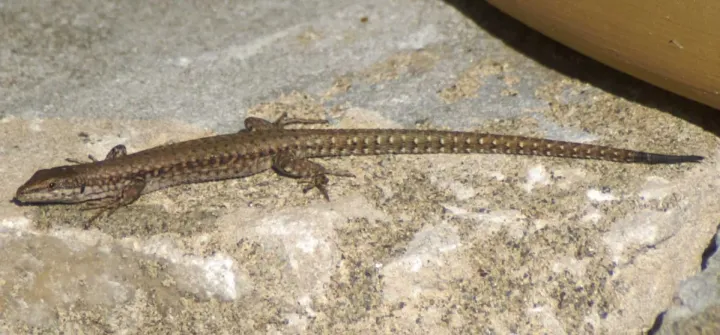
The Iberian wall lizard (Podarcis hispanica) belongs to the family Lacertidae and is a small, agile reptile known for its ability to traverse vertical surfaces with ease.
These lizards typically feature a slender body, a long, whip-like tail, and a variable coloration ranging from grey to brown or greenish with intricate dark patterns.
Their head is narrow, and their limbs are well-adapted for climbing, allowing them to thrive in various garden habitats, including stone walls, sheds, and dense vegetation.
Identifying them often requires quick observation, as they are famously skittish and retreat instantly to crevices or deep cover when they sense movement nearby.
Adults usually reach 5-8 centimeters in body length, making them perfectly suited for navigating through dense crop rows and greenhouse environments.
What it damages
Although Iberian wall lizards are primarily insectivores, they can cause incidental damage to garden beds through their constant activity and foraging behavior.
Moving rapidly over seedling beds can result in broken stems or disturbed roots, particularly in fragile vegetable patches where the plants are not yet established.
By consuming beneficial predatory insects like ground beetles and spiders, these lizards may indirectly contribute to the build-up of aphid or caterpillar populations.
In greenhouse settings, they can become a nuisance by damaging ripening soft fruits or contaminating areas with their waste, which may promote fungal growth.
Their presence can be problematic in high-density seedling nurseries, where constant disruption by these reptiles stresses young plants and slows their initial development.
When it appears
Activity levels begin to rise in early spring as ambient temperatures increase, triggering the emergence of these ectothermic creatures from their winter retreats.
May and June mark the peak reproductive and active period, during which time the lizards are most aggressive in patrolling their home ranges around garden structures.
During the summer, they remain active primarily during the cooler early morning and late evening hours to avoid overheating in the midday sun.
As autumn progresses and average temperatures drop, their metabolic activity slows down, signaling a transition toward their upcoming hibernation period.
Winter months are spent in deep soil cracks, stone foundation crevices, or buried under thick organic mulch, where they wait for the return of warmer weather.
Signs of infestation
The most obvious sign of their presence is direct observation, as they are often seen basking on sunny rocks, walls, or garden structures during the morning.
Small, cylindrical droppings with a distinct white tip on garden paths or leaves are clear indicators of a resident lizard population nearby.
Physical damage, such as trampled young leaves or snapped tender stems, often suggests that the area is being used as a high-traffic zone by these reptiles.
Shed skin remnants (sloughs) found near greenhouses or woodpiles are definitive evidence that these lizards are established and actively living on the property.
Sudden rustling noises in dry mulch or among dense foliage are reliable acoustic indicators that lizards are active in your immediate vicinity.
Control measures
The most effective strategy involves removing their habitats, such as clearing debris, piles of stones, and overgrown wood, where they seek refuge and hibernate.
Installing fine-mesh physical barriers around the perimeter of garden beds can effectively prevent lizards from accessing young seedlings and fragile plants.
Using natural repellents like essential oil sprays (peppermint or eucalyptus) can discourage them from nesting or congregating near specific high-value crops.
Ensuring greenhouses remain tidy and well-ventilated reduces the suitability of these structures as permanent living spaces for the lizards.
While management is often necessary, recognize that these lizards consume many harmful pests, so maintain a balance rather than attempting total eradication.
Taxonomy
- Latin name
- Podarcis hispanica
- Family
- Lacertidae
- EPPO code
- PDRCHI
Discussion
No discussions yet — be the first.