
Vitelline masked weaver
Ploceus vitellinus
Description
How to identify
The vitelline masked weaver (Ploceus vitellinus) is a species of bird in the Ploceidae family known for its distinct social behavior and impact on agriculture in certain regions.
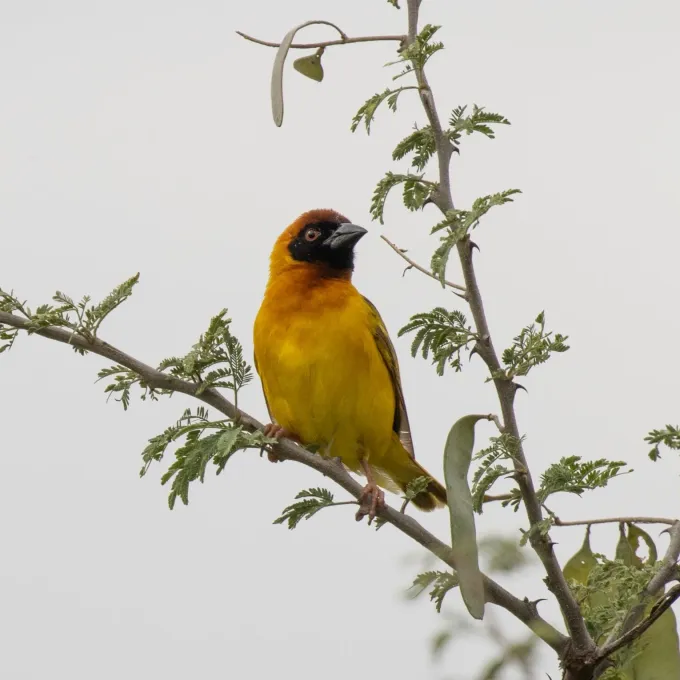
Males in breeding plumage are characterized by a vibrant yellow body color contrasted by a prominent black facial mask, making them easily identifiable in the field.
Females and non-breeding males possess a duller, olive-brown plumage that provides camouflage, which is essential for protecting their nests located near cultivated lands.
These birds are highly gregarious, often forming large flocks that can exert significant pressure on agricultural crops when food sources in natural habitats become scarce.
Their physical structure, particularly the sturdy, conical bill, is perfectly evolved for husking and feeding on cereal grains, which brings them into direct conflict with farmers.
What it damages
Vitelline masked weavers are primarily pests of cereal crops, including wheat, sorghum, and rice, causing significant yield losses during the grain ripening stages.
Beyond direct grain consumption, the weight of large flocks landing on crops causes lodging and stem breakage, which makes harvesting difficult and reduces total yield.
In addition to grain, these birds may feed on seedlings, necessitating replanting and leading to increased costs and delayed developmental cycles for the entire crop.
The presence of large flocks can lead to local overgrazing, where portions of a field are completely denuded of grain, rendering those areas unprofitable for the harvest.
Secondary damage occurs through the contamination of grain with droppings, which degrades the quality and safety of the final agricultural product.
When it appears
The peak period of damage occurs during the milky-to-dough stage of grain development, when the nutritional content of the crops is highest and most attractive to the birds.
Seasonal migrations and local movements often cause sudden spikes in bird populations on farmland, particularly when drought conditions persist in their natural habitats.
Feeding activity is most intense during the early morning and late afternoon hours, requiring farmers to be particularly vigilant during these critical timeframes.
Breeding cycles often correlate with the agricultural growing season, meaning the presence of birds near fields remains high throughout the maturation of the crop.
Post-harvest periods usually see a decline in bird numbers as they migrate or disperse into non-agricultural landscapes to forage on wild seeds.
Control measures
Managing the impact of vitelline masked weavers requires a combination of behavioral deterrents and environmental management to minimize crop damage.
Acoustic deterrents that broadcast alarm calls of predatory species are often used to discourage flocks from settling in or near the cultivated fields.
Visual aids, such as reflective tapes, kites, and predator decoys, can serve as temporary barriers that keep birds on high alert and away from vulnerable grain.
Agricultural hygiene, including the removal of nesting sites like nearby trees and dense brush, reduces the bird population's stability in the immediate vicinity of the farm.
Strategic timing of planting and harvesting is recommended to shorten the duration that crops are susceptible to bird attacks, ensuring the shortest possible exposure window.
Taxonomy
- Latin name
- Ploceus vitellinus
- Family
- Ploceidae
- EPPO code
- HPHAVI
Discussion
No discussions yet — be the first.