
Sociable weaver
Philetairus
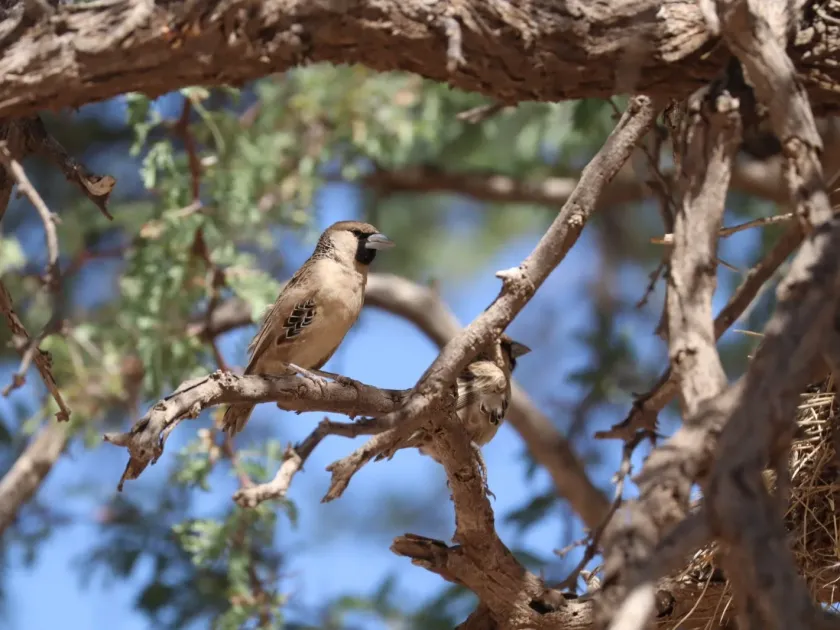
Description
How to identify
The sociable weaver (Philetairus socius) is a small bird belonging to the Passeridae family. It is most famous for its massive, communal nests, which are among the largest structures built by any bird species in the world, often housing entire colonies for years.
The birds are relatively drab, with brown and sandy-colored plumage that helps them camouflage in the arid environments of Southern Africa. Despite their small size, they are highly organized, making them a significant presence in their native habitats.
Adult sociable weavers measure approximately 14 centimeters in length. Their social structure is complex, involving cooperative breeding and communal maintenance of their large, thatched nest structures.
Their life cycle is opportunistic, often timed to coincide with sporadic rainfall. However, they remain year-round residents, which means they are constantly foraging for food within their established territories near agricultural lands.
Because they live in such tight-knit groups, their impact on a local area is concentrated. When a colony decides to forage in a field, the sheer number of birds can lead to rapid depletion of available crops.
What it damages
Sociable weavers are known to feed on a variety of seeds, including cultivated grains like sorghum, maize, and millet. During the ripening phase of these crops, the birds can descend in large numbers, consuming significant portions of the grain yield.
Mechanical damage is another major issue. When large flocks land on young, fragile plants, their combined weight can cause stems to bend, break, or be flattened. This results in direct loss of stand density and total harvest volume.
The birds often choose human infrastructure for nesting, such as telephone poles and electrical pylons. The massive weight of these nests can cause structural damage or electrical short circuits, leading to costs for maintenance and repair.
Contamination of harvested grain with fecal matter and nest debris is a concern. This reduces the market quality of the crop and necessitates additional cleaning procedures before the grain can be sold or processed.
The economic impact is particularly severe during drought years when natural food sources are scarce, forcing the colonies to rely almost exclusively on agricultural fields for survival.
Control measures
Bioacoustic deterrents are widely considered the most effective way to protect large fields. These systems play the alarm calls of predator birds, which triggers an instinctive flight response in the sociable weaver colony.
Visual deterrents, including reflective tape and scarecrows, can offer temporary protection. To remain effective, these devices must be moved or changed frequently to prevent the birds from habituating to them.
Management of the surrounding habitat is crucial. Regularly checking for and discouraging the establishment of new colonies near the edge of cultivated fields can help manage the pressure from these birds.
For smaller fields or high-value plots, bird-proof netting is the most reliable defense. It creates a physical barrier that prevents any access to the crop, ensuring the harvest remains untouched.
- Deploying bioacoustic predator alarms.
- Using reflective and moving visual deterrents.
- Structural inspection to prevent nesting on infrastructure.
- Installing physical bird netting for high-value areas.
- Strategic timing of crop harvest to minimize exposure.
Taxonomy
- Latin name
- Philetairus
- Family
- Ploceidae
- EPPO code
- PHITSP
Discussion
No discussions yet — be the first.