
Weaver
Ploceus
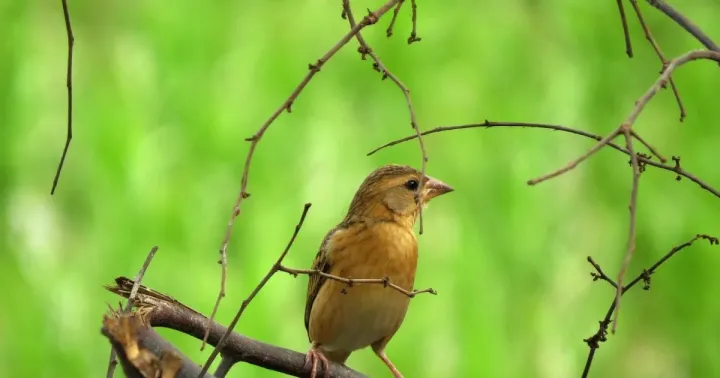
Description
How to identify
Weaver birds (genus Ploceus) are a group of Passerine birds widely recognized in many agricultural regions as significant pests that can devastate standing crops.
They are characterized by their strong, conical bills, which are specifically adapted for husking and consuming seeds, making them highly efficient grain eaters.
Biologically, they belong to the family Ploceidae, with many species displaying complex social behaviors, including the construction of intricate, woven nests.
These birds often live in massive colonies, which allows them to overwhelm food sources quickly and pose a severe threat to large-scale agriculture.
Identifying them is relatively simple due to their distinct appearance, social structure, and the presence of their conspicuous hanging nests near cultivated areas.
What it damages
The primary damage caused by weaver birds involves the consumption of cereal crops like sorghum, millet, rice, and maize at the grain-filling stage.
Feeding in massive flocks, they can strip entire fields of grain in a matter of days, leading to substantial economic losses for farmers in affected regions.
Beyond direct ingestion, the sheer weight of a resting flock can cause stalks to bend or break, complicating the harvest and reducing grain quality.
The damage intensity is particularly high during the milk-to-dough stage, when the grain is soft and most accessible to the birds' specialized beaks.
In addition to physical destruction, the birds' feeding habits often expose damaged grain to secondary fungal infections, which further degrade the final harvest.
When it appears
Weaver bird activity is closely linked to the crop growing cycle, specifically peaking during the maturation phase of cereal crops in the agricultural calendar.
Seasonal migrations and breeding patterns often align with the rainy season, which typically overlaps with the peak growth period of primary food crops.
During the day, birds maintain a constant cycle of foraging, moving between their nesting colonies and nearby cultivated fields with high regularity.
Post-breeding, the increase in flock size due to the addition of juvenile birds often results in increased pressure on late-season crop varieties.
Their opportunistic nature allows them to exploit various food sources, but they show a strong preference for cultivated grains whenever they are available.
Signs of infestation
Signs of infestation include the presence of large, noisy flocks that move across fields, often causing audible disruptions during feeding sessions.
Plants show clear evidence of bird damage, such as stripped panicles, missing grains, and residual husks hanging from the stalks or stems.
Soil and leaf surfaces beneath foraging zones are often covered in significant amounts of bird droppings, indicating localized hotspots of intense feeding.
Bent or broken stalks are frequently observed in patterns corresponding to where the birds have settled in groups to feed on the crop heads.
- Stripped and empty grain heads.
- High-frequency bird activity at the edges of fields.
- Presence of woven nests in nearby trees or shrubs.
- Accumulation of droppings in crop rows.
Control measures
Effective management involves a mix of physical and acoustic deterrents, such as sirens or sound systems that broadcast predatory bird calls.
Visual aids like reflective tape, scarecrows, or decoys of predatory birds are often used to discourage flocks from landing in the fields.
Good agricultural practices, such as choosing early-maturing crop varieties, can help minimize the window of opportunity for bird attacks.
In some regions, habitat management is employed, which involves clearing potential nesting sites around fields to reduce local bird concentrations.
While large-scale control remains challenging, integrated pest management strategies focusing on non-lethal deterrents are the preferred approach for sustainability.
Taxonomy
- Latin name
- Ploceus
- Family
- Ploceidae
- EPPO code
- PLOCSP
Discussion
No discussions yet — be the first.