
Streaked weaver
Ploceus megarhynchus
Description
How to identify
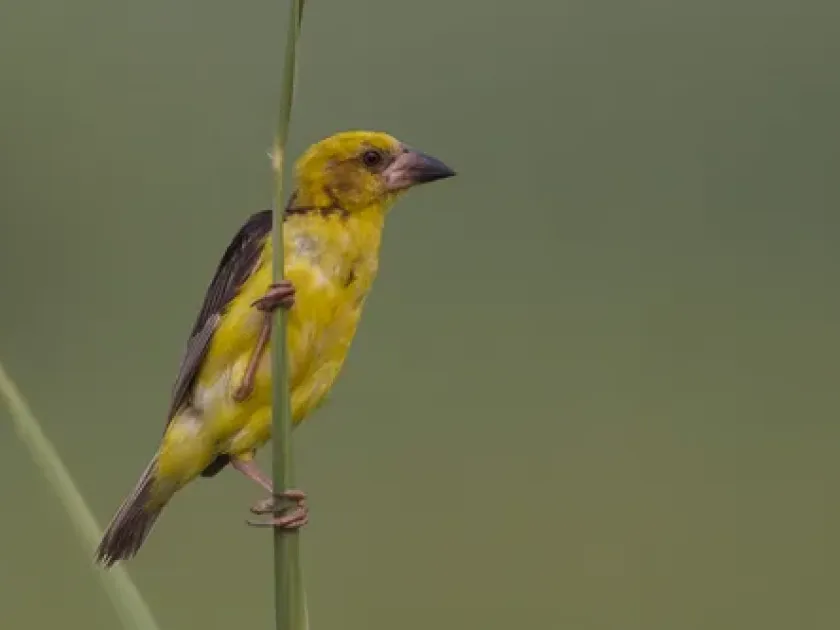
The streaked weaver (Ploceus megarhynchus) belongs to the order Passeriformes and the family Ploceidae. It is a medium-sized bird known for its massive, heavy bill, which is the key diagnostic feature for species identification.
During the breeding season, males exhibit vibrant yellow and black plumage, making them highly visible. Females and juveniles typically have a more cryptic, duller coloration for protection against predators.
This species is endemic to parts of South Asia and prefers habitats such as wetlands, grasslands, and agricultural regions where there is easy access to both water and seeds.
As social birds, they nest in colonies, which often leads to intense feeding pressure when these colonies are situated in close proximity to major agricultural zones.
Understanding their taxonomy and social structure is essential for farmers to distinguish them from other, less harmful avian species that may inhabit the same areas.
What it damages
The streaked weaver is a notorious pest of cereal crops, particularly rice, millet, and sorghum, causing significant yield losses during the grain filling stage.
Birds flock in large numbers to fields during the milk and dough stages of grain development, when the soft kernels are most palatable and accessible to their heavy bills.
In addition to consuming the grain directly, the physical weight of the birds and their feeding activity can cause stems to break, leading to lodging and reduced harvest efficiency.
Damaged panicles and ears become susceptible to secondary infections, as the open kernels provide an entry point for fungi and moisture, further degrading crop quality.
In cases of severe infestation, entire sections of a field can be decimated, resulting in substantial financial losses for grain producers.
When it appears
The period of high damage risk coincides with the crop maturity cycle, specifically when the grain transitions from the flowering stage to full maturity.
Feeding activity peaks significantly during the breeding season, as adult weavers are under high metabolic demand to forage and provision their nestlings.
Seasonal migrations can lead to unexpected surges in bird populations in agricultural landscapes, making real-time monitoring an essential management tool.
Environmental factors, such as regional droughts, can drive weavers away from traditional wild habitats and force them to concentrate on irrigated farmland.
Farmers should implement defensive measures well before the grain becomes fully attractive to the birds to prevent them from establishing feeding habits on their property.
Signs of infestation
Visible signs of infestation include the appearance of stripped or empty panicles where the grain has been completely consumed by the foraging flocks.
Large, noisy flocks observed over the fields, particularly during the early morning and late afternoon hours, are strong indicators of active feeding behavior.
Field inspectors will often find characteristic feather debris, droppings, and broken stalks, creating a distinct pattern of crop failure in specific areas.
The presence of active nests in nearby reeds or woodland areas is a definitive warning sign that the weaver population is actively exploiting the nearby crops.
Early identification of these signs allows for a more timely deployment of deterrent measures, which are most effective when applied before mass feeding occurs.
Control measures
Control strategies often involve a combination of biological and physical deterrents to discourage birds from settling in the fields during sensitive crop stages.
Bioacoustic deterrents, such as playing recorded distress calls of the weavers or predator cries, have shown promise in reducing the duration of bird visits.
Mechanical protection, including netting or the use of bright, reflective streamers, can offer temporary protection for high-value seed plots or smaller fields.
- Installation of bioacoustic alarm systems.
- Physical barriers and netting for small fields.
- Strategic timing of planting to avoid peak breeding cycles.
- Removal of nesting cover in surrounding non-crop areas.
Integrated pest management remains the most sustainable approach, as it balances the need for crop protection with the ecological role of these birds in the wider landscape.
Taxonomy
- Latin name
- Ploceus megarhynchus
- Family
- Ploceidae
- EPPO code
- PLOCME
Discussion
No discussions yet — be the first.